I think it was the inability for GUI's to stay stable. Gnome went off the rails, Unity completely ruined Ubuntu[1], and KDE always felt very cheap and hard to navigate. My opinion, yes, but I always felt the GUI changes in Linux were extremely gratuitous after Gnome 2. Couple this with the fact that for a decade, the actual GUI was tied very, very heavily to the apps. So you had to use Gedit in Gnome, or whatever the…
> I always felt the GUI changes in Linux were extremely gratuitous after Gnome 2. You would like the MATE desktop. Http://ubuntu-mate.com
What Killed the Linux Desktop (2012)
71–80 of 307 posts
Re: What Killed the Linux Desktop (2012)
#72I think it was the inability for GUI's to stay stable. Gnome went off the rails, Unity completely ruined Ubuntu[1], and KDE always felt very cheap and hard to navigate. My opinion, yes, but I always felt the GUI changes in Linux were extremely gratuitous after Gnome 2. Couple this with the fact that for a decade, the actual GUI was tied very, very heavily to the apps. So you had to use Gedit in Gnome, or whatever the…
For me it's been much faster and smoother than my 13 retina Macbook Pro and Window 7 Desktop and this on an ancient i3 2100 system with 4GB ram and old 6770 Radeon card.
My only regret is I didn't try it earlier because of all the negativity floating around about it. I suggest anyone interested in Linux desktops ignore the negativity and try Unity on Ubuntu 16.04 with an open mind. Its fast, lightweight and reasonably sleek and minimal.
Re: What Killed the Linux Desktop (2012)
#73Re: What Killed the Linux Desktop (2012)
#74I think it was the inability for GUI's to stay stable. Gnome went off the rails, Unity completely ruined Ubuntu[1], and KDE always felt very cheap and hard to navigate. My opinion, yes, but I always felt the GUI changes in Linux were extremely gratuitous after Gnome 2. Couple this with the fact that for a decade, the actual GUI was tied very, very heavily to the apps. So you had to use Gedit in Gnome, or whatever the…
> I always felt the GUI changes in Linux were extremely gratuitous after Gnome 2. Yes! Ironically this was what a lot of people hated about Microsoft, and why the XP->Vista and 7->8->10 changes were so unpopular. Everything moves around and works in a different way, imposing a re-learning cost. But the developers like it because they're bored with the old system and think the new one is better.
Re: What Killed the Linux Desktop (2012)
#75I've said this many times but the only real problem I have is the shere pain to get things to work and for uniform styling across programs. I find myself just using terminal applications because gparted's UI is SO different from Wireshark, FireFox, etc. There is no consistancy. There is no standard written. There is nothing. It's just a hodge-podge of "this looks good to me!" No standards = Confused Users
>I find myself just using terminal applications because gparted's UI is SO different from Wireshark, FireFox, etc. There is no consistancy. There is no standard written. There is nothing. It's just a hodge-podge of "this looks good to me!" Then use GNOME Disks, which (if you're using a distro with GNOME) is probably already included: https://en.wikipedia.org/wiki/GNOME_Disks And GParted vs. Wireshark? Of course they…
Look at these
http://cdn2.tekgoblinmedia.com/wp-content/uploads/Restore-di...
https://support.apple.com/library/content/dam/edam/applecare...
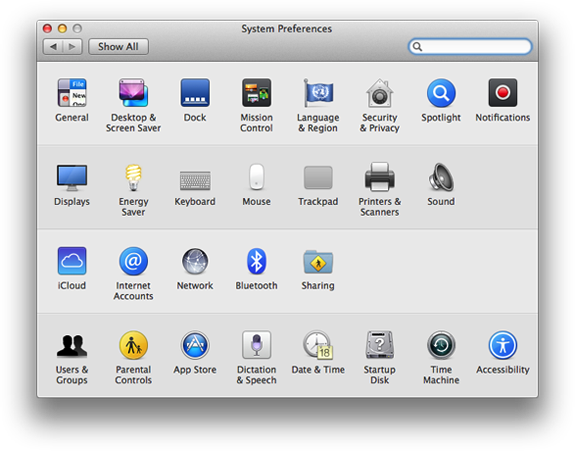
All icons have text. There is a uniform icon for Hard Drive. There is a uniform color scheme. There is a uniform font size. There is a uniform spacing between elements.
In the macOS window you see descriptions where needed like under "First Aid"
You get human-friendly lables such as "Capacity", "Used", etc. It is all presented eligantly and simply.
On the left of your screen all I see are random strings of text with squigly lines next to them. Are those buttons? Can I click them? I know you have to from using wireshark before but the average person sees that and says "...well shit".
Presentation is a very sensative art. HCI should be much more appreciated and people majoring in it shouldn't be relegated to VR as there are still many problems in desktop UI that needs to be fixed.
Re: What Killed the Linux Desktop (2012)
#76Earlier quoted context omitted.
Windows solved many of the GUI problems 20 years ago that Linux still struggles with today. Windows was and is ahead and this is why it was and is more successful. It is that simple. I would take Windows 95's window manager over Ubuntu's Unity every day of the week.
I think Unity (and KDE) were good enough to replace Windows but Windows won 10 years before Gnome and KDE became a thing. And yes Windows95 was not only good enough but great as you pointed. The lack of hardware support was because it made no sense for hardware companies to support an OS with less than 1% market share and same for the gigantic ecosystem of software that ran on windows which had a very long tail. My p…
This was the root cause, "a new desktop" presupposes the existing product category "desktop" which was a solved problem and a mature market. Runaway marketshare required NEW categories.
ABI compat and hardware support are hygiene features; they can slow adoption, but solving them doesn't motivate adoption. Linux needed the motivator; that would have then funded solving the hygiene stuff - just as it has, at least well enough, for x86 servers, Android, and Chromebook.
I don't say this with 20/20 hindsight either. I made this point loudly both inside GNOME and inside Red Hat back in the day. We even had chromebook-type proposals. But the Linux companies at that time were too small and server-focused to undertake such things, and once ipad/chromebook/android were out, there wasn't an obvious opportunity anymore for "Linux" proper.
Still, "Linux desktop" continues to work well for me and millions of other developers daily and I think it's very good for a dev workstation, as long as you buy hardware with OEM-developed open drivers (which mostly means Intel parts).
A lot of people who find it doesn't work for them are doing the equivalent of running OS X on non-Apple hardware with hacks to modify the finder, and surprise it's buggy. Granted, in the Linux world it isn't so clear what the "supported configuration" is. But think boring: default config of a major distribution with all open source drivers...
Re: What Killed the Linux Desktop (2012)
#77I continually trip over the Super key which brings up the Unity version of Spotlight. I killed Spotlight on my Mac a long time ago. I killed whatever Unity thingy the Alt key used to do. Was it the Alt key it hijacked? I don't remember. I don't even remember what weird UI it was trying to foist on me. It was annoying.
I killed the Guest user, but it reappeared with subsequent updates. I still sometimes get logged in as the Guest user, just annoying. And why does the login screen forget the state of the NumLock key? When we type in numbers that might be in our password, we get cursor keyed to the next or previous user in the list. Fun times.
I stopped using LibreOffice. I so much wish I could kill the office ecosystem, it is dreadful. Stop sending me .doc files. My solution is to use an ancient version of Word on an old Mac, and it prompts me so that I can avoid running those Word Macros.
My production server runs Linux (for years now), and I am surprised by how robust it is. A desktop is much more complicated to do well, to satisfy everyone's whims, never mind all of my strange choices.
Not even particularly a desktop issue, but: init cron rc rc.local upstart systemd runit launchd daemontools srvscanner inetd xinetd StartupItems grub2 SystemStarter (I am sure there are many more.) Do I care? No. Ah yes Linux, all of those choices, doesn't even have to be Linux, flavor of the week of BSD anyone? And if I don't like them ... it's open source, so I can "simply" fork my own turd. Not.
Re: What Killed the Linux Desktop (2012)
#78I think it was the inability for GUI's to stay stable. Gnome went off the rails, Unity completely ruined Ubuntu[1], and KDE always felt very cheap and hard to navigate. My opinion, yes, but I always felt the GUI changes in Linux were extremely gratuitous after Gnome 2. Couple this with the fact that for a decade, the actual GUI was tied very, very heavily to the apps. So you had to use Gedit in Gnome, or whatever the…
I don't think it's the gui. I'm a relatively savvy user running Debian on a Thinkpad for more than five years now. Printing is still touch and go. I spent countless hours to get sleep working correctly. It is broken now and I don't have the energy to fix it knowing that nothing I do is guaranteed to last through the next apt update. Wifi will mysteriously refuse to connect with some routers (a daily struggle at the u…
Re: What Killed the Linux Desktop (2012)
#79Quote from article: "The attitude of our community was one of engineering excellence: we do not want deprecated code in our source trees, we do not want to keep broken designs around, we want pure and beautiful designs and we want to eliminate all traces of bad or poorly implemented ideas from our source code trees. And we did. We deprecated APIs, because there was a better way." The Linux kernel only removes/changes…
The linux kernel is hard-core into not breaking backwards compatibility. 2/3 of Linus's rants targeting a kernel developer tend to be because they broke userspace. On the other hand, there is approximately zero chance that a dynamically linked executable from 10 years ago will run on my current system because the system libraries break backwards compatibility all the time. Drepper takes a lot of flak for this, but gl…
Re: What Killed the Linux Desktop (2012)
#80Ts'o on the other hand, in the comments, puts the spotlight on how it is userspace that is the problem. Userspace devs keep breaking APIs and ABIs at whim, effectively playing out "perfection is the enemy of good" in real time.