Live data from Hacker News

Circuit building: stop using antique parts (2014)

sensitiveresearch.com

61–70 of 169 posts

Re: Circuit building: stop using antique parts (2014)

#61
post #38

I build a lot of guitar effects, and that community is even worse when it comes to attachement to obsolete components. The discontinuation of J201 JFETs (in TO-92 through hole package at least) by Fairchild has caused a lot of upset. My perspective, not widely shared, is that JFETs in general have been made obsolete by depletion-mode MOSFETs, at least in audio circuits. Part of the reason, I think, is that a lot of "…

True but i think a lot of that is in adherence to the original design/specs they're emulating (or straight up ripping off). Folks went nuts over the XVive BBD revivals or even still pay ridiculous sums for original panasonics. Sometimes there simply aren't alternatives to achieve the same circuit or you're repairing something very specific (although that's probably outside the scope of the article's PoV). As well the…

> I doubt side by side they sound noticeably better but if you're building vintage it only makes sense to keep the 'tronics true to the time period.

In vintage radio repair, they sometimes will replace old caps (usually electrolytics) with new ones, but put the new ones inside the old cans - to preserve the look of the device.

Obviously, though, this won't work with all parts...
Re: Circuit building: stop using antique parts (2014)

#62

Earlier quoted context omitted.

The article seems mostly right when it's about interfacing logic circuits with loads that require even moderate currents. FET is king in this field. I've a little aquarium and I've noticed how fish always get scared when lights turn suddenly on or off. So I took an Arduino and wrote a timer app for it, using PWM to slowly drive the output up over 60 minutes (sunrise), keep it at max for a few hours, then drive it dow…

If you properly drive a 2N3055 (so all the way to 'on' or all the way to 'off') you'd have to put a pretty good current through it to get it to get hot. The trick is to use the highest voltage you can get away with (most power for the least amount of current). .6V * quite a few amps before you overcome the housings capacity to get rid of the heat. You'll need to properly drive it though and not at too high a frequenc…

> before you overcome the housings capacity to get rid of the heat.

The thing is, most of these larger BJT parts were designed to be used with heatsinks, not usually standalone. IMHO, there's nothing wrong with dropping some voltage and dumping some heat. Sure, it isn't efficient, but if you size everything properly, and your project can accommodate the heatsink - then where's the problem?

Heck, a long time ago you could get tiny heatsinks for some of the small round metal-can transistors that existed - I've got an old 16K minicomputer core-memory board from the 1970s that has drive electronics set up like this.

The author of this "rant" mentions not using L298 (and presumably the L293) either - but there's nothing wrong with these parts for hobbyists (outside of the L298's weird footprint, and the fact that heatsinks for them are almost unobtanium) - provided that the limitations are kept in mind (finding a low-cost mosfet 4A h-bridge in a thru-hole design is virtually impossible). These parts were originally meant for automotive applications, where having a 12-14V large amperage battery supply was the norm (people trying to use them for circuits with 6V or less always wonder why their small motors won't turn).

Re: Circuit building: stop using antique parts (2014)

#63
I'm an electronics amateur, got a question here:

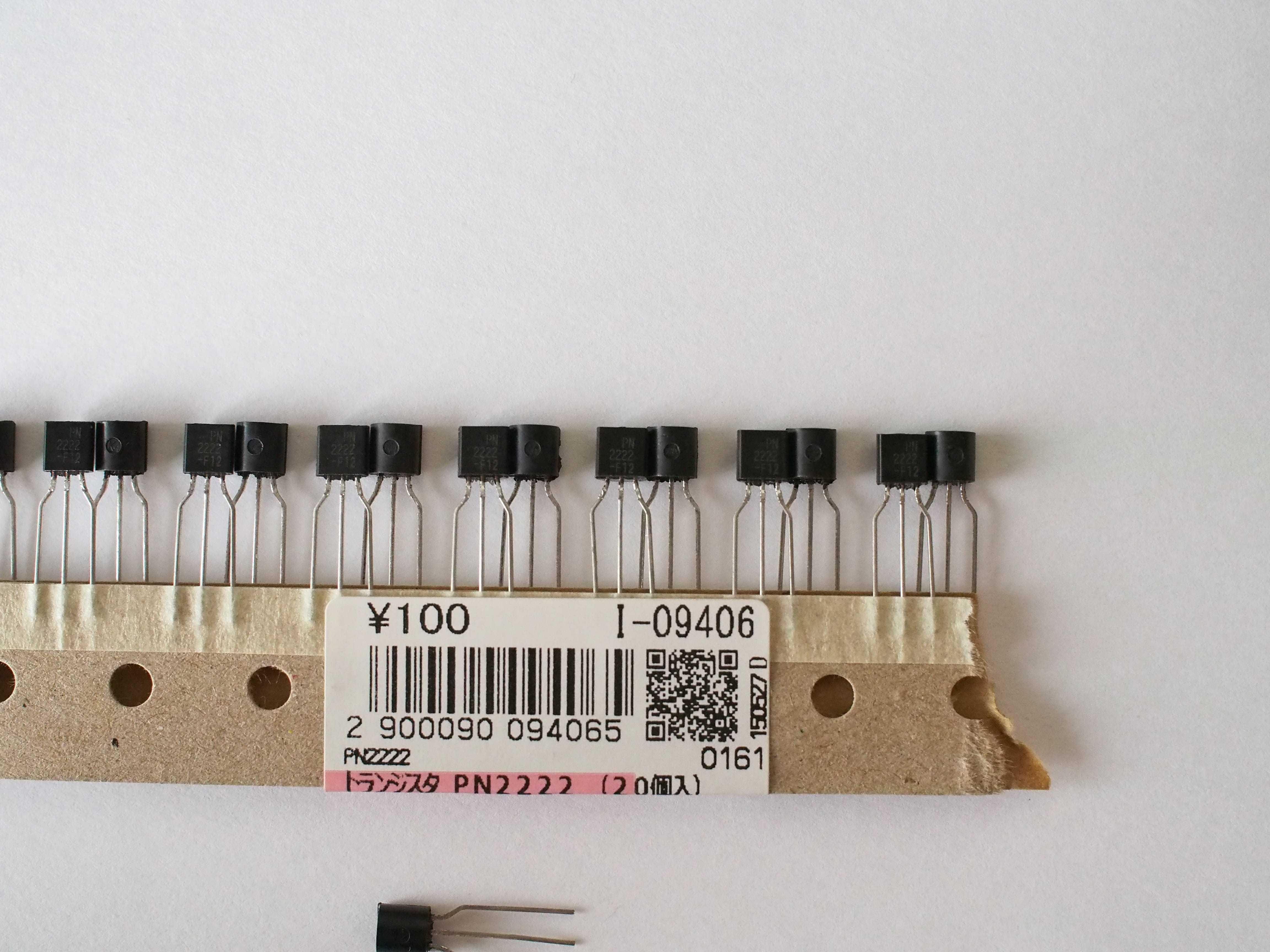
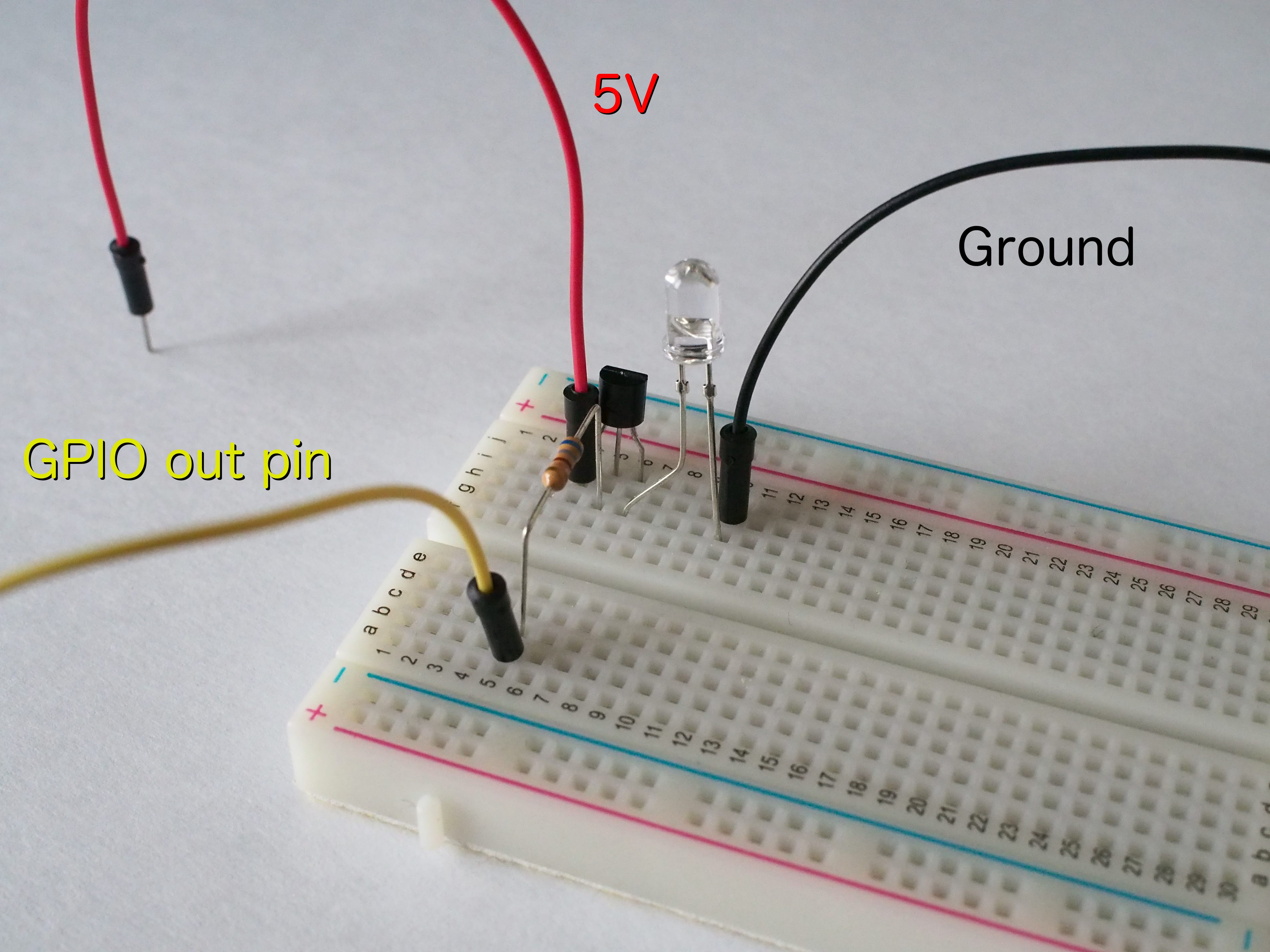
I use a PN2222 [1] transistor to switch a 5V supply through an infrared LED from a microcontroller. It works, but should I be using something better/smaller/more cost effective/more appropriate for the circuit [2]?

[1] https://blog.bschwind.com/2016/05/29/sending-infrared-comman...

[2] https://blog.bschwind.com/2016/05/29/sending-infrared-comman...

(the resistor in the photo is 680 ohms)

Re: Circuit building: stop using antique parts (2014)

#64
post #17

Mechanical relays are not obsolete. They can have lower resistance and capacitance than solid state equivalents. A good relay is a very close approximation to a plain wire when closed. Relays are still commonly used for RF switching.

Funny thing is that a lot of people don't know that relay contact composition is different (and is usually mentioned on the relay's datasheet) depending on the type of load (most especially resistive vs inductive). They then wonder why when they use a motor on a particular relay, even with a snubber, the contacts stop working.

Relays are great though for motor controllers, especially when you need higher amperages (and don't want the huge expense a mosfet solution can sometimes bring); an h-bridge is very simple to build, and tying an n-channel mosfet (of appropriate amperage capability) on the low-side between the relay(s) and ground, and you get easy PWM control (just don't switch the relay while PWM'ing of course).

Re: Circuit building: stop using antique parts (2014)

#65

Don't tell me that a LM386 is bad without telling me why and what to replace it with. If you don't, then you're not actually helping me at all, but rather it just sounds like you're spreading FUD.

About the only thing "bad" with the LM386 is how finicky it is with component selection and layout. It's a great little amp when it works well, but sometimes it will go dopey on you just looking at it sideways. It actually works better in a PCB situation (breadboarding is where it can be wonky in operation - ymmv).

As far as a replacement part? I don't think there are many alternatives there (at least with the same size, and easy to configure - there are a few stereo ICs I've seen used for class-D amps, but they weren't as simple to use or as small).

Re: Circuit building: stop using antique parts (2014)

#67

Earlier quoted context omitted.

Guitar d00ds having obscure, nonsensical reasons for things because "mah tones!"? Say it ain't so. I mean, nearly every tube head on the market has an essentially pointless standby/bypass switch because of the mistaken belief that you need to warm up your tubes for some arbitrary amount of time in a modern amp and keep them warm. I forget which manufacturer it was that dropped the switch on one model and saw sales pl…

If I ever made analog audio equipment professionally, I would add an entire series of switches and dials that weren't wired up to anything.

You could label them like "warmth", "aggressiveness", "heart", and have people go apeshit trying to figure out the best setting for their song.

Re: Circuit building: stop using antique parts (2014)

#68
post #61
post #38

Earlier quoted context omitted.

True but i think a lot of that is in adherence to the original design/specs they're emulating (or straight up ripping off). Folks went nuts over the XVive BBD revivals or even still pay ridiculous sums for original panasonics. Sometimes there simply aren't alternatives to achieve the same circuit or you're repairing something very specific (although that's probably outside the scope of the article's PoV). As well the…

> I doubt side by side they sound noticeably better but if you're building vintage it only makes sense to keep the 'tronics true to the time period. In vintage radio repair, they sometimes will replace old caps (usually electrolytics) with new ones, but put the new ones inside the old cans - to preserve the look of the device. Obviously, though, this won't work with all parts...
This works well with electrolytic caps because modern ones are so much smaller for the same voltage and capacitance rating than older ones were.

You can also hollow out old carbon comp resistors and put metal film resistors inside them. As a bonus you could use resistor shells on the outside with color bands that don't at all represent the actual value of the resistor inside as a practical joke on anyone trying to clone the circuit.

Re: Circuit building: stop using antique parts (2014)

#70

I build a lot of guitar effects, and that community is even worse when it comes to attachement to obsolete components. The discontinuation of J201 JFETs (in TO-92 through hole package at least) by Fairchild has caused a lot of upset. My perspective, not widely shared, is that JFETs in general have been made obsolete by depletion-mode MOSFETs, at least in audio circuits. Part of the reason, I think, is that a lot of "…

Depletion MOSFETs seem to have availability problems. My local distributors only have a dozen or so models, mostly SOT-23. I can see why DIYers are not all over them.

It's definitely true that there just aren't nearly as many depletion mode parts as there are enhancement mode. I've never tried getting them from anywhere other than Mouser. For my purposes I stick with LND150s and DN25XX / DN35XX parts.
Post reply on HN