> I promised a better way... a well-written 8-page document can define the nuances of a complicated system far better than a whole cumbersome flotilla of interlinked JIRA tickets. I'm mystified... everywhere I've ever worked used design documents to some extent -- not for simple features, but more for things that are truly "complicated systems" with nuances. Are there really places that attempt to do project design s…
Death to JIRA
11–20 of 20 posts
Re: Death to JIRA
#12You can't find the reason for a change otherwise, you can't find all the related changes for the feature, you can't catalog incoming bugs and answer whether the last bug report must be tackled or has already been fixed and so on.
This is why - like it or not - there always is an issue management system. It's on a server somewhere, or in an excel sheet, or emails, or on a piece of paper. But it's there.
The usual criticism of Jira is that it's heavyweight compared to e.g GitHubs issue tracker, or whatever post-it moving system is the latest fad.
A fair criticism of Jira is that it makes it too easy for management to encode and expand the formal rules for e.g task workflows, and that these rules invariably end up being too rigid.
An organization should have the least invasive workflow it can, but it should encode and enforce the workflow.
In the end, just like you always have an issue management system, you also have a change workflow. Either it's encoded formally using an issue/PR system or it's ad-hoc via chat and email (which scales very well up to around 2 developers but shows it's weaknesses already at around 3)
Re: Death to JIRA
#13> I promised a better way... a well-written 8-page document can define the nuances of a complicated system far better than a whole cumbersome flotilla of interlinked JIRA tickets. I'm mystified... everywhere I've ever worked used design documents to some extent -- not for simple features, but more for things that are truly "complicated systems" with nuances. Are there really places that attempt to do project design s…
Re: Death to JIRA
#14> I promised a better way... a well-written 8-page document can define the nuances of a complicated system far better than a whole cumbersome flotilla of interlinked JIRA tickets. I'm mystified... everywhere I've ever worked used design documents to some extent -- not for simple features, but more for things that are truly "complicated systems" with nuances. Are there really places that attempt to do project design s…
Its a recent trend to skip the documentation and have a sparsely documented JIRA in the belief it encourages agile development. I just groan when i see it
Re: Death to JIRA
#15Re: Death to JIRA
#16Every large scale software system needs a ticket system if some kind. You might separate the backlog from the bug reports, or omit one part, but you'll have something . You can't find the reason for a change otherwise, you can't find all the related changes for the feature, you can't catalog incoming bugs and answer whether the last bug report must be tackled or has already been fixed and so on. This is why - like it…
Re: Death to JIRA
#17tl;dr Blame the tools.
Re: Death to JIRA
#18Re: Death to JIRA
#19JIRA is a fantastic tool if management know how to use it, and how to limit themselves. Having used 2 other horrible alternatives I really miss JIRA
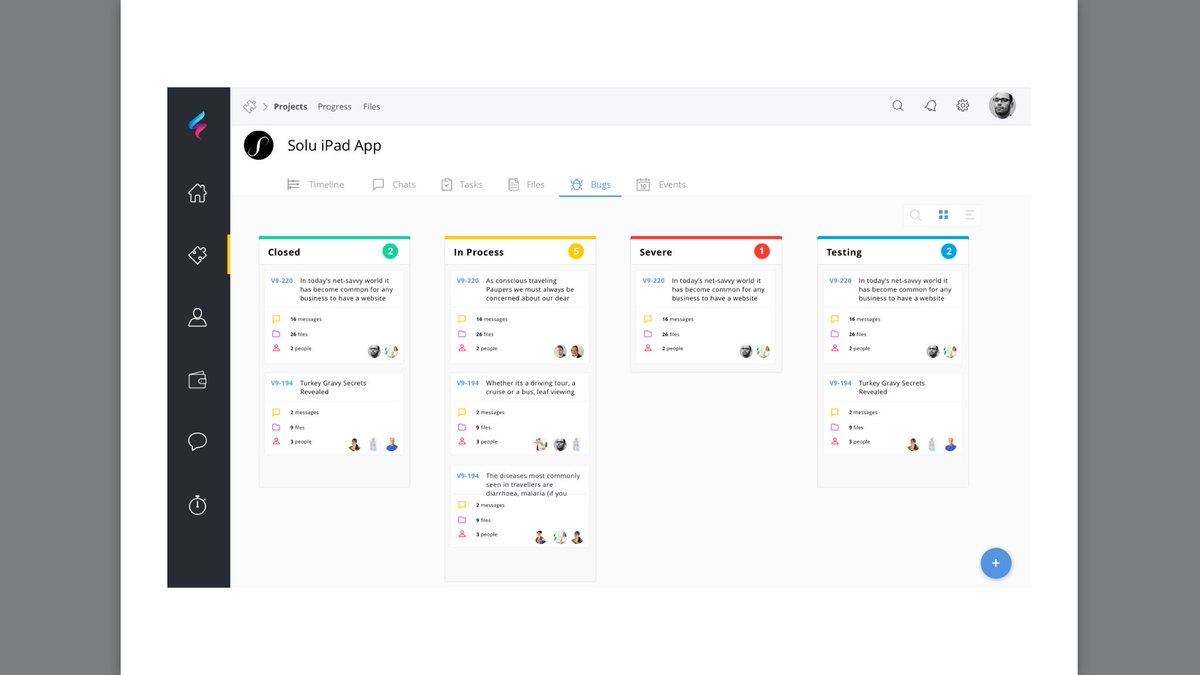
For projects where there's possibly only a dev or two and the project/client, we had success with producteev. It's much less complicated than e.g. JIRA.
If you set up rules for tags and priorities you can manage delivery quite well with it.
Highest priority is reserved for blockers.
Sample of our tags: affects customer, bug, feature, change, production, technical debt