Live data from Hacker News

Barely Half of 30-Year-Olds in the U.S. Earn More Than Their Parents Did at 30

wsj.com

41–50 of 394 posts

Re: Barely Half of 30-Year-Olds in the U.S. Earn More Than Their Parents Did at 30

#41
post #30

Compound that with the percentage of income 30 year olds spend on housing, education, health care and child care compared to their parents and we have a recipe for disaster.

Most consumers are tapped out, bad news for a consumer driven economy. There can only be so much more debt accrued.

This feels correct, anecdotally ... but is there data to support this claim? For example, savings rates going down, credit/debt going up, and consumer spending going down?
Re: Barely Half of 30-Year-Olds in the U.S. Earn More Than Their Parents Did at 30

#42
post #12

Compound that with the percentage of income 30 year olds spend on housing, education, health care and child care compared to their parents and we have a recipe for disaster.

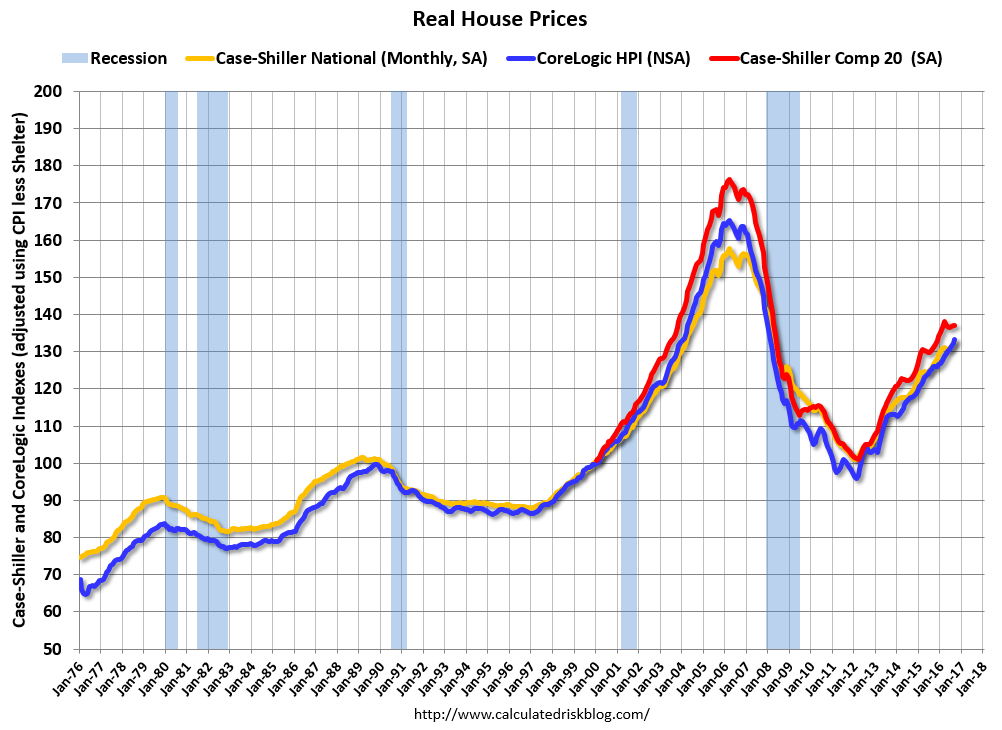
Price per square foot for housing has remained remarkably constant over time. People are spending more on houses than they used to because they are buying bigger houses.

30 year olds are buying larger houses because typically those are the only options.

It comes down to NIMBY local regulation enacted by the boomers with their FU I got mine attitude. Municipalities enforce size restrictions, ie you can't build too small, in order to ensure there isn't housing poor folk can afford. They enact parcel size restrictions which means a piece of land that could have 20 homes on it can only fit 5. They enact stricter and stricter building codes that the only way to make a profit for a builder is to build big and cram in features so the real estate agents can beat you over the head with them so you feel as though you'd be an idiot not to buy this massive house with things you don't need.

Re: Barely Half of 30-Year-Olds in the U.S. Earn More Than Their Parents Did at 30

#43
post #14

About half earn more, about half earn less. Wouldn't that imply that the average earnings are about the same? If so, I don't know that I'd complain because that indicates stability.

Only if you assume that there has been no wealth created by those people and no economic growth in that period.

Re: Barely Half of 30-Year-Olds in the U.S. Earn More Than Their Parents Did at 30

#44

What makes me upset is that the economic realities do not match what is taught in large swaths of America. We are taught (at least in my community, and I am 30 now still living within 20 miles of where I grew up) that a very achievable ideal is a middle class existence with one parent working, and a small house in the suburbs. I am in the top 1% income earners for my generation and do not even come close to this. I t…

very achievable ideal is a middle class existence with one parent working, and a small house in the suburbs

I guess it depends where? There is a large swath of the mid-West where this is true. Near a big city? Probably not.

Re: Barely Half of 30-Year-Olds in the U.S. Earn More Than Their Parents Did at 30

#45

People who will have children ("eventual parents" for the purpose of this comment) are healthier, smarter and wealthier than people who will never have children. If the question is whether things have gotten harder for the average person, it is misleading to compare a group consisting only of eventual parents with a group composed of both eventual parents and non-parents. A better comparison would be 30-years-olds of…

I agree. I've seen a lot of people who have no intention of "settling down" or "having kids" become surprised when their peers who do exactly that become more "successful" (earn more money, move up in job position, etc.). I think making the decision to have kids instills a bit of discipline to get something stable in life.

Re: Barely Half of 30-Year-Olds in the U.S. Earn More Than Their Parents Did at 30

#46
post #19

Compound that with the percentage of income 30 year olds spend on housing, education, health care and child care compared to their parents and we have a recipe for disaster.

This is only going to get worse with software eating the world and automation of every possible task that we can. It has already started with companies like Amazon (in their warehouses) using robots extensively.

Up until we finally get our collective heads out of our asses and implement something like Basic Income.

Re: Barely Half of 30-Year-Olds in the U.S. Earn More Than Their Parents Did at 30

#48

Earlier quoted context omitted.

Got data on this? In my anecdotal experience price per square foot has shot up in urban places, which is where the jobs for young people tend to be concentrated.

"the inflation-adjusted price of new homes has been relatively stable since 1973 in a range between about $105 and $125 per square foot" However this is only new homes, not used homes. http://www.aei.org/publication/todays-new-homes-are-1000-squ...

[deleted]

Re: Barely Half of 30-Year-Olds in the U.S. Earn More Than Their Parents Did at 30

#49
post #12

Compound that with the percentage of income 30 year olds spend on housing, education, health care and child care compared to their parents and we have a recipe for disaster.

Price per square foot for housing has remained remarkably constant over time. People are spending more on houses than they used to because they are buying bigger houses.

Real house prices are currently up 44% since the nineties. https://3.bp.blogspot.com/-OOfzxFgh8YE/WD2XUyaZeqI/AAAAAAAAp...

That is not accounted for by sq footage. Interest rates are a much more likely culprit.

Re: Barely Half of 30-Year-Olds in the U.S. Earn More Than Their Parents Did at 30

#50

This chart from the article is rather painful: https://si.wsj.net/public/resources/images/BN-RD331_CHETTY_1... (I think that'll work without the workaround)

That chart is the core of the article and answers several questions from the comments here: yes it's inflation-adjusted, the ratio has gone down over time (90% of people born in the 1940's earned more than their parents at 30, and it's gone down to 50% now).

Is that really that surprising? People born in the 1940's would have lived through a massive economic upswing post WW2. While their parents probably experience the Great Depression through their 30's.
Post reply on HN