Earlier quoted context omitted.
The point is that the non-assertive position isn't 'playing it safe'. You're no more out of the flow of traffic unless the lane is extra wide, you're signalling to following cars that they are welcome to overtake, and you have robbed yourself of any margin for error when a car misjudges their pass and squeezes you in to a parked car or railing. You're right that the assertive approach is no substitute for segregated…
Interesting. Here in NL we're taught to stay to the right hand side of the lane with about .5 meters of margin to the right relative to where the road surface ends. That way cars can overtake without possibly hitting a cyclist going the other way. Also it is strongly discouraged to cycle side-by side (but kids on the way to and from school routinely ignore that as do couples of all ages). https://fietsmaar.files.word…
In the US, a "bike lane" is a completely separate lane that cars are not supposed to drive in. Unfortunately they're usually retrofitted onto a road, making all the other lanes narrower. This exacerbates the standard situation:
Most roads have a double yellow line down the middle, and drivers are taught to never cross this. The general width of the standard lane is around enough for a larger vehicle and a bike to stand side-by-side, but not enough for comfortable passing. The lowest US traffic speed (outside of neighborhoods) is usually 35 mph (56kph), with the basic non-highway speed being around 40-45 mph (64-72 kph).
Most drivers, especially outside cities, expect that they will always be able to pass a bike regardless of any oncoming traffic. Drivers usually pass bikes by moving over a little and continuing at speed - the "good" ones will put their left tires a foot or two over the double yellow line, or possibly slow down to 70% of their speed if oncoming traffic. If the cyclist is in a bike lane or shoulder, the expectation is that a car does not have to account for them at all, since it's the bike's responsibility to continue out of the car's lane.
In the US context, I agree with the "take the lane" advice wholeheartedly. It makes cars have to account for you, and leaves your clear-lane buffer to your right where you can rely on it (as opposed to thinking its on your left, and suddenly swerving left due to damage, debris, or door). A driver yelling at you because they had to slow down and plan to deliberately pass you is much better than that same driver passing a foot away at full speed. And if a driver does plow into you from behind, they would have done the same thing had you been a few feet more to the right (unless you are actually riding on the shoulder, which is the general approach in rural areas where speeds are even higher and longer distances mean people space out more).
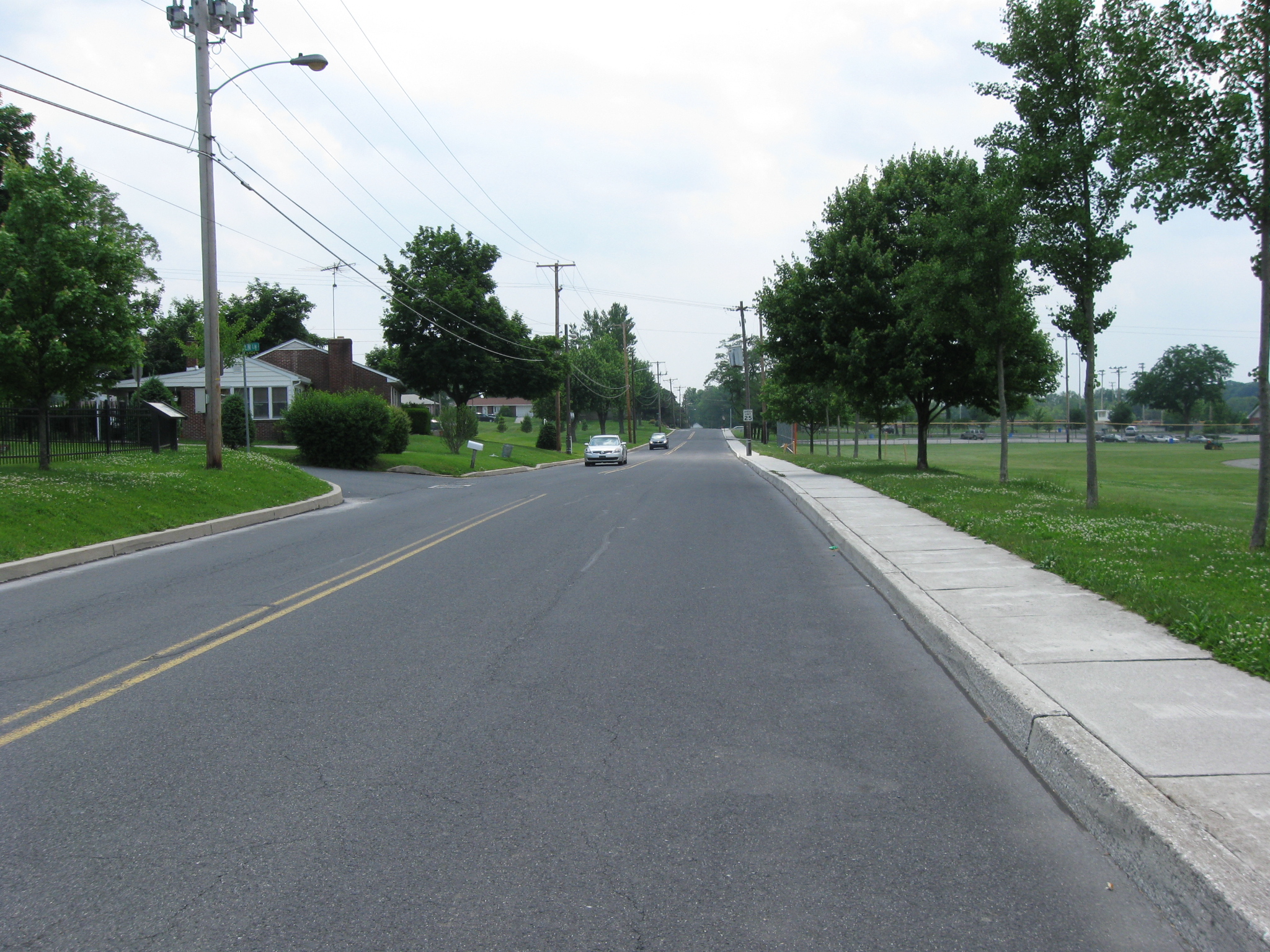
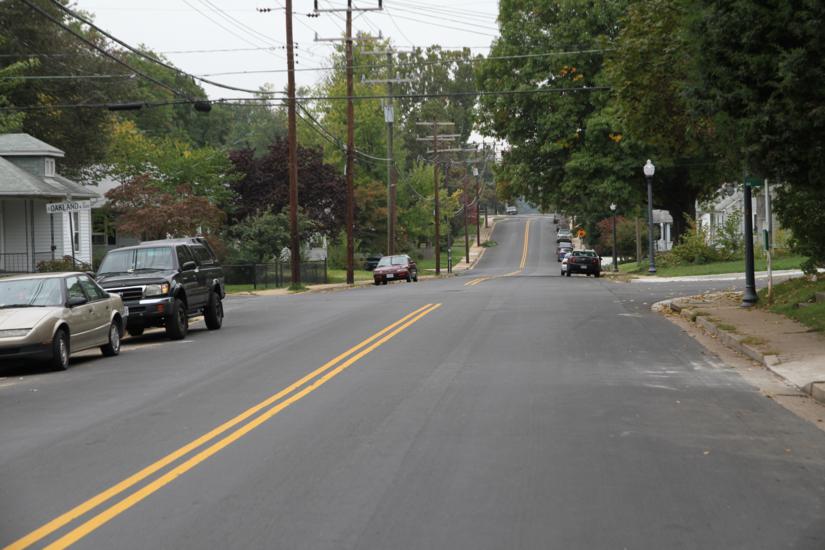
It was actually difficult finding a representative picture, since there are so many distinct types of area in the US. As you go into more planned areas, the neighborhoods become nicer (meant for mixed use), but the arteries become even worse and using them is necessary to go anywhere.
Standard less-planned suburban area: http://i.gettysburgdaily.com/imgs/LongLane060809/LongLane060... (It even has a shiny sidewalk! I bet it abruptly ends up ahead where the road curves)
Slightly denser suburban area (the parked cars): https://www.arlnow.com/wp-content/uploads/2011/10/ik-009_825...
Suburban artery that has had its shoulder painted with a picture of a bike - http://rrcoplanning.ppaponline.org/NeighborhoodImages/RiverR...

What most US drivers perceive: http://www.vaterrarc.com/Content/Images/Products/landing/bg_...
