Live data from Hacker News

Sweden Wants to Fight Disposable Culture with Tax Breaks for Repairing Old Stuff

fastcoexist.com

21–30 of 336 posts

Re: Sweden Wants to Fight Disposable Culture with Tax Breaks for Repairing Old Stuff

#21

Earlier quoted context omitted.

So fixing it means replacing the entire assembly, costing 2/3 of a new machine and with a four week delivery time for the part. I learned this is only done to screw consumers over, and that all manufacturers do it now. The drum still has all the mounting tabs for being screwed together, so they're literally just saving $0.30 on screws. Alternatively, it's telling you to cut it open and screw it back together. If they…

Yeah, I started trying to cut it open, but it soon became clear I would never be able to put it back together and have it 100% watertight . Which is kind of a hard requirement in this case.

If the channel for the rubber gasket is still there, you could. The old way was a rubber gasket (think "gigantic O-ring") and screws. The new model's plastic welding obviated the need for the gasket, but I bet the provision is still there if the screw bosses are still there.

Also, if you're tackling this repair, it's wise to make sure you can get the old bearings off the "spider" and that the spider isn't cracked from vibration. On our washer, I couldn't get the large bearing off the spider without trashing the spider and back half of the tub, and that made the repair overall uneconomical.

If you can get yours off, then order the parts. This also suggests replacing the bearings when they first start to make noise (a bit of a growl) or when the inner tub has some axial play relative to the outer tub (not to the door seal or frame of the washer, as that's from the suspension system). It would suck to order $50-75 worth of parts and not be able to do the repair anyway. You "have" to replace the seal and large bearing. I don't think it makes any sense not to replace the small bearing as well while you're in there. I also buy the tub seal gasket, though I've never felt the old one wouldn't have been fine to re-use (if present).
Re: Sweden Wants to Fight Disposable Culture with Tax Breaks for Repairing Old Stuff

#22
post #20
post #16

Earlier quoted context omitted.

According to the OECD Taxing Wages report [1] for 2016, the total tax wedge for Sweden, including employer contributions, is 42.7%. (Note: for those who are confused about it: This is not the percentage tax paid out of contracted wages - the average tax paid on the contracted wages are much lower) > If he is going to rent an hour from someone with the same salary as himself/herself, that will be three times the hourl…

Please see this: https://en.wikipedia.org/wiki/Non-wage_labour_costs https://sv.wikipedia.org/wiki/Arbetsgivaravgifter_i_Sverige I wrote "a third of the money the company pays for his wages", so I assume that is ignored in the "taxes" report you reference. Just these "social charges" (as I called them) is 31.42% already (just ten percent lower than the OECD report).

Those are included in the OECD total tax wedge numbers.

EDIT: The reason your numbers don't add up is that you can't just add those numbers together with income tax numbers - you also then need to add the amount paid by the employer to the salary to get the gross amount paid for a worker, and recalculate the percentage from the total base.

Re: Sweden Wants to Fight Disposable Culture with Tax Breaks for Repairing Old Stuff

#23
post #22
post #20

Earlier quoted context omitted.

Please see this: https://en.wikipedia.org/wiki/Non-wage_labour_costs https://sv.wikipedia.org/wiki/Arbetsgivaravgifter_i_Sverige I wrote "a third of the money the company pays for his wages", so I assume that is ignored in the "taxes" report you reference. Just these "social charges" (as I called them) is 31.42% already (just ten percent lower than the OECD report).

Those are included in the OECD total tax wedge numbers. EDIT: The reason your numbers don't add up is that you can't just add those numbers together with income tax numbers - you also then need to add the amount paid by the employer to the salary to get the gross amount paid for a worker, and recalculate the percentage from the total base.

I know the definition. I also know that just the "hidden" cost not presented to people as "tax" is 31.42% of the salary.

The tax rate in itself is generally around 30%.

So something is rotten in Den.. Swedish data. :-)

Anyway, it doesn't change my original argument really. I ignored lots of other costs per employee to sell repair time.

Edit: It is probably that the lowest amount to pay taxes on have been raised a lot since I lived in Sweden. Your data might be correct, at least for people with a low income. (The numbers are too big with 31.42% added to the sum and 30% tax for that to result in 41%.)

Edit 2: Regarding total tax and calculation. https://en.wikipedia.org/wiki/Taxation_in_Sweden#Example_of_...

Re: Sweden Wants to Fight Disposable Culture with Tax Breaks for Repairing Old Stuff

#24
post #11

What we really need is financial penalties on companies that make stuff deliberately hard to repair. Set up a department of the Consumer Rights Bureau (or whatever it's called) where people can report devices the've been unable to fix due to deliberate obfuscation/etc., and that forces manufacturers to refund the consumer the entire purchase sum of that device no matter how old it is. Anecdote: my washing machine rec…

That is utterly infuriating. Stuff like this really shakes my faith in capitalism. To think that someone in charge at Bosch has actively decided to 1. Screw over the customer 2. Impose a massive external cost on society and the ecosystem. I honestly wonder how they sleep at night. The market clearly can't fix this issue, so regulation must be the only option.

Markets can fix the issue. But the market may need regulation to ensure externalities are captured. E.g. taxing energy and recycling costs, and taxing based on expected lifetime (e.g. a tax that reduces the longer full repair warranty you offer).

For the "taxing recycling cost" we have an example in the case of bottles. Norway for example has a reducing bottle tax that starts at a certain rate for non-recyclable drinks containers or containers that are recyclable but aren't. The tax rate then drops proportional to your proven recycling rates, and falls away completely if your rate is high enough. Having distributors take back failed products is great, but it's insufficient in that they have no reason to encourage consumers to return broken products, and often have a strong disincentive to (they end up having to pay or the transport and recycling).

Basically, we should expect companies to either make society good for environmental externalities related to their products, or pay what it costs society to make other arrangements, so that these costs end up getting priced into the products so we can make our buying decisions accordingly.

Re: Sweden Wants to Fight Disposable Culture with Tax Breaks for Repairing Old Stuff

#25
post #16
post #8

This has probably more to do with Sweden having so high taxes on labour that repairs becomes impossible without a tax break. An average Swede gets ~ a third of the money the company pays for his wages. (30% tax, 30% in social charges etc.) If he is going to rent an hour from someone with the same salary as himself/herself, that will be three times the hourly salary. (I'll ignore the other costs here.) So, in sum, bec…

According to the OECD Taxing Wages report [1] for 2016, the total tax wedge for Sweden, including employer contributions, is 42.7%. (Note: for those who are confused about it: This is not the percentage tax paid out of contracted wages - the average tax paid on the contracted wages are much lower) > If he is going to rent an hour from someone with the same salary as himself/herself, that will be three times the hourl…

Don't forget to add their 25% VAT rate if you actually want to spend your money.. so you end up with 42.7% + 25%. That's nuts.

Re: Sweden Wants to Fight Disposable Culture with Tax Breaks for Repairing Old Stuff

#26

What we really need is financial penalties on companies that make stuff deliberately hard to repair. Set up a department of the Consumer Rights Bureau (or whatever it's called) where people can report devices the've been unable to fix due to deliberate obfuscation/etc., and that forces manufacturers to refund the consumer the entire purchase sum of that device no matter how old it is. Anecdote: my washing machine rec…

It's not "only" to screw consumers over. IMEstimation, vanishingly few consumers would repair a washer with a bearing failure, most because they assume the service call and repair would be $400+ and the new machine only about double that, so might as well just buy a new one. And the failure mode either sounds dramatic (like a jet engine coming apart in the spin cycle) and/or the machine starts putting brown grease on…

>>And the failure mode either sounds dramatic (like a jet engine coming apart in the spin cycle) and/or the machine starts putting brown grease onto the clothes, making people believe the problem is not a simple one.

Great insight. I wonder how far we (as in general society) have come from the science/technology aspects of our day to day life. Even repairing simple machines like a washing machine is almost beyond the ability of most people even with the availability of all tools needed.

I conjecture that despite the availability of information, the percentage of people with hacker-mindset is declining. Companies are to blame for this (obfuscation etc), no doubt, but societal culture also seems to play a very important role here.

The society doesn't seem to value such knowledge anymore much. Am I missing something?

Re: Sweden Wants to Fight Disposable Culture with Tax Breaks for Repairing Old Stuff

#27
post #9
post #4

I fail to understand why Scandinavian politics always manage to make sense. Is that cultural, historical, economical, or does the tough climate force people to think a little bit more about how they manage their society?

I assure you we have stupidity here too, it's a global trait. While this one makes sense, there's also a proposed "Chemicals tax" for 2017, taxing electronics (phones/tablets/games consoles/etc) per weight, regardless of contents. So what we waste the most (phones/tablets) will barely pay for anything, while TV's which can last 5-10 years will get more expensive.

Wouldn't the answer then be to apply the Chemical tax, divided by the expected lifetime of the device?

Re: Sweden Wants to Fight Disposable Culture with Tax Breaks for Repairing Old Stuff

#28
The only problem with repairing devices is labour cost, nothing else.

I've had a broken subwoofer that I took to a small electronics shop(in UK), and was quoted 60 pounds to even have it looked at. Not repaired - looked at. The subwoofer cost me 80 pounds on ebay. So predictably, it went straight to the bin.

Same with washing machines, dryers, etc - I bought a Hotpoint washing machine for 220 pounds, but a standard call out charge for an engineer to come and have a look is at least 100 pounds. Plus any parts + cost of labour billed per hour = it's cheaper to just buy a new washing machine and at least have a warranty on it.

Now, I feel like this is exclusive to western countries, because people value their time a lot(as they should!) - but where I'm from(Poland) it would be stupidly cheap to get anything repaired. I had an old LCD TV repaired locally, the guy spent half a day fixing it, and only charged 100 zlotys(20 pounds/30 USD) - that included parts.

Not sure how we can change that, unless we get the labour cost down.

Re: Sweden Wants to Fight Disposable Culture with Tax Breaks for Repairing Old Stuff

#29
post #16

Earlier quoted context omitted.

According to the OECD Taxing Wages report [1] for 2016, the total tax wedge for Sweden, including employer contributions, is 42.7%. (Note: for those who are confused about it: This is not the percentage tax paid out of contracted wages - the average tax paid on the contracted wages are much lower) > If he is going to rent an hour from someone with the same salary as himself/herself, that will be three times the hourl…

Don't forget to add their 25% VAT rate if you actually want to spend your money.. so you end up with 42.7% + 25%. That's nuts.

Wouldn't that be 42.7% + (57.3% * .25) = 57%?

Re: Sweden Wants to Fight Disposable Culture with Tax Breaks for Repairing Old Stuff

#30
post #26

Earlier quoted context omitted.

It's not "only" to screw consumers over. IMEstimation, vanishingly few consumers would repair a washer with a bearing failure, most because they assume the service call and repair would be $400+ and the new machine only about double that, so might as well just buy a new one. And the failure mode either sounds dramatic (like a jet engine coming apart in the spin cycle) and/or the machine starts putting brown grease on…

>>And the failure mode either sounds dramatic (like a jet engine coming apart in the spin cycle) and/or the machine starts putting brown grease onto the clothes, making people believe the problem is not a simple one. Great insight. I wonder how far we (as in general society) have come from the science/technology aspects of our day to day life. Even repairing simple machines like a washing machine is almost beyond the…

The availability of tools is far from a given as well.

It appalls me how few people will tackle what seem to me to be utterly basic repair tasks. I may be on the extreme end, but I think some people would pay someone to change a lightbulb in their house (and I'm sure a great many DO pay someone to replace a headlamp or tail light bulbs).

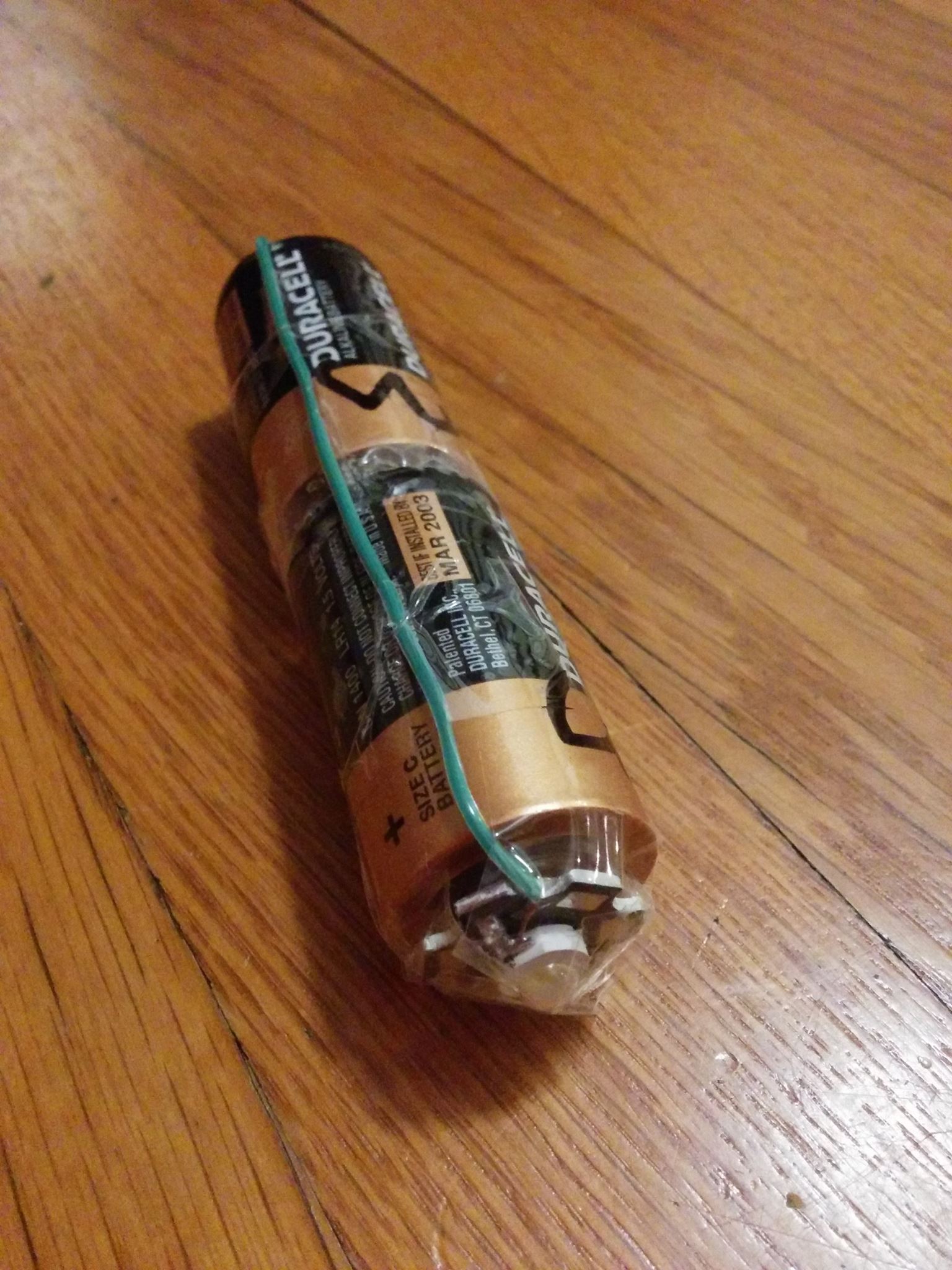
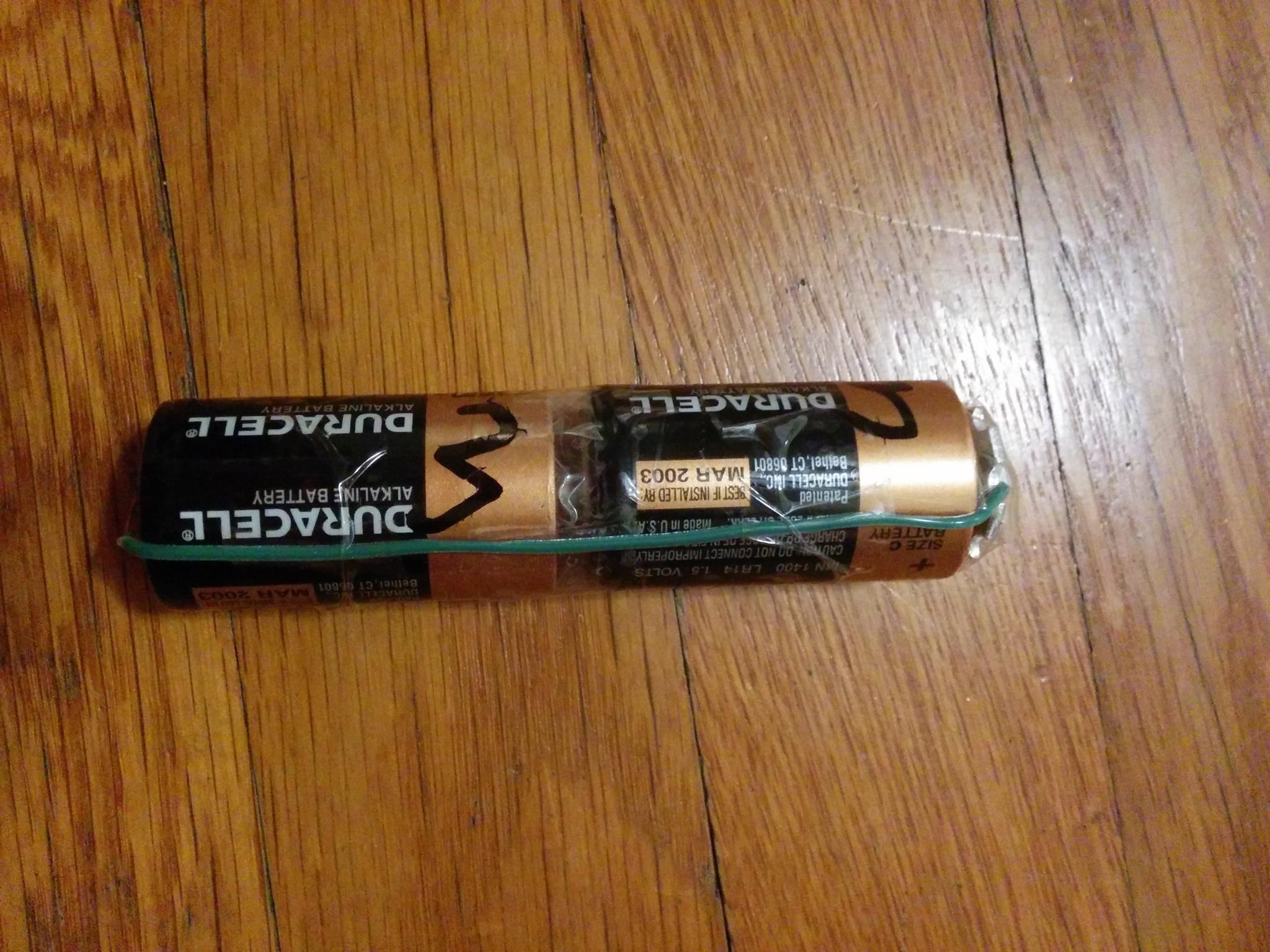
I'm trying to do my part, ensuring that my kids are exposed to the DIY/maker/hacker ethic/experience, and even went into to teach my daughter's kindergarten class the (very) basics of electricity and we "built" flashlights together (mostly, the kids did a life-scale real "electricity" game with banana jack cables to make a complete circuit and a light to light from a 12V battery and then they put stickers with their name on it around the batteries of pre-built flashlights with a bare wire to the negative terminal as the "switch".) That was 2 years ago, and the kids still talk about it sometimes when I see them at pickup. My son (3 at the time, 5 now) can explain from that how a switch works and that electricity "has to make a whole circle" in order to work.

This was the prototype version we made at home. The production version was more robust and looked better, but worked the same basic way.

http://static-s3.sokoloff.com/random/kids/flashlights/flashl... http://static-s3.sokoloff.com/random/kids/flashlights/flashl... http://static-s3.sokoloff.com/random/kids/flashlights/flashl...

Post reply on HN