Live data from Hacker News

Medical guidelines don’t include a diet low in carbohydrates

nytimes.com

31–40 of 185 posts

Re: Medical guidelines don’t include a diet low in carbohydrates

#31
post #22

Earlier quoted context omitted.

How so?

How so what? A diet that says it's ok to eat a steak but an apple is bad because it has carbs in it? There is nothing wrong with carbs, carb free diets work because it's easier to create a caloric deficiency not because you some how can eat 3000 cals of w/e and lose weight. But in the long run they aren't healthy either try being on a low carb diet and exercise at the same time let me know how it's working for you. E…

low carb != zero carb

Zero carb (or if too reduced) is really not sustainable

And you're right, eating an apple is ok.

Re: Medical guidelines don’t include a diet low in carbohydrates

#32

Thank the "low-fat/fat-free" craze for that. Associating dietary fat with body fat has been one of the worse mistakes in "nutrition" in the past decades. Now most "low-fat" food has added carbs to deal with the loss of consistency. And even regular foods (especially in the US) have added sugar.

The sugar free/carb free Atkins diet of the 90s and its modern versions isn't any better. Pretty much any diet which is free of anything should be avoided.

I strongly disagree with this:

> Pretty much any diet which is free of anything should be avoided.

For the couple of years, I've been trying various elimination diets so that I can see what effects particular foods and food groups have on me. Even if I had ended up with exactly the same diet, it would have been worth doing, as I learned a lot about my body and my relationship with food.

As it happens, though, I want to keep some pretty big changes. After doing my 3rd Whole30 [1], a paleo-esque 30-day elimination diet, I'm just finishing a week where I returned to eating refined carbohydrates. My conclusion: as much as I enjoy those foods, they make me feel terrible. My mood and energy were much less even. They put big demands on my self control, and make me prone to binging. I sleep less well. Starting tomorrow, I'm going to spend a few months without refined carbohydrates again (sugar, flour, juices). I'll probably drop dairy again too.

I don't know that I'd recommend my particular choices for anybody else, but I strongly encourage curious people to experiment with elimination diets. If nothing else you get the sort of exercise in self-control that religious people get from Lent, which I think is valuable on its own. But I learned a ton along the way, and wish I had done this years ago.

[1] http://whole30.com/
Re: Medical guidelines don’t include a diet low in carbohydrates

#33
post #26

Earlier quoted context omitted.

How so what? A diet that says it's ok to eat a steak but an apple is bad because it has carbs in it? There is nothing wrong with carbs, carb free diets work because it's easier to create a caloric deficiency not because you some how can eat 3000 cals of w/e and lose weight. But in the long run they aren't healthy either try being on a low carb diet and exercise at the same time let me know how it's working for you. E…

This is somewhat amusing, considering that that is my actual current diet and exercise regimen (for the last several months, with the added restrictions of being almost entirely vegetarian and doing some light weight training and cycling), and I feel pretty awesome. I do agree that this thread is very monoculture-y though, which makes me uncomfortable.

Being vegetarian and being "low carb" is to some extent oxymoronic, you are getting your calories from somewhere and if it is vegetarian it mostly going to be fatty acids and carbs.

A few months with "light exercise" doesn't mean anything, your personal feeling is also not a quantifiable metric, if you were actually setting yourself a specific physical goal like to run say 10KM under 40min, or deadlift X lbs you would not be feeling very well without carbs.

Overall what low carb diets excel at is to cut people away from "bad foods" which means it's very easy for them to be in caloric deficiency (sometimes considerably higher than what they should, you do not want to have a dietary caloric deficiency higher than 200 of your BMR (not the BRM part not total caloric expenditure), and 500 is the max for even extreme diets) but if you are already willing to not eat processed food cutting good carbs like rice, full grain, and many fruits and vegetables out of your diet is simply silly.

Re: Medical guidelines don’t include a diet low in carbohydrates

#34

I've been on a low carb diet since June. I've lost 30 pounds and my high blood pressure is now gone (I read 97/63 last week). My glucose went from 134 mg/do to 96 in 2 months. A1C from 6.5% to 5.5%. Now normal again. If you've been diagnosed with type 2 diabetes you should try a very low carb diet before anything else. It really seems to work.

Weight loss is a symptom of diabetes, I hope you follow strict medial supervision rather than some diet.

Username checks out.

Re: Medical guidelines don’t include a diet low in carbohydrates

#35
post #28

I've been on a low carb diet since June. I've lost 30 pounds and my high blood pressure is now gone (I read 97/63 last week). My glucose went from 134 mg/do to 96 in 2 months. A1C from 6.5% to 5.5%. Now normal again. If you've been diagnosed with type 2 diabetes you should try a very low carb diet before anything else. It really seems to work.

Isn't that blood pressure very low? Sounds like close to something that makes you faint.

actually recent evidence point to below 100 to be beneficial

Re: Medical guidelines don’t include a diet low in carbohydrates

#36
post #25

I've been on a low carb diet for a couple of months now. Went a tad stricter 3 weeks ago and am currently 11kg down. My bodyfat drastically reduced, my belly disappeared and I am feeling a lot healthier. Problem are the more expensive meat-heavy meals that go so far that I just don't enjoy or want to eat anymore - and of course very easy degeneration of muscle mass if you're not careful. Nevertheless, I'm loving it.…

try going for fish or seafood instead of red meat, I love steaks but I started to balance it out with more vegetable proteins/fats (avocado) and oily fish like salmon

Re: Medical guidelines don’t include a diet low in carbohydrates

#37
post #22

Earlier quoted context omitted.

How so?

How so what? A diet that says it's ok to eat a steak but an apple is bad because it has carbs in it? There is nothing wrong with carbs, carb free diets work because it's easier to create a caloric deficiency not because you some how can eat 3000 cals of w/e and lose weight. But in the long run they aren't healthy either try being on a low carb diet and exercise at the same time let me know how it's working for you. E…

> ... carb free diets work because it's easier to create a caloric deficiency not because you some how can eat 3000 cals of w/e and lose weight.

There is much missing / wrong with your logic and assertions - but this one is particularly telling.

Are you genuinely asserting that low-carb diets work because ultimately they involve less calorie consumption than a 'conventional' (carb-heavy) diet?

If so, this seems entirely wrong to me - low-carb diets typically involve the consumption of a greater volume of energy (calories) compared to what your BMR would suggest you need to not gain weight.

This is, as noted elsewhere, also ignoring the benefit of low-carb diets to your GL/GI rollercoaster.

Re: Medical guidelines don’t include a diet low in carbohydrates

#38
post #35
post #28

Earlier quoted context omitted.

Isn't that blood pressure very low? Sounds like close to something that makes you faint.

actually recent evidence point to below 100 to be beneficial

I don't know... The higher my blood pressure, the better my brain works.

Re: Medical guidelines don’t include a diet low in carbohydrates

#39
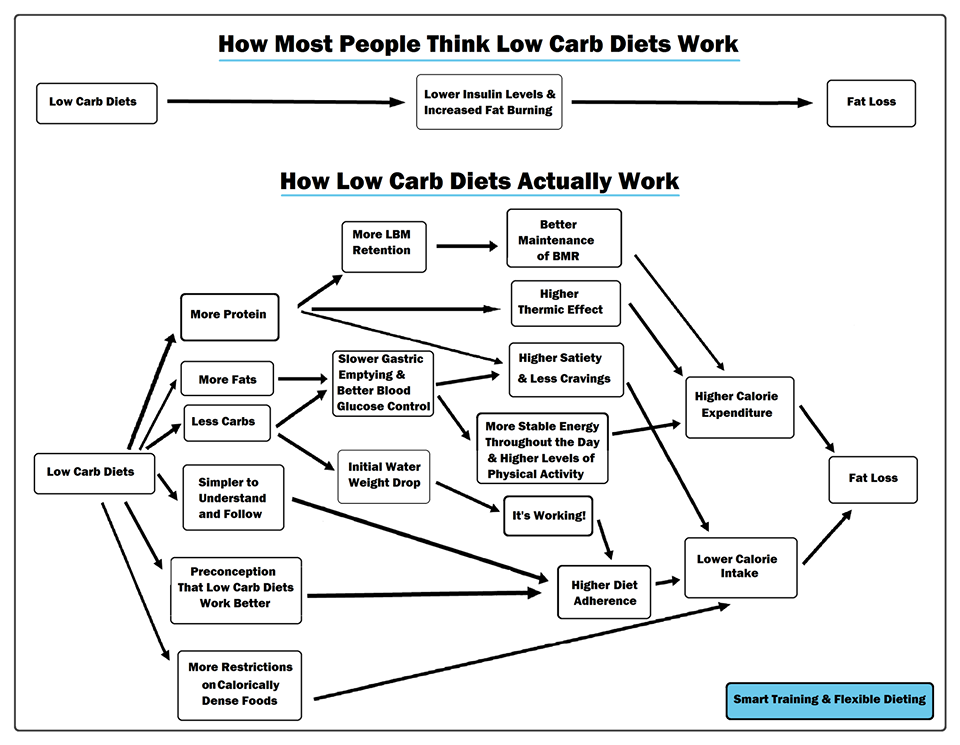
This is a good image to describe high low carb high fat diet works. For the critics, it shows that it does indeed work (also) because of pshycological effects and it doesn't go against the idea that less calories is important to weight loss. But it represents how LCHF diet achieves it better than any diet.

For the supporters, this list all the headlines of the science involved if you want to dig it further.

http://bjjcaveman.com/wp-content/uploads/2015/11/How-Low-Car...

Post reply on HN