Live data from Hacker News

If no-one helps you after a car crash in India, this is why

bbc.co.uk

121–130 of 225 posts

Re: If no-one helps you after a car crash in India, this is why

#121
post #74

Earlier quoted context omitted.

I'm not familiar with this phenomenon of being jailed for helping a crash victim. Can someone elaborate? (Is this as US litigation culture thing?)

Reading the article and not just the comments occasionally helps :-)

Heck even just reading the title should clue you in to the fact that we aren't discussing US litigation.

Some people...

Re: If no-one helps you after a car crash in India, this is why

#122
Kerala [https://en.wikipedia.org/wiki/Kerala] , a small southern state in India known for its high literacy rate in India [https://en.wikipedia.org/wiki/Education_in_Kerala] has a highly efficient emergency service on #108.[http://www.arogyakeralam.gov.in/index.php/special-initiaves/...]

I often hear news of this service being extremely efficient and the reports of bystanders not helping accident victims are rare from that state. This has to do something with the literacy rate as well as an efficient emergency service. Most of the cases of "no one helps you in India" cannot be generalized is my opinion.

Re: If no-one helps you after a car crash in India, this is why

#123
post #116

Earlier quoted context omitted.

I've always been curious where the downright crazy driving style/culture came from in India. It's like nowhere I've ever seen, they drive on whatever side of the road they want, there are no traffic lights, I mean I get that it's a developing country but none of this stuff is that expensive to procure, is it?

Coordinated control of traffic lights isn't cheap. Some quick googling says $250K to $500K per signal[1] when done from scratch. [1]: http://www.wsdot.wa.gov/Operations/Traffic/signals.htm

I stand corrected then. Still seems like it would be a worthwhile investment given their insane traffic death rates.

Re: If no-one helps you after a car crash in India, this is why

#124
post #101

Earlier quoted context omitted.

Caste system is not the same as Racism. However, it has nothing to do with accidents. When you see a person involved in an accident in India you won't be able to make out his/her caste by looking at them (unlike race where the racial features are apparent).

How does the caste system survive if you can't tell what caste someone is by looking at them? Is it on your ID card? Can you tell via their accent? Is there anything stopping someone from moving to a different city and pretending to be a different (better?) caste?

No you can't tell by looking at their ID card or their accent unless the surname of that person clearly indicates the caste.

> Is it on your ID card?

EDIT: The only place where you ever need to fill your caste is in your application for ID card or while applying for an University. However, your caste is not printed on the ID card though you are provided a certificate for it (that you need to provide in case you want to avail any government benefits). You can see an example of Voter ID card here: http://3.imimg.com/data3/RA/DI/MY-513699/pvc-electrol-photo-...

This is an example of Aadhar Card (similar to SSN in the US): http://1.bp.blogspot.com/-2yVnN-Mji48/VK6hZ6KAWAI/AAAAAAAAG-...

> Is there anything stopping someone from moving to a different city and pretending to be a different (better?) caste?

That won't work. The issue is that no one wants to "leave" their caste. There is no better or worse caste these days. It was the case centuries ago where the Brahmin caste was considered superior to the rest (when Kshtariya Kings ruled India). That is no longer the case. In the ancient times, education was only restricted to upper castes. These days we have quotas (almost 50%) in education/jobs sector for lower castes.

The only place where caste has a major impact is in marriages and politics. If you love a person from a different caste and your in-laws are against your caste you'll have a tough time dealing with that situation. Unless your in-laws are total whackos (see news reports on honor killings) you should be able to convince them. Those who can't convince elope and get married.

When it comes to politics casteism is rampant. If you belong to a particular caste and your caste does not have enough representation in that constituency you are standing from you are bound to lose (irrespective of whether you are a good candidate or not). Each caste votes as a group and only vote for their own candidate. The reason for that is all castes in India want a slice of the pie. Some castes want higher quota in education while others want quota in private sector etc.

If you hear stories about how bad the caste system is in India take it with a pinch of salt. Most of it is politicking. There are however a few real cases of caste based violence that mostly go unreported by the mainstream media as the people involved in that violence do not have political patronage.

If you hear someone saying that they want the caste system to be abolished what they really mean is the modern caste system (of which I gave examples of) rather than the traditional caste system (that which existed centuries ago and of which you find a lot of articles/writings on the interwebs).

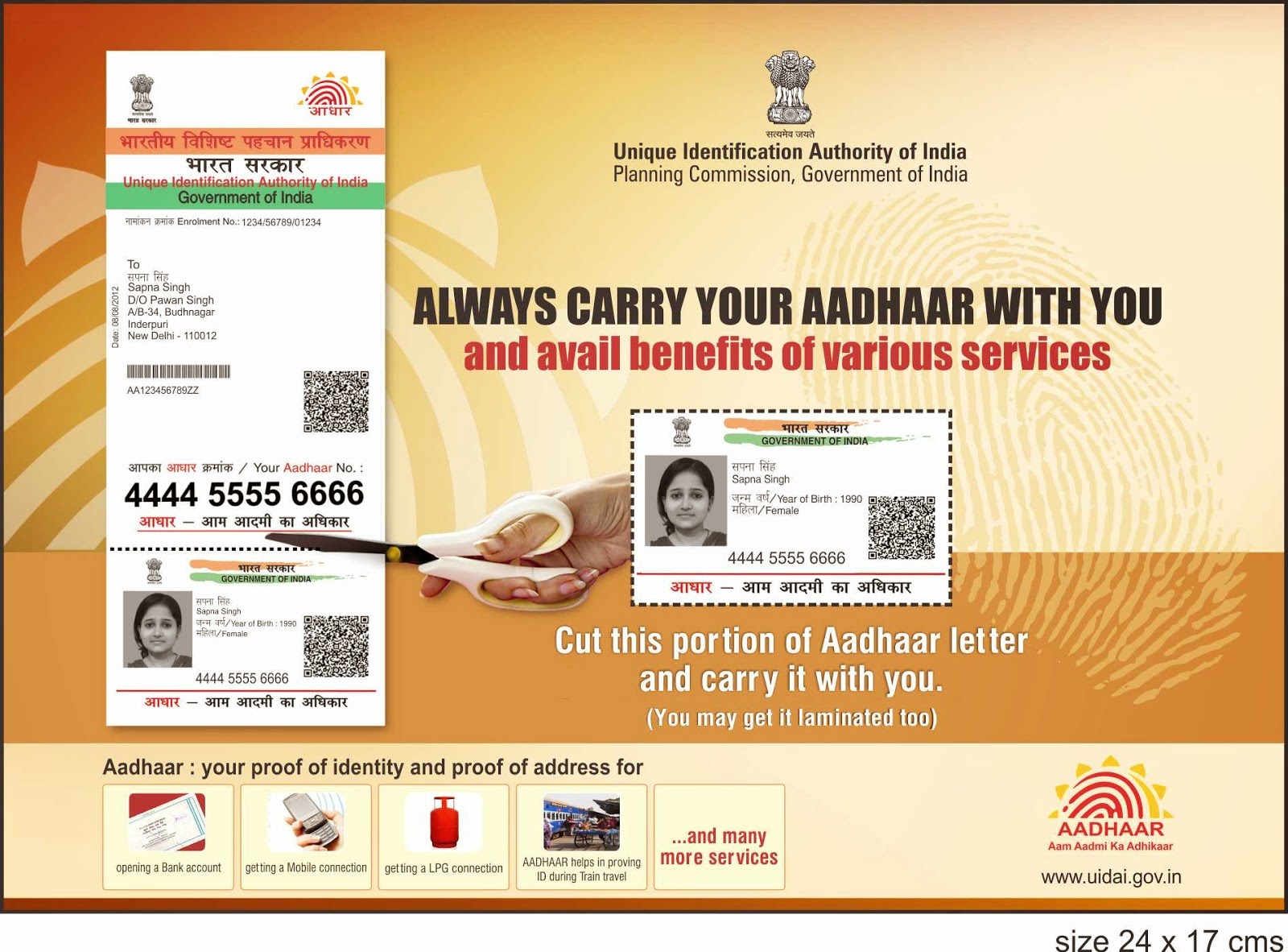
Re: If no-one helps you after a car crash in India, this is why

#125
post #87

I am from India and many people I know at least think that they will get into more trouble with police or hospital formalities if they help.Even many films made here portray same picture to the public. My mother once told me (when i was a kid) one person from her hometown who was a lorry driver ,once helped an accident victim and took him to hospital. But in the end they framed the same guy on murder attempt and he h…

I heard these kind of stories as well. But the driving school where i went specifically mentioned to help injured passengers. Maybe times are changing.

Re: If no-one helps you after a car crash in India, this is why

#126

Earlier quoted context omitted.

While I haven't been to Japan, a documentary [1] on expats living in Japan had a part (if my memory serves me) where the same sentiment was expressed, ie, "don't involve yourself". https://www.youtube.com/watch?v=prNYOW0_kms PS - Even if my memory is from another source regarding Japan, the documentary showed me a lot I didn't know.

I've only watched the first 20 minutes of the documentary, but I'm impressed. It's probably one of the most accurate portrayals of what it's like to be a foreigner living long term in Japan that I've seen. Like always, documentary directors usually like to be controversial, so I'm waiting for the other shoe to drop ;-) In terms of "don't involve yourself", I wouldn't say that's really true. The very few times I've se…

Thanks for your comment. The sentiment I recall is, for instance, related to a thief that's running away after having just stolen a purse and you have the ability to stop him. It was said in regards to big city living and making yourself part of the act in some manner, where you might get pulled into the police station to make a statement and spend hours on something you didn't want to be a part of. Again, I've never set foot in the country, so I can't say either way. Another smaller example might be someone is talking on their cell phone on the train, and thus a Japanese person wouldn't go up to the one yapping on the phone to tell them it's rude, per Japanese standards.

Re: If no-one helps you after a car crash in India, this is why

#129

Earlier quoted context omitted.

> I, personally, could not sit idly by and watch, or record, anyone suffering without attempting to assist. We should be careful with this kind of statements. I remember that in Thinking, Fast and Slow , Daniel Kahneman describes an experiment which shows that most people don't actually take action when the responsibility is shared among other people. Of course most people think they would.

It's called the Bystander Effect, and the most disturbing thing about it is that its strength is in proportion to the number of people present. https://en.wikipedia.org/wiki/Bystander_effect

My favourite description of dealing with this is from Cialdini's Influence, where he describes getting in a car accident, and worrying about the bystander effect as people drove past without stopping, and how he applied his knowledge about it to counter the effect.

The most important aspect is basically that your chances of getting help goes up dramatically if you address specific people and ask for specific action ("you in the red shirt, please call 911" rather than "help").

Once people understand that there is a problem, and nobody else has it in hand, and they've been asked, chances are they will help, and once one person has started helping, the odds that more people will help of their own accord goes up significantly as well.

Incidentally this translates to many aspects of life. If you ever want a group of people to take action, address specific people and get them to start. Once someone starts it becomes far harder for others to remain idle, and the first people are far more likely to start if you specifically task them with it.

Re: If no-one helps you after a car crash in India, this is why

#130
post #121

Earlier quoted context omitted.

Reading the article and not just the comments occasionally helps :-)

Heck even just reading the title should clue you in to the fact that we aren't discussing US litigation. Some people...

Sorry.
Post reply on HN