Earlier quoted context omitted.
Doctors are also among the highest-paid members of American society and, along with wealthy financial professionals, you will typically find them siding more with the Republican Party often out of concern for their tax bracket.
I modified my main post with some more evidence in support of my theory which I'm posting here so you can see it as a response. Professors in humanities that identify as Republican range from 6 to 11 percent. Social Sciences 7 and 9 percent 2% of English professors are Republican. Meanwhile 18% of social scientists are Marxists. This evidence leads me to believe that Academics self select to be liberal and that peopl…
Why Are the Highly Educated So Liberal?
121–130 of 229 posts
Re: Why Are the Highly Educated So Liberal?
#122Earlier quoted context omitted.
I find this comment to be borderline insulting, even when my political views are very liberal. Basically, what I read in your comment (maybe I'm misreading it) is that not having a liberal view means that the person does not understand the world, has an angry response, ignores the complexities of life and does not understand anything. So, instead of just trying to understand what do these people think, feel and fear…
"A degree just gives you knowledge in a specific area, and does not make anyone more intelligent just by having it." I've always felt the most beneficial part of higher education isn't the knowledge gained but the way you are taught to get it - Through research and critical thinking. That isn't to say that people who don't have a higher education aren't capable of these things, but as a proportion of the population I…
Re: Why Are the Highly Educated So Liberal?
#123Pithy answer: because you aren't going to be afraid of something when you understand that it's not something you need to fear. When you have a simple world view, nuance is always going to escape you. An educated person can understand that the world isn't simple, which will lead to a more liberal view, as liberal views tend to be based on the assumption that angry, narrow world view responses aren't a good thing. Some…
Perhaps the real answer is closer to "it's easy to be tolerant and broad-minded if you don't feel threatened". You're answer boils down to "because liberals are right and the others are wrong". But there isn't really such a thing as a wrong political opinion. People's political choices are based on their experience of the world. The whole premise of democracy is that if you take the mean of everybody's personal exper…
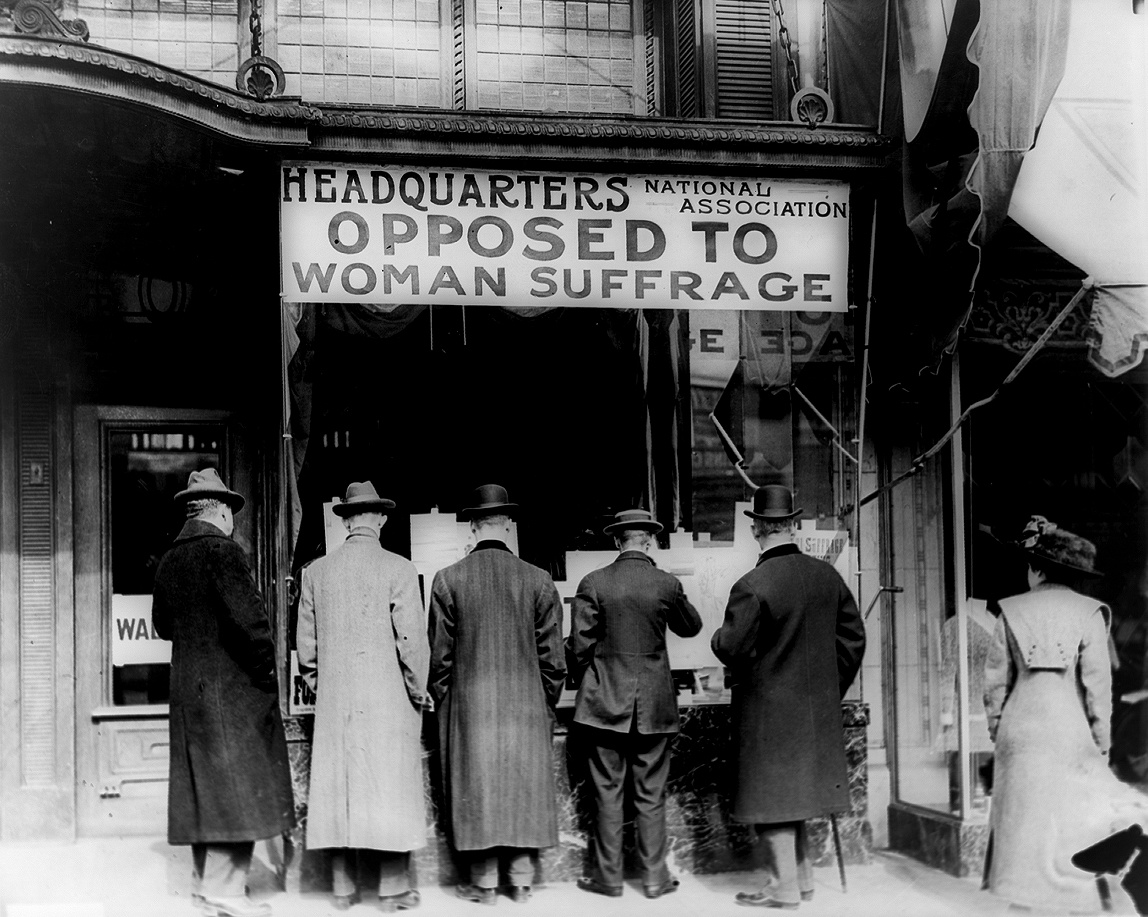
True, but there is such a thing as being on the wrong side of history.
https://i2.wp.com/upload.wikimedia.org/wikipedia/commons/thu...
https://upload.wikimedia.org/wikipedia/commons/9/9b/National...
Re: Why Are the Highly Educated So Liberal?
#124Pithy answer: because you aren't going to be afraid of something when you understand that it's not something you need to fear. When you have a simple world view, nuance is always going to escape you. An educated person can understand that the world isn't simple, which will lead to a more liberal view, as liberal views tend to be based on the assumption that angry, narrow world view responses aren't a good thing. Some…
They aren't, you just don't understand it. Anti-vax people are often very well educated. Their position is that you can't trust the pharmaceutical corporation and the government to put health of the citizens above their profit.
99%+ of the population is in no position to make their own judgement about climate change or effectiveness of medical procedures. What most people do is choose who to believe. You choose to believe the government and the researches, some people don't. From purely incentive based analysis maybe those people are rational after all as they are very clearly not aligned in the interest of general population (the whole thing relies on assuming there would be enough whistleblowers among researchers and that they are in general ethical - both very shaky assumptions).
>>It's worth noting that all these things are driven by fear of things people don't understand.
No, they just don't believes the same authority figures as you do.
>>Someone who understands how vaccinations work, why we do them, why they're made the way they are can't be afraid of them, and thus won't be against them.
This comment is equivalent of sticking your fingers in your ears and shouting rather than seeking to actually understand the position of others.
Thinking like yours is a problem because it skips over actual problems: misaligned incentives, lack of transparency, history of corruption and politically motivated government policies (for example with anti-fat pro grain diet policy).
Re: Why Are the Highly Educated So Liberal?
#125I worked with many wonderful academics, they are people that I still count among the smartest and kindest people that I have ever met. At the same time, they could be absolutely vicious towards conservative or religious ideals or individuals. There was regular conflict over the Catholic University's traditional masses and other gatherings. They would wrap themselves in a cloak of "Academic Freedom" as they denounced anything that they viewed as religious infringing on their positions.
It wasn't just religious issues that brought out the worst of them. I still remember how on the first anniversary of 9/11 a number of professors refused to participate in the memorial ceremony because the University's ROTC would be the color guard. They deemed their presence to be sending the wrong message and a validation of the war in Afghanistan.
All in all, it left a bad taste in my mouth and as time grew on it was no longer a place that I wished to be. If it wasn't for an online option at a different school, then I never would have pursued my masters degree.
Re: Why Are the Highly Educated So Liberal?
#126This has always confused me. There are some rich texts based on beautiful rigor on the side of the conservatives like freidman and Hayek. Goldwater also approaches things in a very principled manner. Arthur brooks' latest book is similar. On the other than, I have not come across any liberal text, yet, that makes a good convincing case for liberalism. I would love to get some recommendations. I'm interested in princi…
After reading Rawls, I'd suggest maybe reading Robert Nozick's libertarian leaning Anarchy, State, and Utopia. Nozick was another distinguished philosopher from Harvard writing about the same time as Rawls. Nozick comes to a completely different conclusion than Rawls.
Both books are good and completely accessible to an ordinary reader (i.e. philosophy degree not required). However, they are serious and not as entertaining as the Friedmans' Free to Choose. While the two philosophy books address the question of what should a fair society look like from a philosophical perspective, I feel they don't address the aspects of human nature that have proven troublesome in socialist economies as well as Free to Choose.
Finally another classic, The Fatal Conceit by F. A. Hayek considers the practicality of socialism from an economic position in a more focused way. Like the previously mentioned books, it is an easy read.
These books may not reflect cutting edge thought, having been written in the 70's and 80's, but they were a useful starting point for me when I started to think about these issues more deeply and they are considered seminal works that in my opinion shouldn't be skipped while studying the questions of political and economic theory.
A Conflict of Visions by Thomas Sowell further reflects on this question and makes some conclusions about why smart people end up disagreeing in such fundamental ways. I find Sowell's thinking and writing to be clear and well expressed.
Finally, an interesting book addresses the puzzling and related question of why does the academic community so easily accommodate views so antithetical to a scientific world view. I believe that this at the heart of the questions raised by the original NYT piece. The book is Higher Superstition by Gross and Levitt. While interesting this book is erudite and seems directed to narrower audience than those mentioned above, expecting a well-read reader.
[1] Rawls, A theory of justice. http://www.amazon.com/Theory-Justice-John-Rawls/dp/067400078...
[2] Nozick, Anarchy, state and utopia. http://www.amazon.com/Anarchy-State-Utopia-Robert-Nozick/dp/...
[3] Milton and Rose Friedman, Free to choose: a personal statement. http://www.amazon.com/Free-Choose-Statement-Milton-Friedman/...
[4] Hayek and Bartley, The fatal conceit: the errors of socialism. http://www.amazon.com/s/ref=nb_sb_ss_i_1_9?url=search-alias%...
[5] Gross and Levitt, Higher superstition: the academic left and its quarrels with science. http://www.amazon.com/s/ref=nb_sb_noss?url=search-alias%3Dst...
Re: Why Are the Highly Educated So Liberal?
#127And I guess the converse question which has vexed socialists for decades - why do so many of the poor vote for centre-right, business-friendly parties? For example, why did so many working class people vote for Thatcher in UK in the 1980s? Why are they not massively in favour of Jeremy Corbyn right now? I'm not saying it's irrational. But sometimes it's odd to hear people who need the government to subsidise their mi…
Perhaps also because some people value social attitudes more than economic ones. Perhaps some people say, dislike immigration more than they dislike economic inequality. Maybe people would vote for parties with 'liberal' economic views and 'conservative' social ones, or 'conservative' economic views and 'liberal' social ones.
Re: Why Are the Highly Educated So Liberal?
#128Earlier quoted context omitted.
Generally, when people say "liberal" in Europe they mean "economically liberal", while people mean "socially liberal" in the US.
I've always used 'liberal' in the socially liberal sense (I'm from the UK). Here we tend to use 'neo-liberal' to describe the laissez-faire attitude towards economics.
I do find it peculiar, though, that "neo-liberalism" is of a different form than "liberalism", and hence not really "new liberalism":P
Re: Why Are the Highly Educated So Liberal?
#129Earlier quoted context omitted.
Or at least he'll say that. Given a choice between someone who promises to fight for the thing you care about, but might be lying, and someone who promises to not fight for the thing you care about, the choice seems easy.
I have a really cheap bridge to sell you, it's powered by a perputual motion device. You can raise the money to buy it by helping me extract the fortune of my Uncle, a former military commander in Nigeria, just reply with the details of your bank account. If you reply within seven days you get exclusive access to my fat burning natural rose petal extract pills! Don't listen to those people who claim it isn't this eas…
Re: Why Are the Highly Educated So Liberal?
#130I'm an upper-middle class, over-educated professional expert, and I'm strongly liberal for selfish reasons: mostly, I want to live in a climate of social peace, and would prefer to be surrounded by people who foster a mood of solidarity and benevolence, rather than a cut-throat and ever-worsening competitive mindset. So sure, one way is to protect myself and those I love behind a gated community. But that's pretty mu…
"I'm an upper-middle class, over-educated professional expert, and I'm strongly liberal for selfish reasons: mostly, I want to live in a climate of social peace, and would prefer to be surrounded by people who foster a mood of solidarity and benevolence, rather than a cut-throat and ever-worsening competitive mindset." That's mostly my rationale for being in favor of (moderate) wealth redistribution, which on surface…