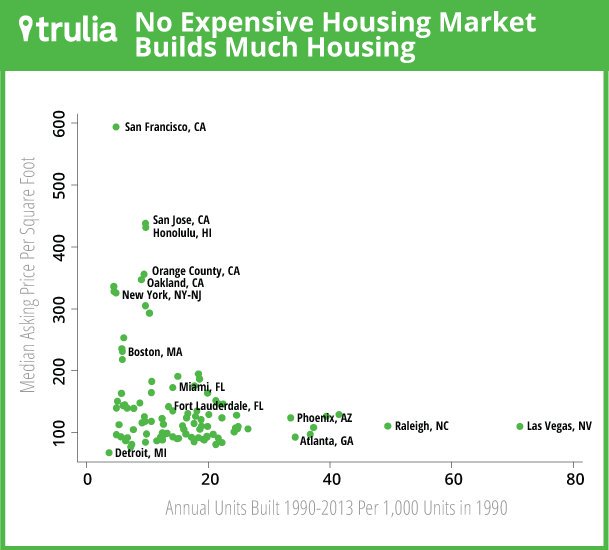
I'm skeptical that the bribes will be big enough to affect most land owners in San Francisco, but I don't have any numbers handy about the average income of the NIMBY's in that city. Just an intuition that they stand to lose far more in property value than it is practical to pay them. Side note - Does anyone know of a place to get that kind of information? Maybe it can be triangulated from census data + some other so…
Clever reforms can reduce the power of NIMBYs and cut housing costs
21–30 of 55 posts
Re: Clever reforms can reduce the power of NIMBYs and cut housing costs
#22The chief problem with the idea of NIMBY is that it is not really the concerned party's back yard. A more accurate term for the concept might be NIMNBY (Not In My Neighbors' Back Yard). NIMBY is an affront to the concept of property rights. But, some say, the concerned party has the legitimate concern that development on a neighboring property will negatively impact the value of their own property. While an understan…
If the person next door wants to run a private, non-commercial meat processing plant (abattoir) then I think it's fair to object. If they wanted to setup a rifle range that ran throughout the day and night, this would also be a valid objection.
Or more likely, if they were hoarders who cause a health hazard to neighbouring properties, then they eventually don't have the right to unfettered freedom at the expense of everyone else in the community.
Case in point: in Bondi, Sydney there was a case where a family of hoarders caused such problems that there was a massive health risk to the entire suburb. They were forced to allow the council to cleanup their home.[1] That is fair enough.
In any society, individual rights are important. However, there is a limit, even to holding property. There must be some controls over what you can do on your private property to ensure that the greater community is not adversely affected.
1. http://www.dailytelegraph.com.au/newslocal/city-east/bobolas...
Re: Clever reforms can reduce the power of NIMBYs and cut housing costs
#23Talk about your clickbait headlines.
That's...the title of the Economist article. Well, the subtitle, but the real title is "Terms of enlargement", which is not really self-explanatory, is it?
I honestly think that there should be a reporting mechanism for folks to complain about submarine articles, or click-bait headlines. So often I find that they aren't the case and it adds zero to any actual discourse around the subject matter itself.
I think if you have an issue with clickbait headlines you really should email the site admins/moderators. They are pretty good about getting back to you, mostly.
Re: Clever reforms can reduce the power of NIMBYs and cut housing costs
#24Earlier quoted context omitted.
I completely agree that development creates negative externalities which are legitimate complaints for neighbors. However, restrictions on development create a regressive tax in the form of high rents, which is, as the article describes, distributed broadly. What's needed is some sort of cost-benefit balance between the two. For example, I rent a 400 sq foot apartment in SF for $3k. The operating and capital cost of…
Do you happen to have another example of an city with a similar weather and employment profile that is significantly cheaper? Regardless of development? Is there unanimous agreement that high rents(which are occurring throughout the US and abroad right now) are solely due to lack of development?
https://pbs.twimg.com/media/CgXjY3cWIAAVfCM.jpg:large
Unfortunately we can't run experiments on this question. Every city is unique, and people tend to think very special.
Re: Clever reforms can reduce the power of NIMBYs and cut housing costs
#25Earlier quoted context omitted.
That's...the title of the Economist article. Well, the subtitle, but the real title is "Terms of enlargement", which is not really self-explanatory, is it?
It's not even clickbait. It's not sensationalist in any way really. It actually captures in a one sentence summary exactly what the article is about. I honestly think that there should be a reporting mechanism for folks to complain about submarine articles, or click-bait headlines. So often I find that they aren't the case and it adds zero to any actual discourse around the subject matter itself. I think if you have…
Re: Clever reforms can reduce the power of NIMBYs and cut housing costs
#26Earlier quoted context omitted.
It's not even clickbait. It's not sensationalist in any way really. It actually captures in a one sentence summary exactly what the article is about. I honestly think that there should be a reporting mechanism for folks to complain about submarine articles, or click-bait headlines. So often I find that they aren't the case and it adds zero to any actual discourse around the subject matter itself. I think if you have…
"Click-bait" is another one of those terms that gets thrown around too far regularly these days. MOST headlines are "click-bait" both online and in print. Headlines are supposed to grab your interest whether because of the topic itself, through clever wordplay (as the Economist tends to do), or through perhaps less scrupulous means. If a headline is deceptive or otherwise is misleading people (subject to the limitati…
Just using the words "click-bait" is even worse than a click-bait headline. In fact, it just becomes forum-spam.
Re: Clever reforms can reduce the power of NIMBYs and cut housing costs
#27The article seems to have it arse backwards. Yes, a lot of times this is a situation of "Distributed Costs and Concentrated Benefits", but with the benefits going to the property developer, and the costs to the impacted community. NIMBY is the catchy phrase constructed by marketing to discredit serious concerns people have when they are on the receiving end of someone's 'unacounted externality'. Technology has made i…
Re: Clever reforms can reduce the power of NIMBYs and cut housing costs
#28The article seems to have it arse backwards. Yes, a lot of times this is a situation of "Distributed Costs and Concentrated Benefits", but with the benefits going to the property developer, and the costs to the impacted community. NIMBY is the catchy phrase constructed by marketing to discredit serious concerns people have when they are on the receiving end of someone's 'unacounted externality'. Technology has made i…
I completely agree that development creates negative externalities which are legitimate complaints for neighbors. However, restrictions on development create a regressive tax in the form of high rents, which is, as the article describes, distributed broadly. What's needed is some sort of cost-benefit balance between the two. For example, I rent a 400 sq foot apartment in SF for $3k. The operating and capital cost of…
Is that where life becomes so unpleasant for the people who live there that the rents crash? I think you run into a traditional work migration problem here, because the young people who are moving to SF from suburbs and small towns across the nation generally have no intention of staying in SF and raising a family, so will be tolerant of far worse conditions than people who intend to actually make a life there.
Re: Clever reforms can reduce the power of NIMBYs and cut housing costs
#29Landowners get windfall gains from surrounding development and government services. We should have a high land value tax, to tax these unearned gains, which would ensure that only people able to make productive use of prime land will hold onto it.
For instance, a subway stop will boost the surrounding land value of every property by hundreds of thousands of dollars, yet everyone else is footing the bill for it. And worse, if the taxes are low enough, landowners can, in effect, hold that prime land for ransom, and do nothing with it. https://vimeo.com/32548658