Live data from Hacker News

Dominions of fizz: the carbonated-drinks industry and public health [pdf]

nature.com

171–180 of 218 posts

Re: Dominions of fizz: the carbonated-drinks industry and public health [pdf]

#171
post #101
post #93

Earlier quoted context omitted.

At home I have a 1:1 ratio. I've got my own well and my own pump, so every liter of water I get out of the well flows out through my tap. I guess you could argue that the electricity needed to work the pump may be produced by means that waste water.

The mine that dug the iron that made your pipes contaminated a lot of water. In the vegan world its standard to count every drop of rain that hit the livestock pasture as being used, therefore its fair to count the rain that ran off the factory roof where the pump was manufactured as used. Wells don't dig themselves and although that doesn't happen often, it does take a lot of water to do it, and make the gear to do…

"In the vegan world its standard to count every drop of rain that hit the livestock pasture as being used"

Do you have any sources for this? I have never heard a vegan claim this once.
Re: Dominions of fizz: the carbonated-drinks industry and public health [pdf]

#172

Earlier quoted context omitted.

What if I heated the earths atmosphere and then boiled all the earths water. What would you drink then? I'd drink soda.

This is especially funny as outside of US, this means baking soda (Sodium bicarbonate). In powder form.

I'm from outside the US, it was just a joke :S

Re: Dominions of fizz: the carbonated-drinks industry and public health [pdf]

#173

Earlier quoted context omitted.

Yeah, I was amazed both when I saw how much water got wasted in home RO and how much wasn't wasted in industrial RO!

There are a few more parts you can buy for the home install to make it more efficient. I can see the manufacturers leaving it out due to install space and cost. My system is relatively new, but this thread has my thinking of ways I can better use that 4 gallons of waste.

That's handy to know. I was investigating whether I could make my hydroponics system recycle the water but the waste ratio made it unattractive - it was only for science.

Re: Dominions of fizz: the carbonated-drinks industry and public health [pdf]

#174

Earlier quoted context omitted.

Even given the cost overruns, insurance, nuclear pools, etc it is quite cheap. The only problem with nuclear power is that it is highly centralized and requires significant upfront capital expenditures. And political consequences of radiophobia are so high that investing in nuclear power is limited. I think that solar and nuclear are the only sustainable power generation methods these days. The rest are either bad fo…

Radiophobe here. I can't accept the morality of handing stewardship of spent nuclear fuel to my children and their children for a thousand generations. Would you still want to be caring for a monster left to us by the people who wrote on cave walls? As far as a DGR, I'll believe it when a nation other than Finland has shovels in the ground to actually build one.

"Caring for" meaning simply not entering the tomb labeled "This is not a place of honor"?

Re: Dominions of fizz: the carbonated-drinks industry and public health [pdf]

#176

Earlier quoted context omitted.

Water vapor is lost to the vacuum of space, though it's obviously not enough to make a perceptible difference, at least on a human scale.

...and replenished from space through slushball comets!

(Almost?) All water on Earth came from a comet, pretty amazing when you think about it.

Re: Dominions of fizz: the carbonated-drinks industry and public health [pdf]

#177

Earlier quoted context omitted.

Nuclear fuel waste is much less dangerouns than many other substances created in industrial chemical processes, and occur in much smaller amounts. Managing that is a non-problem compared to other hazardous waste. That people are afraid of radioactive waste and aren't of what their friendly neighbourhood chemical plant produces is pure FUD.

Not exactly, unfortunately. (I am as pro-nuclear as one could be). However, all chemical waste can be neutralized and reprocessed (though this might be expensive to do so). Some nuclear waste can't be reprocessed and has to be stored safely for hundreds of years. This scares some people. However, it's not _that_ dangerous. Even if containment is breached, it generally stays in the same place and can be collected and…

> Even if containment is breached, it generally stays in the same place and can be collected and put back (happened a lot of times).

Asse II springs to my mind: https://en.wikipedia.org/wiki/Asse_II_mine An old salt mine used to store low/medium radioactive waste that's under threat of collapse due to ground water. There are plans for the retrieval, but success is far from guaranteed.

Re: Dominions of fizz: the carbonated-drinks industry and public health [pdf]

#178

Earlier quoted context omitted.

"People" isn't one person. Maybe most people choose sweeter yogurt, but that doesn't mean there isn't a substantial minority of people who would prefer less sweet yogurt. Who knows if these tests even accurately measure what people would actually buy? I remember that Coca-Cola did such tests too once...

The guy I spoke with was unequivocal: they don't think they can sell enough to make it worth any shelf space at all. Their brand in my market gets allocated enough space for about five flavors. They know exactly what sells how much and where, and they know it to some extent for their competitors too (none of whom produce reduced-sugar, but most of whom do produce reduced-fat). Now, if your argument is that these full…

it's a vicious circle

this is where there's a role for regulation to break the loop

Re: Dominions of fizz: the carbonated-drinks industry and public health [pdf]

#179

Earlier quoted context omitted.

Adding some corn facts, as it's how most American soda is sweetened. 90% of the land area used for growing corn is not irrigated (100% green water) and in this case it's no trade off. It's not irrigated because there is adequate rainfall.

Right! Here in Iowa we water the corn the way God intended, by waiting for it to fall from the sky for free. I can always tell when flying to CA when I get into Nebraska, those huge 'crop circles' formed by irrigation start to show up.

Even in droughts?

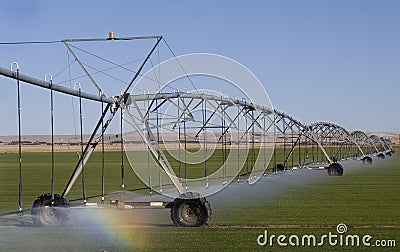
In Indiana most corn fields have some movable watering things (like http://thumbs.dreamstime.com/x/field-irrigation-system-34543...). They don't get used much, but in a few week dry spell they might get used for a day to keep the corn alive.

Re: Dominions of fizz: the carbonated-drinks industry and public health [pdf]

#180

Earlier quoted context omitted.

Right! Here in Iowa we water the corn the way God intended, by waiting for it to fall from the sky for free. I can always tell when flying to CA when I get into Nebraska, those huge 'crop circles' formed by irrigation start to show up.

Even in droughts? In Indiana most corn fields have some movable watering things (like http://thumbs.dreamstime.com/x/field-irrigation-system-34543... ). They don't get used much, but in a few week dry spell they might get used for a day to keep the corn alive.

Nobody has nothing. Rain or not, the corn is on its own.
Post reply on HN