Live data from Hacker News

Uber for Welfare

politico.com

11–20 of 88 posts

Re: Uber for Welfare

#11

This is ridiculous. The stereotype of welfare recipients as lazy, unemployed people is completely inaccurate. I'm a former Welfare Clerk, and the vast majority of welfare recipients I dealt with---in a district that covered West Philadelphia---were employed. The work varied: childcare, retail, and hair salon work were the most common, but there were also school staff, church secretaries, and construction workers who…

This is also consistent with those on food stamps. The last statistics I read that the majority were employed, disabled, or students.

Re: Uber for Welfare

#12

This is ridiculous. The stereotype of welfare recipients as lazy, unemployed people is completely inaccurate. I'm a former Welfare Clerk, and the vast majority of welfare recipients I dealt with---in a district that covered West Philadelphia---were employed. The work varied: childcare, retail, and hair salon work were the most common, but there were also school staff, church secretaries, and construction workers who…

A quick google search suggests a significant portions of welfare dollars flow to non-workers: http://blogs.wsj.com/economics/2015/04/13/get-a-job-most-wel...

36% of families receiving TANF (which is what this article discusses) work.

Why not spend 30 seconds googling to determine if your anecdotes reflect reality?

Re: Uber for Welfare

#13

This is ridiculous. The stereotype of welfare recipients as lazy, unemployed people is completely inaccurate. I'm a former Welfare Clerk, and the vast majority of welfare recipients I dealt with---in a district that covered West Philadelphia---were employed. The work varied: childcare, retail, and hair salon work were the most common, but there were also school staff, church secretaries, and construction workers who…

A quick google search suggests a significant portions of welfare dollars flow to non-workers: http://blogs.wsj.com/economics/2015/04/13/get-a-job-most-wel... 36% of families receiving TANF (which is what this article discusses) work. Why not spend 30 seconds googling to determine if your anecdotes reflect reality?

Typically, TANF benefits went to the elderly, disabled, or to new mothers. Do you really want to force them to work the gig economy?

Also, don't forget that the "T" in TANF means _temporary_.

Re: Uber for Welfare

#14

Earlier quoted context omitted.

A quick google search suggests a significant portions of welfare dollars flow to non-workers: http://blogs.wsj.com/economics/2015/04/13/get-a-job-most-wel... 36% of families receiving TANF (which is what this article discusses) work. Why not spend 30 seconds googling to determine if your anecdotes reflect reality?

Typically, TANF benefits went to the elderly, disabled, or to new mothers. Do you really want to force them to work the gig economy? Also, don't forget that the "T" in TANF means _temporary_.

If only the authors of the article thought of that. Then they might have written this:

Work requirements, however, should not unfairly punish people who are physically or mentally unable to complete gig economy jobs. The gig economy can often provide flexible work for those previously considered unable to work, but exemptions would still be available as needed.

Why not read the article to see what it actually advocates rather than criticizing some unrelated idea no one advocated for?

Re: Uber for Welfare

#15

This is ridiculous. The stereotype of welfare recipients as lazy, unemployed people is completely inaccurate. I'm a former Welfare Clerk, and the vast majority of welfare recipients I dealt with---in a district that covered West Philadelphia---were employed. The work varied: childcare, retail, and hair salon work were the most common, but there were also school staff, church secretaries, and construction workers who…

A quick google search suggests a significant portions of welfare dollars flow to non-workers: http://blogs.wsj.com/economics/2015/04/13/get-a-job-most-wel... 36% of families receiving TANF (which is what this article discusses) work. Why not spend 30 seconds googling to determine if your anecdotes reflect reality?

That sounds like 64% (a majority) didn't?

Re: Uber for Welfare

#16

Earlier quoted context omitted.

This is an extreme misrepresentation of the article. Anyone who doesn't want to work is free to stop telling the welfare office they want work but can't find it. No one is forced to do anything.

I vehemently dislike when people say "no one is forced to do anything" in situations where, say, you will lose your food stamps if you do not do something. That is a force, the force of starvation.

People who give up food stamps will be prevented from going out and seeking work on their own, and buying food with the proceeds?

I totally missed that part of the article.

Re: Uber for Welfare

#17
This is the worst idea not proposed in jest that I have ever read. Uber and the "gig economy" are the death throes of an economy that is suffocating itself with rotten ideas about globalism ("We can all be rich if we stop making things and have other people do it for us!") hatched by corporate economists... Suggesting that we should all do each others' laundry more is just a brutal exacerbation of the underlying problem no one wants to confront. We need farms, factories and things so that the work of everyone can participate in creating actual value and system can create more value for the people working again.

Re: Uber for Welfare

#18

How about hell no? I'm curious who this author is, a lobbyist for Uber? How about a Guaranteed Minimum Income for every American, which will do far more to address poverty as well as raise wages (if you're already receiving money, you'll be able to demand a higher wage for working a job). Screw welfare, and its tenuous political existence. Support everyone and the government doesn't need to invent more regulations an…

"I'm curious who this author is, a lobbyist for Uber?"

Actually, yes, pretty much.

"Derek Khanna (@DerekKhanna) is a former congressional staffer and IP litigation lawyer in Silicon Valley who spearheaded a campaign that enacted the last technology bill into law (P.L. 113-144), and Cesar Conda (@CesarConda) is a former Senate chief of staff and White House policy adviser, founding principal and policy adviser of Navigators Global."

Re: Uber for Welfare

#19
Absolutely horrifying point of view.

I get it, we don't like leeches. But forcing people to work or else not get benefits meant for the poorest (i.e. let them starve or go homeless)? Wow. It's work camps without fences.

Driving around and/or delivering things to people that are better off then they are? How is that helping people build their own human capital? The only people that helps are the people consuming those services at exploitative wages. Why exploitative? Because if this option wasn't exploitative and it actually helped them beyond making sure they don't die, they'd have chosen it for themselves.

Yes. Train bureaucrats that administer this programs and deal with those seeking welfare about these gig economy options. Make sure that those who want to engage know about them and have the ability to engage, but let's not force them 'or else'.

Imagine losing your job, having to get on welfare to feed your family, and being told (probably through an impersonal text) "15 min foot massage at 111 Anywhere street. $5. $20 an hour equivalent. Appt. in 45 min. Confirm or lose benefits."

We're better than that.
Re: Uber for Welfare

#20

This is the worst idea not proposed in jest that I have ever read. Uber and the "gig economy" are the death throes of an economy that is suffocating itself with rotten ideas about globalism ("We can all be rich if we stop making things and have other people do it for us!") hatched by corporate economists... Suggesting that we should all do each others' laundry more is just a brutal exacerbation of the underlying prob…

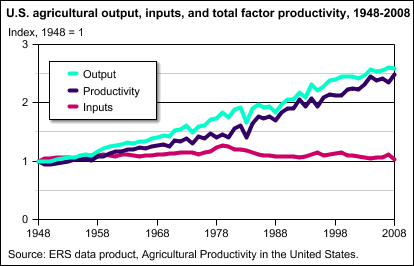
We never stopped making things. We have farms and factories and they produce more than ever before.

https://research.stlouisfed.org/fred2/series/INDPRO https://research.stlouisfed.org/fred2/series/IPMAN http://www.klamathbasincrisis.org/agriculture/2012/productiv...

No one is suggesting we all do each other's laundry. Instead, the article is suggesting that people currently producing nothing will do laundry for people who actually are producing things.

Post reply on HN