The First Fully General Computer Action Model
1–10 of 85 posts
Re: The First Fully General Computer Action Model
#2Curious about the masked diffusion IDM choice. They mention CTC loss and cross-entropy both underperformed — I'd love to see ablations on that. The claim that typos were "extremely common" with non-causal cross-entropy is interesting but hand-wavy without numbers.
Re: The First Fully General Computer Action Model
#3The car thing is very impressive
By the way, do you have plans to handle the computer’s audio output?
Re: The First Fully General Computer Action Model
#4How do you tokenize the mouse inputs?
Re: The First Fully General Computer Action Model
#5Hey guys! I’m Neel, been holed up in our south park office for the past year working on model training. excited to share our research!
This is a preview of a very different type of computer use model—we train on the internet. Specifically we have 11 million hours of computer video stored on our storage cluster (previously shared https://news.ycombinator.com/item?id=45438496 !) and the model can work in 30 FPS. Since we match the fundamental form factor of computer-use, we can get our model to do CAD, browse websites, and even drive a car using arrow keys. I’m super excited to see what our model can do as we scale more, it's a fun frontier to work on (not language models :) ).
The team and I will be online responding to the comments, so drop any questions.
Re: The First Fully General Computer Action Model
#6The car thing is very impressive By the way, do you have plans to handle the computer’s audio output?
yeah we've done audio work in the past so we'll def merge the recipes at some point, long term should have full io that a human has (except maybe not generating video for video calls that seems a bit much)
Re: The First Fully General Computer Action Model
#7I rly liked the point about ctrl-c only being able to be labelled retrocausally. I do think that with enough past context you should be able to know what was copied - in some sense the past does encode the future - but also an agentic decision is precisely the kind where the future is more informative than the past for reconstructing that decision.
It does make me wonder if you should have the inverse dynamics model split into specifically retrocausal and causal. You kind of do this already with the inverse and forward dynamics model, but the idea of a model that knows only about the future training in a feedback loop with a model that knows only about the past is kind of interesting.
I think you could just do a clever masking regime in your diffusion model to achieve the same effect without a whole architecture change.
Re: The First Fully General Computer Action Model
#8How do you tokenize the mouse inputs?
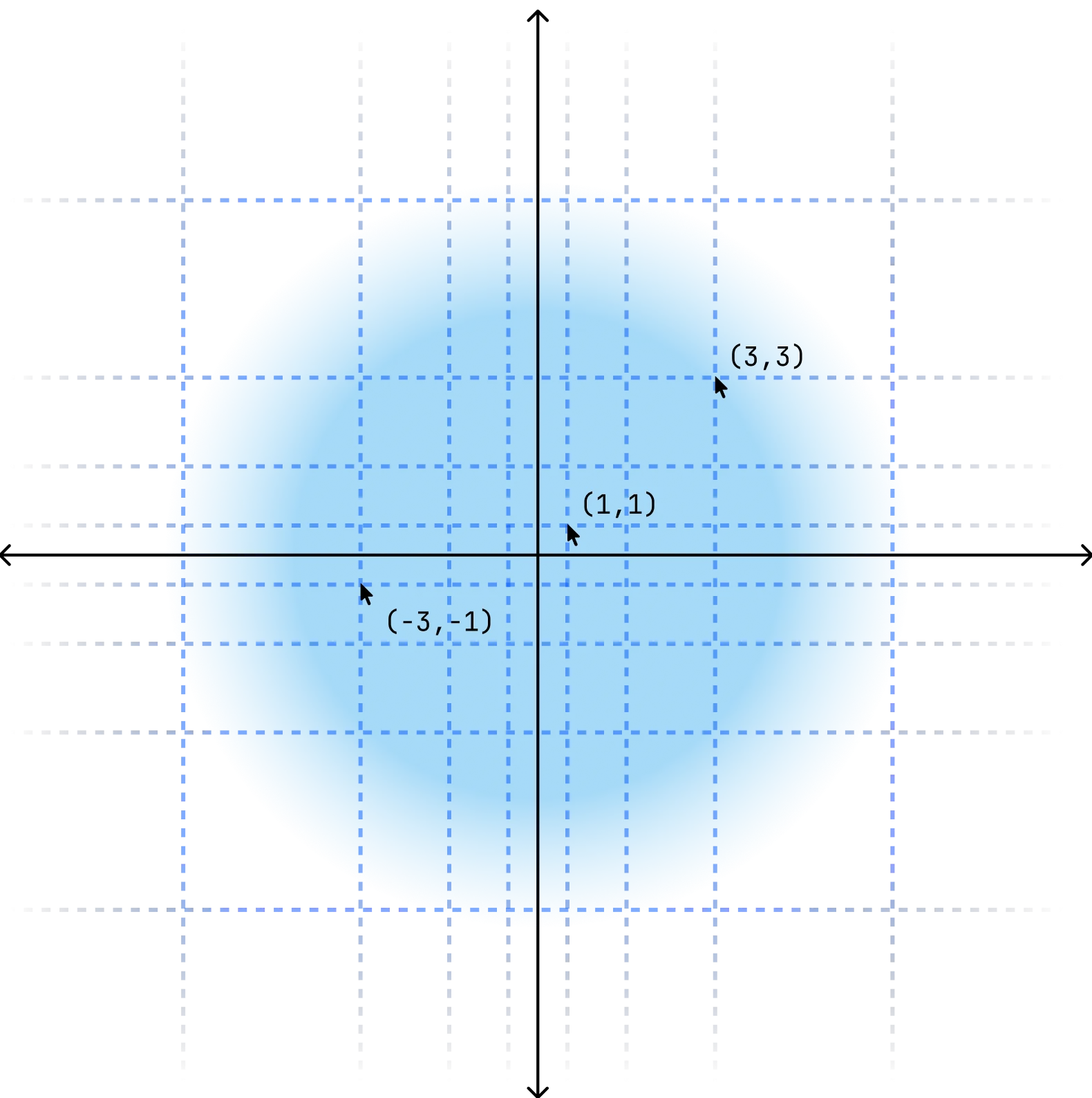
good question! we use exponential binning (map the mouse movements onto a plane with exponentially increasing tick marks https://si.inc/fdm1/exponential_binning.webp) but tried a bunch of other methods (linear creates too many tokens for the model to learn well). Polar coordinates seem like a better solution but empirically didn't work well because the tokens got too coarse too fast.
Re: The First Fully General Computer Action Model
#9How do you tokenize the mouse inputs?
we do exponential binning but fwiw I think we can do way better just hasn't been the main research area initially
Re: The First Fully General Computer Action Model
#10Curious about the masked diffusion IDM choice. They mention CTC loss and cross-entropy both underperformed — I'd love to see ablations on that. The claim that typos were "extremely common" with non-causal cross-entropy is interesting but hand-wavy without numbers.
the main chain of experiments was trying causal => non-causal => non-causal with ctc and CE. i think a good intuition here is that you need a generative approach fundamentally because there definitely are multiple correct IDM labels.