I'm in CS and I submit both to conferences and journals (the former because it's what people actually read, the latter because of evaluation requirements in my country). And I can tell you that (IMO of course) the conference model is immensely better, and idealization of journals in the CS community is a clear case of "grass is always greener".
Revise and resubmit is evil. It gives the reviewers a lot of power over papers that ends up being used for coertion, sometimes subtle, sometimes quite overt. In most papers I have submitted to journals (and I'm talking prestigious journals, not MDPI or the likes), I have been pressured to cite specific papers that didn't make sense to cite, very likely from the reviewers themselves. And one ends up doing it, because not doing it can result in rejection and losing many months (the journal process is also slower), maybe the paper even becoming obsolete along the way. Of course, the "revise and resubmit" process can also be used to pressure authors into changing papers in subtler ways (to not question a given theory, etc.)
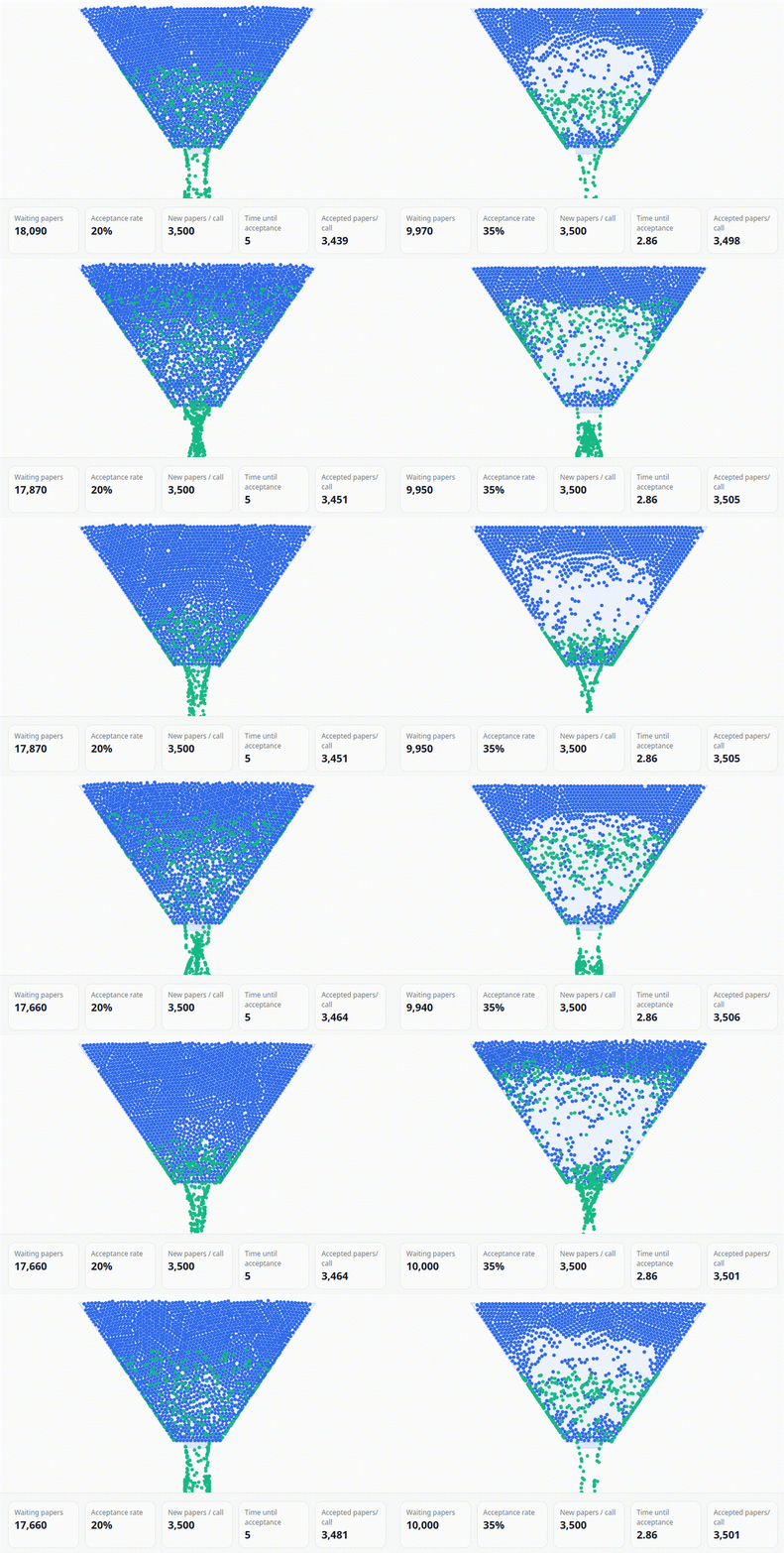
The slowness of the process also means that if you're unlucky with the reviewers, you lose much more time. There is a fact that we should all accept: the reviewing process always carries a huge random factor due to subjectivity. And being able to "reroll" reviewers is actually a good thing. It means that a paper that a good proportion of the community values highly will eventually get in, as opposed to being doomed because the initial very small sample (n=3) is from a rejecting minority.
Finally, in my experience reviewing quality is the other way around... there is a small minority of journals with good review quality but the majority (including prestigious ones) it's a crapshoot, not to mention when the editor desk rejects for highly subjective reasons. In the conferences I typically submit to (*ACL) the review quality is more consistent than in journals, and the process is more serious with rejects always being motivated.