NASA's Voyager Team Focuses on Software Patch, Thrusters
1–10 of 53 posts
Re: NASA's Voyager Team Focuses on Software Patch, Thrusters
#2Now this is hackernews. Imagining working on spacecraft where no human made thing has gone before.
Also is this correct?
>NASA extended the mission so that Voyager 2 could visit Uranus and Neptune; it is still the only spacecraft ever to have encountered the >ice giantsAren’t they gas giants? I mean they are probably very cold, but usually they are called gas giants.
Re: NASA's Voyager Team Focuses on Software Patch, Thrusters
#3Now this is hackernews. Imagining working on spacecraft where no human made thing has gone before. Also is this correct? >NASA extended the mission so that Voyager 2 could visit Uranus and Neptune; it is still the only spacecraft ever to have encountered the >ice giants Aren’t they gas giants? I mean they are probably very cold, but usually they are called gas giants.
> Aren’t they gas giants? I mean they are probably very cold, but usually they are called gas giants.
"Ice giant" seems to be the more modern terminology:
An ice giant is a giant planet composed mainly of elements heavier than hydrogen and helium, such as oxygen, carbon, nitrogen, and sulfur. There are two ice giants in the Solar System: Uranus and Neptune.
In astrophysics and planetary science the term "ice" refers to volatile chemical compounds with freezing points above about 100 K, such as water, ammonia, or methane, with freezing points of 273 K (0°C), 195 K (−78°C), and 91 K (−182°C), respectively (see Volatiles). In the 1990s, it was determined that Uranus and Neptune were a distinct class of giant planet, separate from the other giant planets, Jupiter and Saturn, which are gas giants predominantly composed of hydrogen and helium.
As such, Neptune and Uranus are now referred to as ice giants.
Re: NASA's Voyager Team Focuses on Software Patch, Thrusters
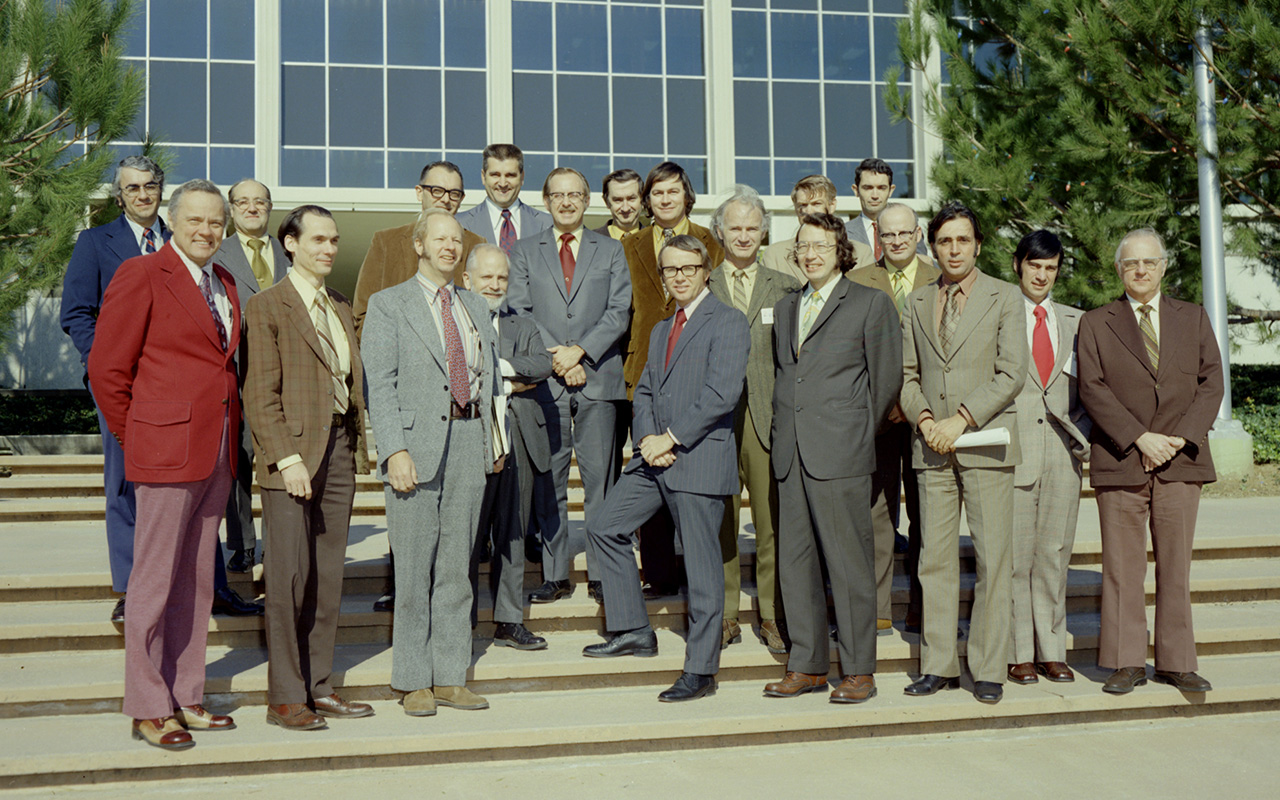
#4Pioneer 10 is technically further away, just dead as a rock without power (no comm for 20 years)
Voyager website is awesome
https://voyager.jpl.nasa.gov/mission/timeline/
A very different time, thank goodness for DEI now
https://voyager.jpl.nasa.gov/assets/images/timeline/0003.jpg
Re: NASA's Voyager Team Focuses on Software Patch, Thrusters
#5Now this is hackernews. Imagining working on spacecraft where no human made thing has gone before. Also is this correct? >NASA extended the mission so that Voyager 2 could visit Uranus and Neptune; it is still the only spacecraft ever to have encountered the >ice giants Aren’t they gas giants? I mean they are probably very cold, but usually they are called gas giants.
> Aren’t they gas giants? I mean they are probably very cold, but usually they are called gas giants. "Ice giant" seems to be the more modern terminology: An ice giant is a giant planet composed mainly of elements heavier than hydrogen and helium, such as oxygen, carbon, nitrogen, and sulfur. There are two ice giants in the Solar System: Uranus and Neptune. In astrophysics and planetary science the term "ice" refers…
I've heard Uranus and Neptune referred to as ice giants since at least the late 90s.
In any case, I understand ice giants to be a subset of gas giants with more specific parameters.
Re: NASA's Voyager Team Focuses on Software Patch, Thrusters
#6There's a great ROI on these, I don't know why we're not sending more just like it with updated packages.
Re: NASA's Voyager Team Focuses on Software Patch, Thrusters
#7There's a great ROI on these, I don't know why we're not sending more just like it with updated packages.
That's because the planetary alignment that let us send them only happens once every 175 years.
Re: NASA's Voyager Team Focuses on Software Patch, Thrusters
#8Pioneer 10 is technically further away, just dead as a rock without power (no comm for 20 years) Voyager website is awesome https://voyager.jpl.nasa.gov/mission/timeline/ A very different time, thank goodness for DEI now https://voyager.jpl.nasa.gov/assets/images/timeline/0003.jpg
. . . but it still watches football.
Re: NASA's Voyager Team Focuses on Software Patch, Thrusters
#9There's a great ROI on these, I don't know why we're not sending more just like it with updated packages.
We are probably doing even better than that. The Voyagers were flybys, which naturally limited the amount of time they could spend observing each planet up close. This is why we only know what one side of Triton looks like.
Voyager’s follow-ups have been missions like Galileo and Cassini, which stayed in orbit around Jupiter and Saturn respectively, allowing more detailed observations with better instruments. It looks like the next priority is Uranus:
Re: NASA's Voyager Team Focuses on Software Patch, Thrusters
#10Is it just me that really wants to FOIA the firmware code to read it?
What is it written in? Assembler, surely?
What is the development toolchain like in 2023 for a 70s computer? Do they have an emulator? What happened to the spare development Voyager they had lying around?