America uses stealthy submarines to hack other countries’ systems
washingtonpost.com
America uses stealthy submarines to hack other countries’ systems
1–10 of 121 posts
Re: America uses stealthy submarines to hack other countries’ systems
#2Did you know that the subsea fiber optic cables which the submarines hack are only 17mm thick? [0]. Great companion story at ARS from a while back worth a read.
[0]: http://arstechnica.com/information-technology/2016/05/how-th...
Re: America uses stealthy submarines to hack other countries’ systems
#3>But despite the rising prominence of Russian hackers in this news cycle — and Chinese hackers before that — it's worth pointing out that the United States has grown fairly proficient in cyberspace, too.
How am I not surprised that in an article about US espionage the American s̶t̶a̶t̶e̶ media makes sure to remind yet again us how bad, bad, bad the Russians are.
Re: America uses stealthy submarines to hack other countries’ systems
#4Edward Snowden revealed a long time ago that the NSA also taps the undersea communications cables for mass surveillance (which obviously includes US citizens).
Re: America uses stealthy submarines to hack other countries’ systems
#5Assume all oceanic cables rigged. The CIA has been doing this for decades.
Added: https://www.amazon.com/Blind-Mans-Bluff-Submarine-Espionage/...
Re: America uses stealthy submarines to hack other countries’ systems
#6>But despite the rising prominence of Russian hackers in this news cycle — and Chinese hackers before that — it's worth pointing out that the United States has grown fairly proficient in cyberspace, too. How am I not surprised that in an article about US espionage the American s̶t̶a̶t̶e̶ media makes sure to remind yet again us how bad, bad, bad the Russians are.
The context of the article is recent comments by political candidates about Russian cyber warfare. The subs' capabilities were revealed at a conference three weeks ago.
Re: America uses stealthy submarines to hack other countries’ systems
#7If this sort of stuff interets you, I highly recommend the book "Blind Man's Bluff: The Untold Story of American Submarine Espionage". [0] It tells the story of Cold War espionage from the submarine warfare point of view. The book also covers "Operation Ivy Bells" which was a joint Navy/CIA/NSA mission whose objective was to place wire taps on Soviet underwater communication lines during the Cold War. [1] Sub placed a listening and recording devices over Soviet cables and was able to capture their communications. The device was fairly large as can be seen from this picture [2]. I'm sure they're smaller now.
[0] https://en.wikipedia.org/wiki/Blind_Man%27s_Bluff:_The_Untol...
[1] https://en.wikipedia.org/wiki/Operation_Ivy_Bells
[2] http://www.therebreathersite.nl/11_Closed%20Circuit%20Rebrea...
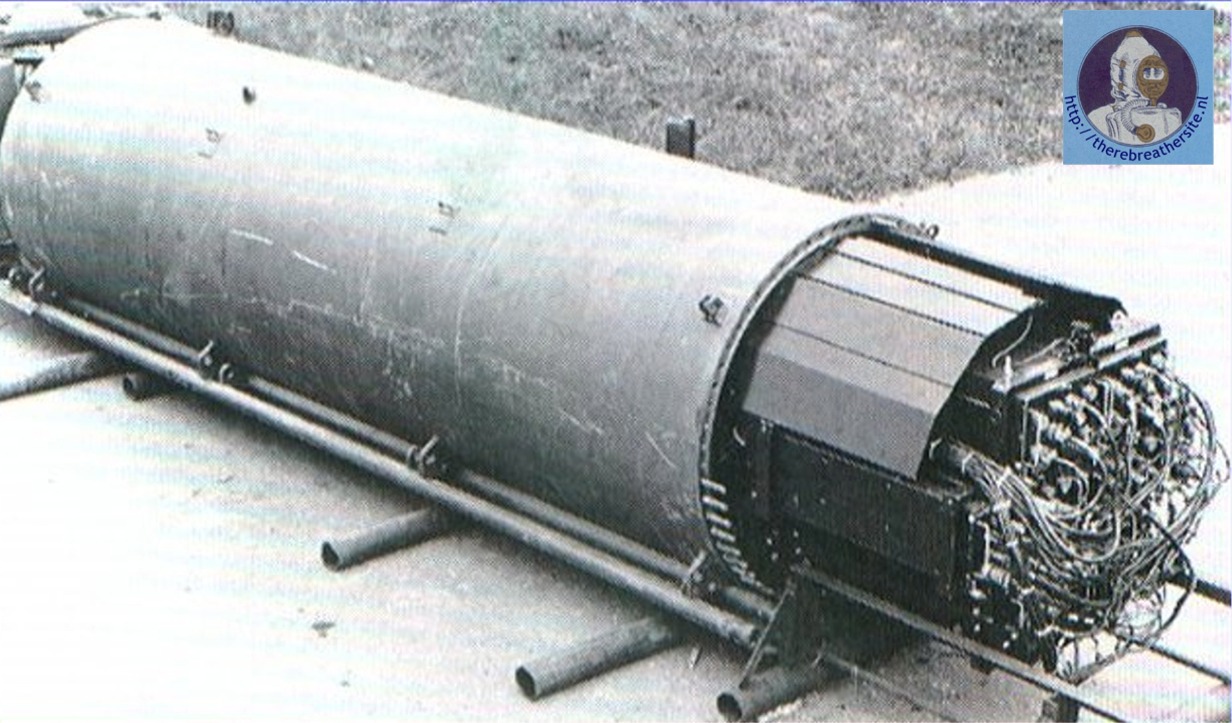
Re: America uses stealthy submarines to hack other countries’ systems
#8I'm calling BS on this. The stealthiness of a sub, it's only real purpose, is defeated the moment you start transmitting via a big antenna. It wouldn't happen. Subs no doubt are used for surveillance, but the concept of them sitting offshore and actively "hacking" communications is absurd. It would be a suicide mission with a billion-dollar asset.
The OP reads like a funding request. It's a pitch for a world where hackers will live inside submarines close to the action, when we know from experience that even when submarines were used to tap lines that the submarine did nothing other than install the tap and scurry away. (They also retrieved the recorders, but then too scurried away asap.) You don't risk something like a sub, and the lives onboard, on information management that can be done from afar. A drone capable of operating untethered far away from the mother ship might as well be controlled from thousands of miles away. The sub may launch the hacker-drone, but no matter the navy's fantasy, subs won't be at the center of the flowchart.
Re: America uses stealthy submarines to hack other countries’ systems
#9Did you know that the subsea fiber optic cables which the submarines hack are only 17mm thick? [0]. Great companion story at ARS from a while back worth a read. [0]: http://arstechnica.com/information-technology/2016/05/how-th...
I was going to reply that this was surely nonsense and I've seen the thick cables the size of a man's leg, but as the article says these images we've seen are only for shallow areas and the majority of the cable really is just the size of a marker pen, shielded with just a few millimetres of plastic.
Re: America uses stealthy submarines to hack other countries’ systems
#10Did you know that the subsea fiber optic cables which the submarines hack are only 17mm thick? [0]. Great companion story at ARS from a while back worth a read. [0]: http://arstechnica.com/information-technology/2016/05/how-th...
I was going to reply that this was surely nonsense and I've seen the thick cables the size of a man's leg, but as the article says these images we've seen are only for shallow areas and the majority of the cable really is just the size of a marker pen, shielded with just a few millimetres of plastic.
http://mikesenese.com/DOIT/wp-content/uploads/2011/11/Unders...

^undersea cables are typically made up of a central fiber line, which look like human hairs in a small tube, and a shell of insulation and copper. You need power to send the signal across the ocean floor and, as we do not generate electricity underwater, all of the current needs to be sent from one end to the other to power all of the repeaters along the way.
The fiber optic cable is 17mm, but the cable itself can't be because of the power constraint (unless I'm missing something deep; feel free to correct me if so).