Live data from Hacker News

Swarm – Low cost, global satellite connectivity for IoT

swarm.space

91–100 of 165 posts

Re: Swarm – Low cost, global satellite connectivity for IoT

#91

Well this is terrifying. Pretty soon you'll have to crack open your appliances to snip the antennas to prevent them from calling home, rather than just not giving them the wifi password...!

This is already possible with cell connectivity. Many cars have this now, for instance. Nothing is stopping the telcos from offering something to compete with this other than in remote tower-free locations.
Re: Swarm – Low cost, global satellite connectivity for IoT

#92
post #41

Earlier quoted context omitted.

Up to the minute sensor data for something so remote that it needs a satellite uplink is either going to be for something incredibly critical or totally overkill and a waste of money. With Swarm, you could be waiting up to 2 hours between passes that last anywhere between 10 and 50 minutes so it's not like you'll have your data instantly for large portions of the day.

Yes, but then IoT usually invokes a sense of (almost) real-time monitoring of things and lots of packets etc... But I get your point, also you can always do a lot of things to save on bandwidth, like do not send info which is not interesting (i.e. no point in sending 100s of "no fire was detected" messages). Btw, anyone here knows if there's compression schemes designed specifically for small data packets? Gzip and o…

This product is targeted at actual users of "IoT", think remote monitoring in remote locations. Not "smart microwave" style IoT.

Not sure there is any automatic solution for compression here. If you know your own use case you are in the best position to choose where to sacrifice accuracy with a lossy compression scheme. But this relies on understanding of the accuracy of the input data, possible ranges of values, importance of accuracy in different fields etc. Not sure how an automated algorithm could take these real world constraints into account.

A clever compression algo can't help you if you try compress 4 doubles, but in reality you only needed byte precision on some fixed 0-100% range.

Re: Swarm – Low cost, global satellite connectivity for IoT

#93
post #33

Earlier quoted context omitted.

What might somebody (or some company) use this for? 192 bytes * 750 packets = 144000 bytes per month at what speed/latency?

In-Q-Tel, the venture capital arm of the CIA, lists Swarm Technologies as one of their startups. I bet the military/intelligence community has all sorts of ideas!

Inqtel also funds Anaconda, Mongodb and Gitlab, interesting

Re: Swarm – Low cost, global satellite connectivity for IoT

#94

Why isn’t this mandatory on ALL planes? A simple device like this (or similar ones) would make real-time tracking of all flights a reality. We’ll see many new things and interesting technologies in the coming years, like this one and also the one in iPhones.

ADS-B is mandatory these days, and Aireon [1] has a constellation of satellite receivers for 24/7 global coverage.

[1]https://aireon.com/

Re: Swarm – Low cost, global satellite connectivity for IoT

#95

Earlier quoted context omitted.

Provides 750 data packets per device per month (up to 192 Bytes per packet) 144,000 bytes. Almost the capacity as a Commodore 1541 disk drive. 40 years ago it would have been unfathomable that a regular schmoe could transmit a floppy disk via satellite for just $5.

Sure, but 40 years have passed since then and 144K peanuts for any real world application. A quick example, you have a sensor that sends a single metric every minute. Suppose that you can pack that info (sensor id, metric type and data) in 32 bytes. You're looking at about 1.2MB/month of data (8 times your 144K), which will come to about $40/month. Quite expensive for a single data point, but I can imagine several us…

Helium charges 0.00001$ per packet (about 24 bytes) using Lora protocol.

But it's associated with crypto so people hate it.

It also undercuts everything by a factor of 100x and is ubiquitous in US and western Europe.

Re: Swarm – Low cost, global satellite connectivity for IoT

#96
post #22

I can't get to their documentation but it looks like it's using LoRa for the RF. https://blog.semtech.com/satellite-iot-qa-with-swarm Pretty cool. Just checked coverage over my house using their pass checker and it's already ~50% coverage through the course of the day. No good for realtime alerting but good enough for daily reporting.

Helium has a competitive Lora network at 100x less cost, in western Europe and US.

Ducks

Re: Swarm – Low cost, global satellite connectivity for IoT

#97
post #95

Earlier quoted context omitted.

Sure, but 40 years have passed since then and 144K peanuts for any real world application. A quick example, you have a sensor that sends a single metric every minute. Suppose that you can pack that info (sensor id, metric type and data) in 32 bytes. You're looking at about 1.2MB/month of data (8 times your 144K), which will come to about $40/month. Quite expensive for a single data point, but I can imagine several us…

Helium charges 0.00001$ per packet (about 24 bytes) using Lora protocol. But it's associated with crypto so people hate it. It also undercuts everything by a factor of 100x and is ubiquitous in US and western Europe.

The reason people are skeptical about its long-term longevity is that the vast majority of the income of the project is coming from the sale of hotspots, rather than from paying customers [1]. This means pricing for users is heavily subsidized by hotspot revenues right now. Eventually, the hotspot market will be saturated and prices will have to come up to keep the project afloat; it remains to be seen how competitive the pricing will be at that point.

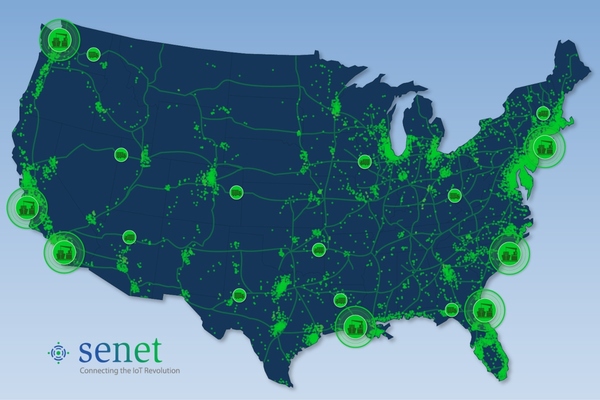
PS: Saying LORA is "ubiquitous" in the US oversells it quite a bit. It is quite available in cities but most rural areas are completely devoid of coverage, see [2].

[1] https://cointelegraph.com/news/critique-on-helium-s-6-5k-mon...

[2] https://scwcontent.affino.com/AcuCustom/Sitename/DAM/031/Sen...

Re: Swarm – Low cost, global satellite connectivity for IoT

#98

Earlier quoted context omitted.

What might somebody (or some company) use this for? 192 bytes * 750 packets = 144000 bytes per month at what speed/latency?

It's ideal for asset tracking - you can fit a GPS fix, timestamp, and accuracy estimate (based on # of satellites visible) into 12 bytes, which is enough to ping once per minute and still only use half your allocated bandwidth. If your asset tags call in every 5 minutes or once per hour lots of options open up. 2 way communications aren't much more demanding because most of what you need can be done with lookup table…

[deleted]

Re: Swarm – Low cost, global satellite connectivity for IoT

#99
post #79

Earlier quoted context omitted.

What might somebody (or some company) use this for? 192 bytes * 750 packets = 144000 bytes per month at what speed/latency?

Hourly data collection for science like stream gages, earthquakes, air quality, precipitation, or similar in very remote areas. Sensors along a pipeline etc to monitor remote infrastructure. Texting in remote areas for logging, cattle, forestry services, etc. Redundancy for boats, emergency services etc that may have primary and secondary communication channels, but still greatly benefit from the capacity for redunda…

No post body was provided.
Post reply on HN