Live data from Hacker News

A review of Thomas Piketty’s “Capital and Ideology”

bostonreview.net

91–100 of 218 posts

Re: A review of Thomas Piketty’s “Capital and Ideology”

#91

Paul Krugman's review: * https://www.nytimes.com/2020/03/08/books/review/capital-and-... Krugman liked Piketty's previous book ( Captail-21C ), but concluded this one needed some more editing: > The bottom line: I really wanted to like “Capital and Ideology,” but have to acknowledge that it’s something of a letdown. There are interesting ideas and analyses scattered through the book, but they get lost in the sheer vo…

A renowned quack reviewing the work of one of his peers. Guaranteed enjoyment.

Re: A review of Thomas Piketty’s “Capital and Ideology”

#92
post #55
post #31

Earlier quoted context omitted.

That's why I don't like to call the current system capitalism. I find Varoufakis' description more apt: socialism for the rich and capitalism for the poor. Or put in another way, privatised gains and socialised losses.

I think I understand what "socialism for the rich" is supposed to mean, but I don't understand how it relates to socialism. > Socialism is a political, social and economic philosophy encompassing a range of economic and social systems characterised by social ownership of the means of production and workers' self-management of enterprises. [wikipedia]

Or put in another way = socialised losses

Re: A review of Thomas Piketty’s “Capital and Ideology”

#93
post #7

" “the Democratic Party in the United States transitioned over half a century from the workers’ party to the party of the highly educated.” Elites’ distance from working-class interest, he contends, led the Democratic party and its ideological counterparts abroad to accede to a policy program betraying the values of social democracy: regressive taxation, elite domination of higher education systems, and forms of glob…

One thing to remember is that everyone thinks they're "middle class". Even the corporate VP making half a million dollars thinks she's middle class.

The middle class is an illusion, but I have more in common with that VP than I do a billionaire.

Re: A review of Thomas Piketty’s “Capital and Ideology”

#94

Earlier quoted context omitted.

Open borders is anti-capitalist because it allows labor to move with the same liberty as capital, so it can help reduce the ability of capitalists to find deals. Without other policies it is atomizing and ineffective, but there is a good moral argument for it in that invisible lines shouldn't hamper freedom of movement for people. Nations are fake. The socialist left is against free trade and outsourcing. Period. We…

> Open borders is anti-capitalist because it allows labor to move with the same liberty as capital, so it can help reduce the ability of capitalists to find deals. What? I seriously don't understand this. Find what deals? How does it make it harder? > Nations are fake. In what sense? Surely, given the opportunity, most people would prefer to live in Sweden as opposed to Liberia. Most would pick US citizenship over, s…

Not sure about the first part, but nations are quite obviously fake constructions once you start prodding at the seams.

The most instructive places to look at in that direction are border areas in general, and the Middle East in particular.

Often times when you look at border areas you will see absurd divisions of people who would normally work together. The border between Ireland and Northern Ireland is a strong example.

For the clear negative impact of borders though, the absurd creation of most Middle Eastern countries by British diplomats is one of the clearest examples. The arbitrary lines that were drawn through tribal lands and small fiefdoms, the people left without countries of their own (e.g. the kurds) or brought to power over vast swaths of other people (the Saudis)- it is all as absurd as can be, and has proven as poisonous as expected.

Re: A review of Thomas Piketty’s “Capital and Ideology”

#95
post #75

Earlier quoted context omitted.

One thing to remember is that everyone thinks they're "middle class". Even the corporate VP making half a million dollars thinks she's middle class.

We just had a great illustration of that effect in Germany: Friedrich Merz, a politician of Angela Merkel's Christian Democratic Union, but purged by her years ago, is trying to become next party chief and chancellor. He is a board member of Blackrock. A lobbyist, and a successful business lawyer. He owns private airplanes. Yet, in a much laughed about interview, he claimed to belong to the "upper middle class".

Interesting how Blackrock has become the new Goldman Sachs of the 2020s, apparently they tend to have quite a big influence in Macron's France, too [1].

[1] https://www.nytimes.com/2020/02/14/business/france-blackrock...

Re: A review of Thomas Piketty’s “Capital and Ideology”

#96
post #7

" “the Democratic Party in the United States transitioned over half a century from the workers’ party to the party of the highly educated.” Elites’ distance from working-class interest, he contends, led the Democratic party and its ideological counterparts abroad to accede to a policy program betraying the values of social democracy: regressive taxation, elite domination of higher education systems, and forms of glob…

One thing to remember is that everyone thinks they're "middle class". Even the corporate VP making half a million dollars thinks she's middle class.

If you stop working an can't live off your savings indefinitely you are middle class by definition.

Re: A review of Thomas Piketty’s “Capital and Ideology”

#97
I think Piketty makes some good points.

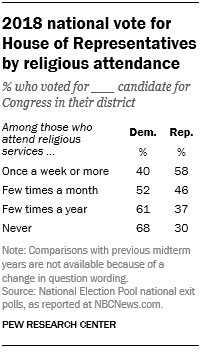
But I still think any account of the woeful separation between the Democratic Party and the common people which ignores the rise of the pro-life movement has to be incomplete. Piketty thus misrepresents those who are concerned about the prevalence of destructive beliefs among the working class:

>“The problem” with the story of a bottom-up defection “is not just that it depends on the notion that the disadvantaged classes are by their very essence permanently racist...”

But racism, while extant, is not the most significant ideological issue that separates the elites from the working class, nor can it reasonably explain their disagreements with Democrat policy -- current anti-racist policy is laughably weak, and elites are not consistently anti-racist. That award must certainly go to religion, not racism.

That an elite who bemoans the disconnection between the elites and the working class could write a book about ideology which largely ignores the predominant ideology among the working class in Western countries is painfully ironic. Ignore this correlation at your peril:

https://www.pewresearch.org/wp-content/uploads/2018/11/FT_18...

One could argue, of course, that the pro-life movement has been cultivated and manipulated for the benefit of capital. But it would be better to actually write the argument. Such a key step should not be left as an exercise to the reader.
Re: A review of Thomas Piketty’s “Capital and Ideology”

#98
post #39
post #7

" “the Democratic Party in the United States transitioned over half a century from the workers’ party to the party of the highly educated.” Elites’ distance from working-class interest, he contends, led the Democratic party and its ideological counterparts abroad to accede to a policy program betraying the values of social democracy: regressive taxation, elite domination of higher education systems, and forms of glob…

> wonder if educated elites being merely oblivious or totally asshole about working class concerns. I lean to "oblivious" argument. People inherently see things through their own experience. Back in the 80s I took some classes that tried to break through the bubble (especially funny that it was MIT where I like to joke "if you don't arrive arrogant they'll beat it into you").* This was just before the CMC machine too…

I attended a top-20 US University and many of my classmates and friends had multimillionaire parents & fell into the "oblivious" camp, (like telling me $50k income for an entire family was upper middle class)...

BUT their upbringing, the media they consume, and the reinforcement of beliefs through their social echo chamber makes it insanely hard to change their "obliviousness", to the point where it's not so innocent anymore - more like willful ignorance.

Re: A review of Thomas Piketty’s “Capital and Ideology”

#99
I was watching a documentary[1] about Sweden's shift away from social democracy in the 70's/80's time-frame that Piketty talks about.

From the way it sounds, the program of social democracy nearly destroyed the country. I would take Piketty's nostalgia for those times with a grain of salt.

[1]https://www.youtube.com/watch?v=QcX6BUZlEw4

Re: A review of Thomas Piketty’s “Capital and Ideology”

#100
post #7

" “the Democratic Party in the United States transitioned over half a century from the workers’ party to the party of the highly educated.” Elites’ distance from working-class interest, he contends, led the Democratic party and its ideological counterparts abroad to accede to a policy program betraying the values of social democracy: regressive taxation, elite domination of higher education systems, and forms of glob…

This happened because, while the Republican Party represents the same old interests, the increase in inequality forced a change in the Democratic Party. The bills were being paid by progressive elites, with high salaries and linked to big corporations. Low-wage earners, increasingly losing their jobs to other countries, felt as having lost their influence in the party.

Seems directly tied to the unions’ loss of power.
Post reply on HN