Live data from Hacker News

Scott’s Supreme Quantum Supremacy FAQ

scottaaronson.com

91–100 of 215 posts

Re: Scott’s Supreme Quantum Supremacy FAQ

#91

I've been waiting for Scott Aaronson to put all of this into perspective since the first leaks about Google's quantum supremacy started appearing in popular media. He has exceeded my expectations with this post, which cuts through all the hype to communicate exactly what the results of this experiment mean for the field. It's worth reading and sharing.

On second reading, I have but one trivial gripe: "Enormity" implies moral reprobation, so it's a poor way of describing the significance of a computational discovery.

Isn't it just

Enormous : enormity :: huge : hugeness?

Re: Scott’s Supreme Quantum Supremacy FAQ

#93
post #32

Earlier quoted context omitted.

Short answer, a qubit is a unit vector in a 2D complex Hilbert space. Now, that doesn't actually say much about why we care or how they're useful. In practical terms, you can think of qubits as complex unit vectors along two axes, with one axis corresponding to |0⟩ (the zero qubit) and one axis corresponding to |1⟩, or the one qubit. So for example, you could have a qubit called |+⟩, which is just shorthand for (|0⟩…

> Schrödinger's cat must be alive or dead once we open the box I recently had a conversation about this in another thread. It seems to me, and nobody tried to convince me otherwise, that the Cat would be the Observer. Therefore it would be dead, NOT dead AND alive, as soon as it observes the poisonous gas in its box.

That version of the though experiment is known as "quantum suicide": https://en.wikipedia.org/wiki/Quantum_suicide_and_immortalit...

Re: Scott’s Supreme Quantum Supremacy FAQ

#94
post #2

Preface: I know nothing about quantum computing. What exactly is a qubit? I'm not asking what does it mean, because I know there's superpositions and all that jazz, but as in...like, in an electronic circuit, what is a qubit? Is it made out of logic gates? Which ones? If we can make one qubit, can't we just make a bunch of them by copy and pasting circuits similar to how we used vacuum tubes in the 60s and 70s? How c…

> If we can make one qubit, can't we just make a bunch of them by copy and pasting circuits similar to how we used vacuum tubes in the 60s and 70s? How come our current limit is only around 54 or so?

(I'm not an expert in this area, so the following may not be incomplete or limited to only certain kinds of quantum computation, or worse).

The kinds of computation that qubits can beat a classical computer on require that the qubits be entangled. If the qubits are not entangled, you can't do better than regular bits.

Briefly, if two (or more) quantum systems are entangled, and you make certain measurements that have a random outcome on one of the systems, and then measure the same property on the other system(s), there will be correlations that you would not get if the systems were not entangled. The entangled systems act is if whenever you measure one and it randomly chooses a value for the property you measured, that result is somehow communicated to the other entangled systems, and they make sure them that when they are measured they will give results with the appropriate correlation.

You might think that this could be explained if the systems had some internal variables that were set when they became entangled that determined what "random" values they would pick when later measured, but there are experiments that have shown that this is not so. The systems are truly making their random choice at the time of measurement as far as we can determine.

This happens even if after you entangled the systems, you separate them by a great distance--so far that between the time you do the measurements on the separate systems there is no time for any communication between the systems (or, rather, no time for any communication limited by the speed of light--I believe there have been experiments showing that IF there is communication, it is at more than 10000 times the speed of light). (This communication, or whatever it is, cannot be used to send messages faster than light. All it can do is make the correlations work out for entangled systems).

Anyway, the thing about entangled systems is that as soon as you make a measurement of the entangled property, you lose the entanglement. Your particle that had entangled spin, say, with another particle and that was 50/50 whether it was spin up or spin down becomes, once you actually measure spin, a non-entangled particle whose spin is a concrete value, either up or down. Measure it again, and you get the same value.

When I say "you make a measurement", I don't specifically mean you, or any other human, or any human instruments. For purposes of quantum mechanics, a measurement is anything that makes the system reveal a value. So if you have a particle with entangled spin with some other particle, and some random passing particle happens to interact with yours in a way that depends on the spin of your particle--that's a measurement and you've lost your entanglement. (Your particle might now be entangled with that random passing particle, but it is no longer entangled with the particle you intended it to be entangled with).

If you are trying to do a quantum computation on 50 qubits, you have to get them all entangled, and then you have to keep them from interacting with anything that might inadvertently do a measurements long enough for them to do their quantum computation, where you can then measure the result (which finally ends the entanglement).

This turns out to be hard, because there are a lot of things in the universe that want to effectively do a measurement. Any random particle bumping into one of yours with too much energy can do it. Some random passing electromagnetic wave can do it. The more things you need to entangled and keep entangled, the hard this is, and 50ish is the current limit.
Re: Scott’s Supreme Quantum Supremacy FAQ

#95
post #58

If it goes well, the history of quantum computing will be divided up in to three eras: the era of twisty philosophical arguments that it's working ("the molecule is simulating itself"), the era of academic arguments that it's working ("we can solve this one carefully constructed problem") and the era of practical arguments ("Amazon is selling QC time for $20/kilogate-bit, what do you mean it's not possible?"). Quantu…

What are the theoretical models for the energy cost of computing on a qubit? I'll be excited for QC when there is known way (even with some handwaving and future-tech plans) to compute a non-trivial result for a reasonable sum, such as "crack someone's private RSA key for under $10M of compute cost"

[deleted]

Re: Scott’s Supreme Quantum Supremacy FAQ

#96
post #88

Earlier quoted context omitted.

I don't understand. Factoring composite numbers into their primes is definitely a predicted use for QC in the future. Are you just saying the architecture of the machine powerful enough to do that is still uncertain?

I think it is analogous to fusion. Fusion definitely works (the Sun and hydrogen bomb) and power generation is a predicted use of fusion in the future. That doesn't mean we have known path to fusion for power generation. To extend the analogy, quantum supremacy is like fusion for neutron source. There are commercial fusion devices to be used as neutron source.

> That doesn't mean we have known path to fusion for power generation.

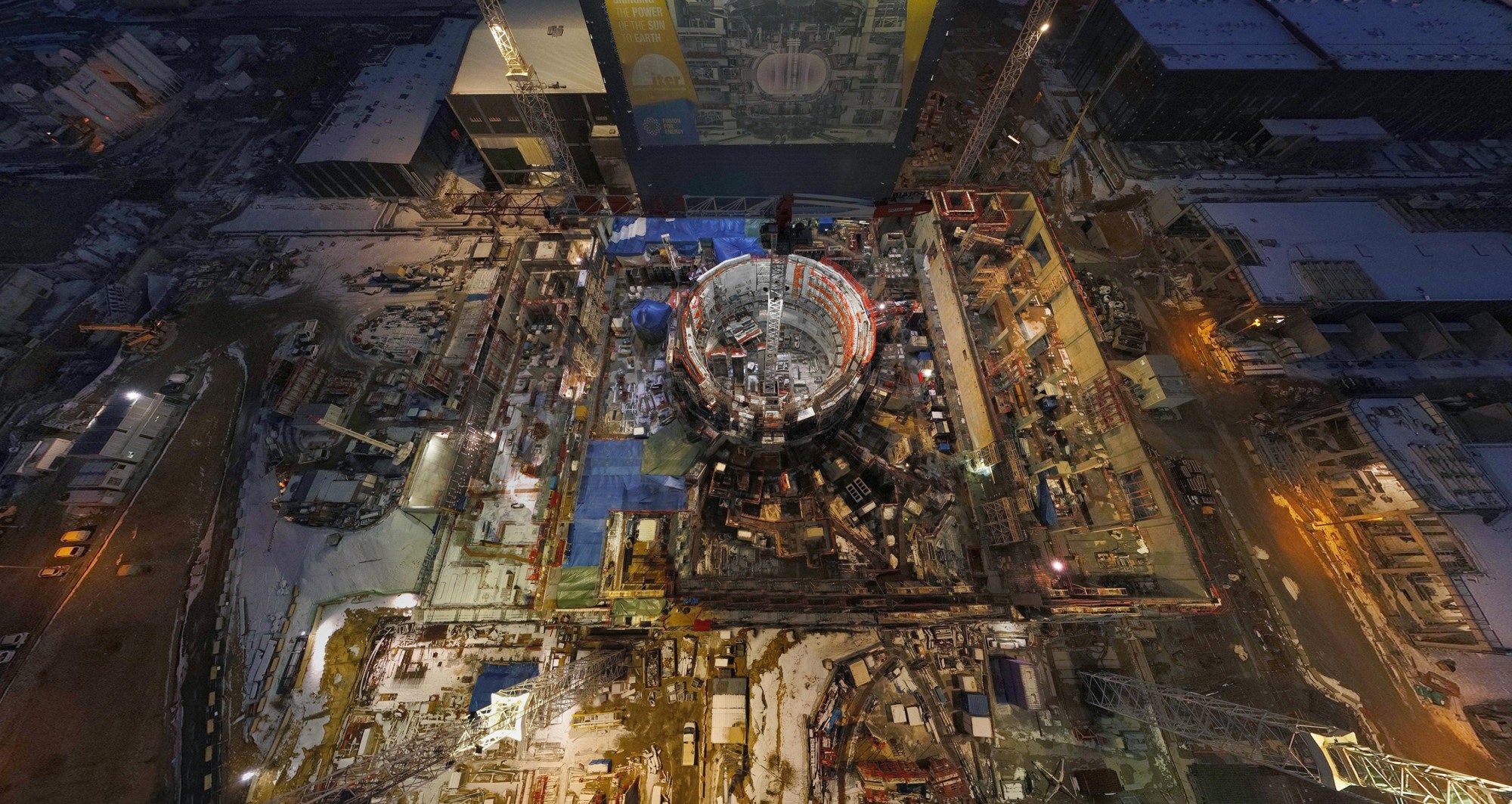
Perhaps this was just a poor example, but we absolutely have a path to fusion power generation. ITER [0][2] is under construction now, and is expected to be capable of 10x power returns. DEMO [1] should have 25x.

[0] https://en.wikipedia.org/wiki/ITER

[1] https://en.wikipedia.org/wiki/DEMOnstration_Power_Station

[2] https://media4.s-nbcnews.com/j/newscms/2017_52/2273651/17122... (worth a click)

Re: Scott’s Supreme Quantum Supremacy FAQ

#98
post #25

Earlier quoted context omitted.

Essentially, they use superconducting electronics to create a quantum circuit. It's not the same logic gates as a traditional computer chip and not based on the same physics. The details are difficult & messy. There are several reasons it doesn't scale easily to more qubits, but you can imagine that you don't want the chip to be large (must be cooled to 25mK!) but the qubits should be spaced quite far apart so they d…

Holy hell. > > In a superconducting circuit, conduction electrons condense into a macroscopic quantum state, such that currents and voltages behave quantum mechanically [2, 30]. Our processor uses transmon qubits [6], which can be thought of as nonlinear superconducting resonators at 5 to 7 GHz. The qubit is encoded as the two lowest quantum eigenstates of the resonant circuit. Each transmon has two controls: a micro…

"For a number of years now, work has been proceeding in order to bring perfection to the crudely conceived idea of a transmission that would not only supply inverse reactive current for use in unilateral phase detractors, but would also be capable of automatically synchronizing cardinal grammeters..."

Re: Scott’s Supreme Quantum Supremacy FAQ

#99
post #96
post #88

Earlier quoted context omitted.

I think it is analogous to fusion. Fusion definitely works (the Sun and hydrogen bomb) and power generation is a predicted use of fusion in the future. That doesn't mean we have known path to fusion for power generation. To extend the analogy, quantum supremacy is like fusion for neutron source. There are commercial fusion devices to be used as neutron source.

> That doesn't mean we have known path to fusion for power generation. Perhaps this was just a poor example, but we absolutely have a path to fusion power generation. ITER [0][2] is under construction now, and is expected to be capable of 10x power returns. DEMO [1] should have 25x. [0] https://en.wikipedia.org/wiki/ITER [1] https://en.wikipedia.org/wiki/DEMOnstration_Power_Station [2] https://media4.s-nbcnews.com/j/…

From the ITER wiki link:

> ITER Project was initiated in 1988.

> The expected cost of ITER has risen from US$5 billion to US$20 billion, and the timeline for operation at full power was moved from the original estimate of 2016 to 2027.

> A technical concern is that the 14 MeV neutrons produced by the fusion reactions will damage the materials from which the reactor is built

... definitely not clear to me that this is a "clear path forward" to fusion power, but I was encouraged to learn that a project of this sort was underway.

Re: Scott’s Supreme Quantum Supremacy FAQ

#100
post #39
post #2

Preface: I know nothing about quantum computing. What exactly is a qubit? I'm not asking what does it mean, because I know there's superpositions and all that jazz, but as in...like, in an electronic circuit, what is a qubit? Is it made out of logic gates? Which ones? If we can make one qubit, can't we just make a bunch of them by copy and pasting circuits similar to how we used vacuum tubes in the 60s and 70s? How c…

Physicists here. In practice, a qubit is a two-level physical system. It can be spin state of an electron, polarization of a photon, lowest two energy states of an atom or an electron in quantum dot/well trap potential, the charge state (called charge qubit) -- whether you have 0 or 1 electrons in it, etc etc (if you have 3 levels, it's called qutrit, and for d levels qudit). This experiment uses charge qubits (a spe…

And there's the pesky issue of readout errors, which tends to bad.
Post reply on HN