Earlier quoted context omitted.
The year after the TNT was the TNT2 (which was a great chipset). Geforce didn't come out until Oct 1999 and even then it was only one chipset. The rest of the product range came the following quarter (2000). I skipped that generation and jumped to the Geforce 2 (this time first party rather than a 3rd party card with nvidia GPU), which was also an awesome card. As for the fall of 3dfx, I dont think the rise in popula…
> I skipped that generation and jumped to the Geforce 2 (this time first party rather than a 3rd party card with nvidia GPU) Wait, nVidia made their own cards? I can't ever recall seeing one that wasn't made by a partner.
Fall of Voodoo
91–100 of 108 posts
Re: Fall of Voodoo
#92I remember those days vividly. I was just getting to know the world of computers, I think it was the year 97, I had 13 years old and my first PC, Pentium 200mhz with Windows 95, I thought the games were fabulous! Quake 1, Duke Nukem, Carmageddon, Moto Racer. But one day I bought the Diamond Monster 2 with a Voodoo 2 chip and 12MB Ram (3DFX accelerator card), I put that thing on my PC and it was like traveling to the…
Re: Fall of Voodoo
#93Earlier quoted context omitted.
I love Amigas but seems like their fate was sealed by then. By the release of Doom in 1993 it was over for sure. Their whole shtick was that they had special hardware that let them do things PCs couldn't. Doom proved them wrong.
Pretty much on the money. The hardware guys tried though. Management delayed and delayed until they'd blown all the money. In 90-91 ish they had a prototype AAA architecture and the specs were great. (3000+). PC's had caught up some way. Instead management pushed a cheap, horrible, slower machine with none of the features, no SCSI II but CPU driven IDE and AGA in place of AAA. No DSP or voice recognition. No 16 bit P…
From what I remember it was more like my Retina Z3 card but better. Had some discussions at conferences, it seemed Amiga hardware engineers didn't believe in 3D and were frozen in their graphics mindset of blitter and copper (huge when I wrote 68k demos in the mid-80s, but meaningless when 3D happened).
[1] https://en.wikipedia.org/wiki/Amiga_Advanced_Architecture_ch...
Re: Fall of Voodoo
#94Earlier quoted context omitted.
Yes. I even remember the need of two cards. A GPU and a 3D accelerator.
That's nothing, I remember the need for 4, a 2D card, two Voodoo 2s in SLI and a dedicated hardware DVD decoder card :-) The picture quality was terrible with multiple pass through analog VGA cables...
Re: Fall of Voodoo
#95Earlier quoted context omitted.
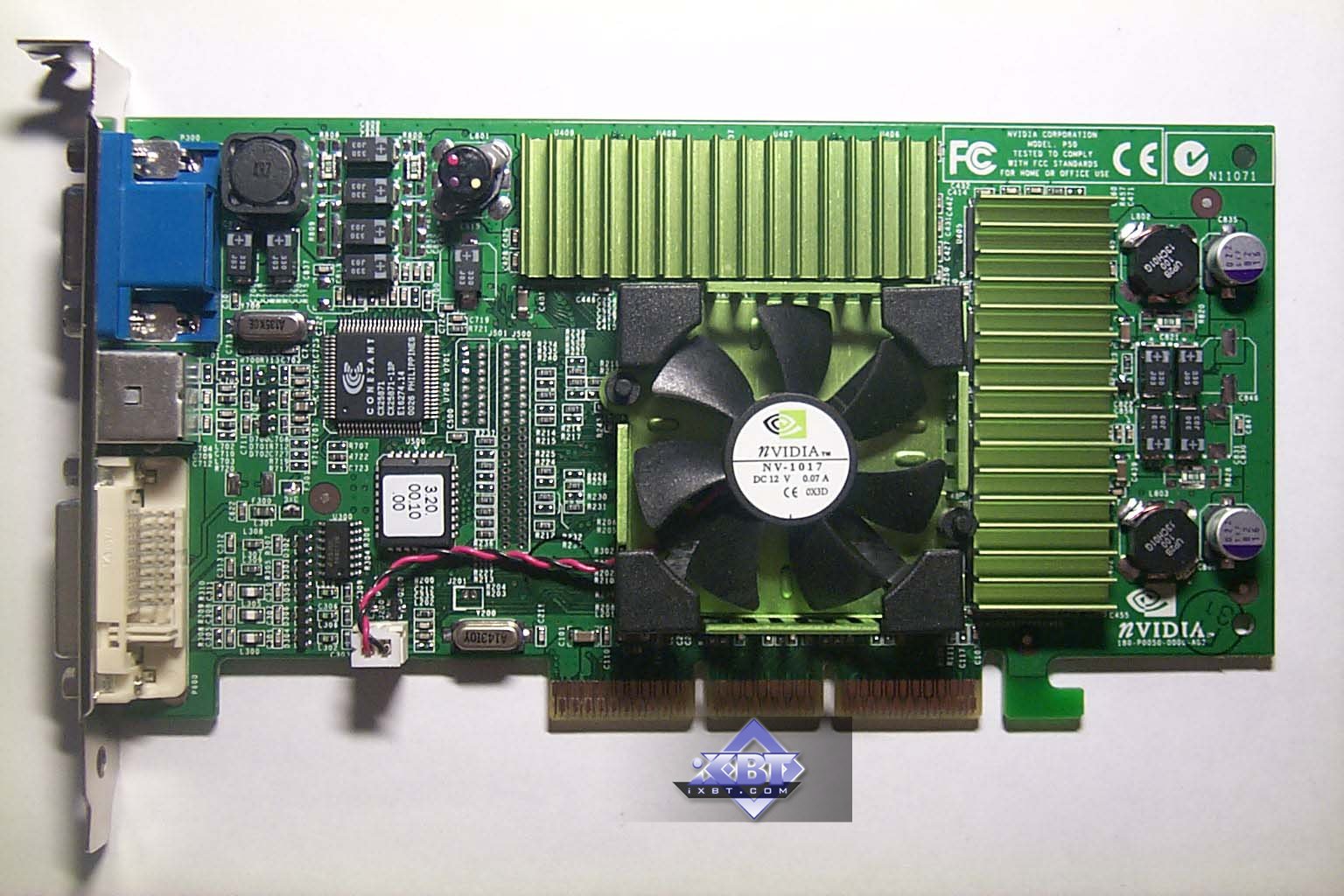
> I skipped that generation and jumped to the Geforce 2 (this time first party rather than a 3rd party card with nvidia GPU) Wait, nVidia made their own cards? I can't ever recall seeing one that wasn't made by a partner.
AFAIK, Nvidia have never fabricated their own cards, but they do design the reference boards that most OEMs use as a basis for their own cards, and they did at one point release cards directly under the Nvidia brand (the cards were fabricated by Foxconn using Nvidia's designs).
Re: Fall of Voodoo
#96Earlier quoted context omitted.
iPhones also had a PowerVR GPU as part of A-series SoC. In iPhone 8/X (A11) it was replaced with Apple's own GPU design.
That design isn’t custom but appears to be using PowerVR licenses IP given the way some press releases were worded. I find it highly unlikely Apple could design a market leading GPU compatible with their existing products in such a short time. Their CPU took a lot longer. My guess is the A11 is a tweak of the PVR and subsequent versions later will introduce a ground up redesign. PVR owns a lot of TBDR patent IP since…
Nobody noticed, but apple started working back on their GPU all the way back on the iPhone 5s (with their A7 SoC)
It wasn't a complete custom design, but it wasn't an off the shelf powervr either. Until that point, apple always released the exact model of GPU they were using in their SoC, then suddenly their documentation starts referring to "the apple A7 GPU" and "the apple A8 GPU". Wikipeida does give a model number for the GPU, but if you trace it back you find a andandtech article going through the logic speculating it must be a powervr 6 series. And all roads lead back to that speculation.
For later SoCs, andandtech actually invent a new 6 core powervr variant, because powervr wasn't listing one yet die shots of the new iPad showed a 6 core GPU.
With the release of the iPhone 5s, apple also switched from the powervr supplied driver to their own one written in house.
It appears that apple incrementally swapped out parts of the powervr design until they arrived at the A11 SoC GPU which they declared as their own, with none of the original powervr parts remaining. Though the result appears to be very close to the original design. (I suspect powervr accidentally gave apple a perpetual patent license at some point before realizing what apple was up to)
They didn't redesign the GPU overnight, it was designed and released incrementally over many years under our very noses. Nobody noticed.
Re: Fall of Voodoo
#97Earlier quoted context omitted.
Pretty much on the money. The hardware guys tried though. Management delayed and delayed until they'd blown all the money. In 90-91 ish they had a prototype AAA architecture and the specs were great. (3000+). PC's had caught up some way. Instead management pushed a cheap, horrible, slower machine with none of the features, no SCSI II but CPU driven IDE and AGA in place of AAA. No DSP or voice recognition. No 16 bit P…
It doesn't look like AAA [1] has any 3D? From what I remember it was more like my Retina Z3 card but better. Had some discussions at conferences, it seemed Amiga hardware engineers didn't believe in 3D and were frozen in their graphics mindset of blitter and copper (huge when I wrote 68k demos in the mid-80s, but meaningless when 3D happened). [1] https://en.wikipedia.org/wiki/Amiga_Advanced_Architecture_ch...
With chunky graphics, you can write out an entire pixel with a single write, which is essential for rasterisation in software 3d games.
It's not like PCs got 3d graphics cards until late-95, the AAA chipsets released in 1993 might have allowed the Amega to hold on until 96, get proper Doom clones (and maybe even quake clones) and then get it's own 3d accelerators.
Re: Fall of Voodoo
#98Earlier quoted context omitted.
Pretty much on the money. The hardware guys tried though. Management delayed and delayed until they'd blown all the money. In 90-91 ish they had a prototype AAA architecture and the specs were great. (3000+). PC's had caught up some way. Instead management pushed a cheap, horrible, slower machine with none of the features, no SCSI II but CPU driven IDE and AGA in place of AAA. No DSP or voice recognition. No 16 bit P…
It doesn't look like AAA [1] has any 3D? From what I remember it was more like my Retina Z3 card but better. Had some discussions at conferences, it seemed Amiga hardware engineers didn't believe in 3D and were frozen in their graphics mindset of blitter and copper (huge when I wrote 68k demos in the mid-80s, but meaningless when 3D happened). [1] https://en.wikipedia.org/wiki/Amiga_Advanced_Architecture_ch...
3D was in Hombre that was the PowerPC. Wildly different and no compatibility, so heaven knows how that would have played out. Only that was when we were all starting to play Doom at work :)
Edit: I searched and found this from Dave Haynie - who always seemed pretty straight talking. Weirdly some of the dates have 10 years added :D The 3D section and the following on Gould and Ali seems to sum up the train wreck pretty well. eg:
"When he got to Engineering, he hired a human bus error called Bill Sydnes to take over. Sydnes, a PC guy, didn’t have the chops to run a computer, much less a computer design department. He was also an ex-IBMer, and spent much time trying to turn C= (a fairly slick, west-coast-style design operation), into the clunky mess that characterized the Dilbert Zones in most major east-coast-style companies"
Re: Fall of Voodoo
#99Still fondly remember my passively-cooled! Voodoo 3, their rendering stack was top quality. Nvidia was the feeble newcomer. Times change fast...
> Nvidia was the feeble newcomer. Nvidia was never really feeble. Even when 3Dfx was shocking everyone with their raw throughput and had a bit of a moat (until DirectX stopped sucking) with the Glide API, Nvidia got their foot in the door with 32-bit rendering and decent OpenGL. 3Dfx made sense for a lot of us - anyone using Quake would get it if they could, since raw performance mattered a lot and you don't suffer t…
Re: Fall of Voodoo
#100Earlier quoted context omitted.
3dfx also misread the trends. I remember something about them staying on 16 bit graphics for way too long.
Yeah, I was a pretty serious PC gamer (Quake/Q2/Q3) back during the rise and fall of 3dfx. Pretty much everyone I knew went from software rendering to 3dfx-chipset cards but then jumped ship when the Riva TNT2 cards came out, primarily because they just produced much better visuals due to support for 32-bit color while the 3dfx offerings were all limited to 16-bit. There was still a bit of a split in the market back…
https://www.vogons.org/viewtopic.php?f=46&t=36548
Texture memory capacity, texture size limit (256x256!) and lack of s3tc/DXT1 compression were the real culprit. TNT shipped with 16MB, in TNT2 32MB came standard. Texture quality played the biggest role in perceived visual difference. Not to mention TNT performance went 1/2 down in 32bit mode, TNT2 fared only slightly better.
Quality is great, until you learn both Nvidia and ATI repeatedly cheated in benchmarks and games dropping quality below old 3dfx limits. ATI Quake 3 was quite dramatic: https://techreport.com/review/3089/how-ati-drivers-optimize-...