Live data from Hacker News

First possible interstellar object detected in our solar system

nasa.gov

91–100 of 104 posts

Re: First possible interstellar object detected in our solar system

#91
post #81

Off topic but can someone answer this for me? Are the stars in our night sky part of our galaxy or no? It seems such a stupid question to ask, but when I look online it says we have one star, our Sun, whereas other galaxies have one or multiple - for instance a galaxy with two stars would be called a Binary System. So where are the stars in our night sky? Are they even further away than Uranus, Neptune.., but so brig…

Either I didn't get your question, or you're a bit confused about the structure of the universe. Not a problem. There's Earth, it's a planet orbiting our star, Sol AKA the Sun, in our solar system. A star has plenty of bodies orbiting around it, dust, asteroids, planets, so the whole group is called a solar system. There's other stars "next" to us, which in turn have dust, asteroids and planets orbiting around them.…

This, and also:

You can see some other galaxies with the naked eye, but not make out any of the stars within them.

https://en.wikipedia.org/wiki/List_of_galaxies#Naked-eye_gal...

Note that the Magellanic Clouds are basically orbiting our galaxy, and that the next closest independent galaxy is Andromeda, 2 and a half million light years away.
Re: First possible interstellar object detected in our solar system

#92
post #81

Off topic but can someone answer this for me? Are the stars in our night sky part of our galaxy or no? It seems such a stupid question to ask, but when I look online it says we have one star, our Sun, whereas other galaxies have one or multiple - for instance a galaxy with two stars would be called a Binary System. So where are the stars in our night sky? Are they even further away than Uranus, Neptune.., but so brig…

When we look up at the "heavens" with the naked eye, we have our own personalized "starry night", courtesy of, and unique to our own, galaxy.

We don't see the individual stars from other galaxies. We barely can even see other galaxies with the naked eye. But once technology shows us that the sky is filled with galaxies, invisible to the unassisted eye, it blows the mind away. Every galaxy has it's own unique "starry night".

Astonishingly, some have projected that there are more galaxies in the universe than stars in our Milky Way galaxy. ~d

Re: First possible interstellar object detected in our solar system

#94
post #66

Would it be possible at all to intercept it for analysis?

It's moving far too fast in the worst possible direction, and it's already far too far away. If we'd known it was coming, we could in principle have gotten something out to its point of closest Earth approach, but the object's velocity means even that would've been a flyby with no possibility of rendezvous outside possibly an impactor. As the matter stands today, anything we'd send after it would have to overcome a v…

That doesn't make sense. If the Earth is 12,000km in diameter, surely it will take a few minutes to traverse and not multiple times per second?

Edit: Oh never mind, you meant the velocity needed to catch up with it.

Re: First possible interstellar object detected in our solar system

#95
post #81

Off topic but can someone answer this for me? Are the stars in our night sky part of our galaxy or no? It seems such a stupid question to ask, but when I look online it says we have one star, our Sun, whereas other galaxies have one or multiple - for instance a galaxy with two stars would be called a Binary System. So where are the stars in our night sky? Are they even further away than Uranus, Neptune.., but so brig…

As others have covered, the stars you can see are all in our galaxy. The closest star to us is around 4 light years (the sun is around 8 light minutes).

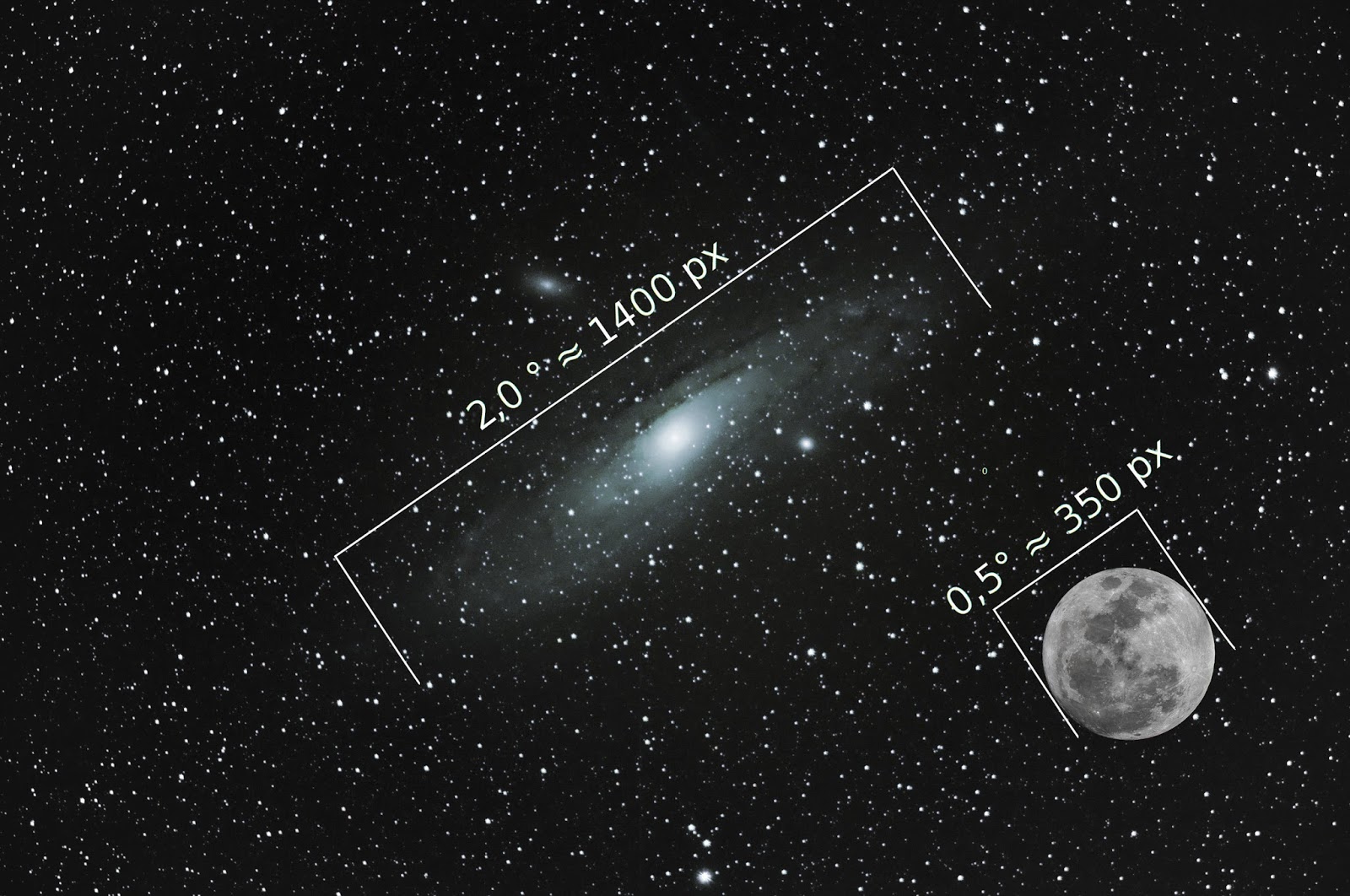
The two obvious extra-galactic objects you can see are (1) Andromeda, which appears as a small smudge but is actually huge: https://3.bp.blogspot.com/-4Z_aNPDvDVU/UtvEsVBCzSI/AAAAAAAAD... and (2) the large magellanic clouds which are a bit more obvious.

Andromeda is the nearest big galaxy to us, but the LMC still has its own stars.

To answer your last question - yes, this is the concept of apparent magnitude. Stars are so incredibly bright that you can see them despite the fact they're very distant. We can see the planets even though the only light we're getting is from reflection. Look at how bright Jupiter or Saturn are, for example, and then think what a miserable fraction of the Sun's light they actually reflect, and how much of that we receive on Earth. It's a very small percentage - the Sun is just really bright.

This is an important point though - you cannot measure the size of most stars directly. We've been able to do it with very large stars, but mostly all you know is (a) That star is this bright and (b) it's this colour. From that astronomers can derive models to figure out how large it is. Even if you know the distance, it's not trivial: is it a really tiny, but stupidly bright object or is it a massive, but really dim object? Beyond a certain distance you have to use models and make educated guesses.

Re: First possible interstellar object detected in our solar system

#96
post #94

Earlier quoted context omitted.

It's moving far too fast in the worst possible direction, and it's already far too far away. If we'd known it was coming, we could in principle have gotten something out to its point of closest Earth approach, but the object's velocity means even that would've been a flyby with no possibility of rendezvous outside possibly an impactor. As the matter stands today, anything we'd send after it would have to overcome a v…

That doesn't make sense. If the Earth is 12,000km in diameter, surely it will take a few minutes to traverse and not multiple times per second? Edit: Oh never mind, you meant the velocity needed to catch up with it.

Of course you're right. Evidently I cannot accurately exponentiate before coffee!

But, yes, the velocity difference is a killer. The closest we've ever come was the Apollo-Saturn stack, and even that only had ~9km/s left over after reaching escape velocity.

Re: First possible interstellar object detected in our solar system

#97
post #64
post #22

This surprised me at first, because i thought Halley's Comet was also interstellar...then looked it up, and sure enough its not...So, yeah for new things!

Halley's comet returns every ~75 years. How could it possibly be interstellar?

Is it not possible for the sun to capture an interstellar object?

Re: First possible interstellar object detected in our solar system

#98
post #83

Our asteroid detection system is still very pitiful if a 400m large object is only detected four days after its closest approach.

"closest approach" is very unquantified, and 400 meter is a very small object in a large space. It's a hard problem, probably not very prioritized either.

Re: First possible interstellar object detected in our solar system

#100
post #45

Anyone else thinking of Rendezvous with Rama by Arthur C Clarke right now?

I'm thinking more like The Expanse.

How have I never heard of this before?

>Hundreds of years in the future, things are different than what we are used to after humans have colonized the solar system and Mars has become an independent military power. Rising tensions between Earth and Mars have put them on the brink of war. Against this backdrop, a hardened detective and a rogue ship's captain come together to investigate the case of a missing young woman.

SOLD. I know what I'm watching this weekend, thank you!

Post reply on HN