Live data from Hacker News

Many Kenyans refusing basic income experiment

businessinsider.com

91–100 of 127 posts

Re: Many Kenyans refusing basic income experiment

#91
post #9

Earlier quoted context omitted.

"to educate the people" It's not 'reading and arithmetic' that's the problem. It's a basic lack of intelligent social organization across the board. It's the thousand little bits of behaviour that make you 'civilized' vis-a-vis other cultures. I'm weary of the using the word 'civilized' because it sounds a little colonialist, but when people turn to 'magic spells' for many things ... you know there really are some de…

I support this position, it is just not a very popular one with today's political thinking. It is evident that different societies have different rates of things like social cohesion, trust, violence and about a million other variables. There are some societies that have managed to emulate the success of Europeans, such as the Japanese and Chinese, so we know it is possible, that is the good news. The bad news is tha…

> It is evident that different societies have different rates of things like social cohesion, trust, violence and about a million other variables.

Of course...

> There are some societies that have managed to emulate the success of Europeans, such as the Japanese and Chinese, so we know it is possible, that is the good news.

Many culturally and technologically sophisticated societies existed in the ancient world outside of Europe -- in Asia, the Americas, and yes, Africa too. I have neither the time nor knowledge to list them all, but perhaps you should start by checking out what was happening in Egypt, China, Central America, and India long before golden age of European antiquity.

> The bad news is that there is no evidence Africa is attempting a similar feat. That is the fact and it is as plain as day.

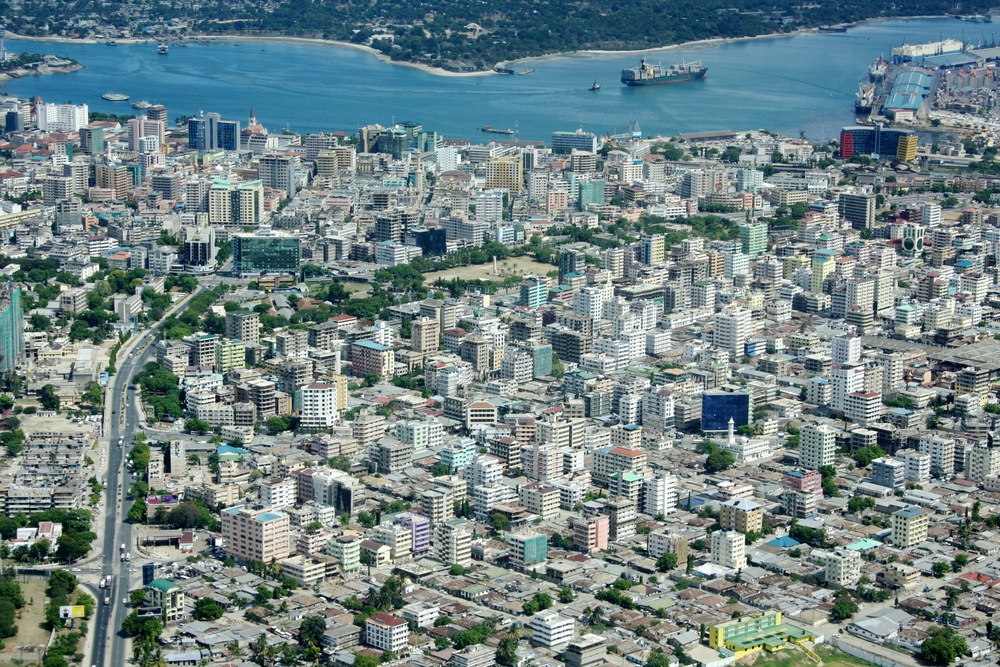
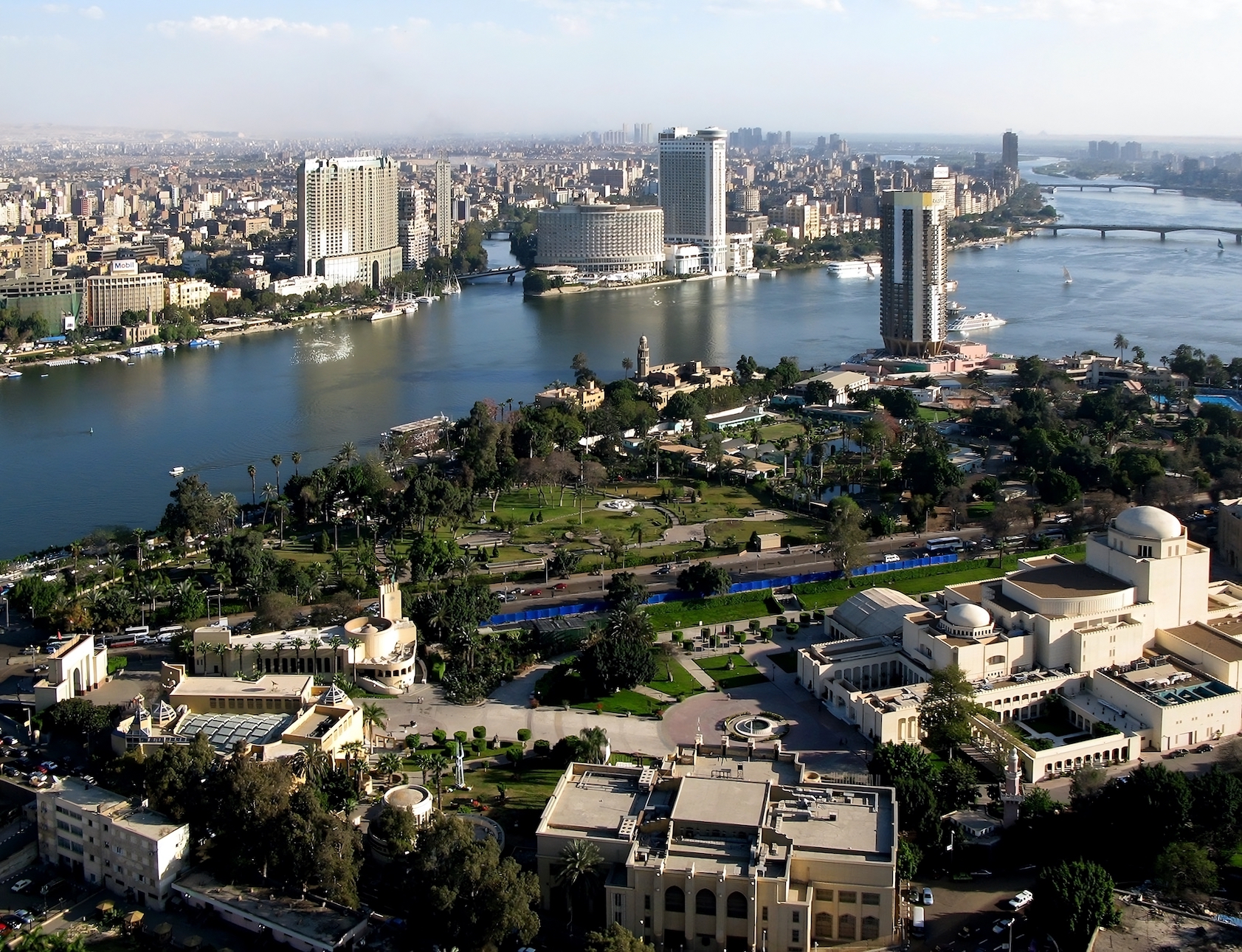
Nairobi, Lagos, Luanda, Dar es Salaam, Addis Ababa, Cairo, Dakar, Harare, Kigali, Abidjan...

https://media-cdn.tripadvisor.com/media/photo-s/03/da/de/46/...

http://s.newsweek.com/sites/www.newsweek.com/files/styles/lg...

http://imgs.sapo.pt/gfx/fc/67/591570.jpg

https://afktravel.com/wp-content/uploads/2014/07/dar-es-sala...
http://paradiseintheworld.com/wp-content/uploads/2012/02/add...

https://upload.wikimedia.org/wikipedia/commons/b/b2/View_fro...
https://upload.wikimedia.org/wikipedia/commons/4/46/Dakar-In...

http://www.bradtguides.com/media/wysiwyg/destinations/africa...

https://jaredmworley.files.wordpress.com/2011/12/p1070303.jp...

http://static.panoramio.com/photos/original/66636928.jpg

> Think of the enormity of it. The richest people (Euros) trade with the East Asians across a terrific distance by land or sea. All those ships bypass Africa. It is incredible.

What is incredible is how ignorant you are. The images above clearly demonstrate that trade is happening in Africa, though however I don't think trade is a meaningful measure of societal "success" in the first place.

Re: Many Kenyans refusing basic income experiment

#92

I understand why people don't want to take this money. Basically, here in Kenya we're brought up in a way that there is nothing for free, you have to work to get what you want. So someone giving you free money is very suspicious there must be something they want in turn.

I think it's true anywhere poverty is a common economic status for folks. You live with less, so every thing you get you want to own 100% of. Gifts are just deposits (implicit) on favors in the future, so I always avoid them unless they're from family or good friends. Strangers and gifts aren't a good mix in my opinion here from the US side of things.

Re: Many Kenyans refusing basic income experiment

#93

"Many Kenyans refusing basic income." I'm not sure how representative this project is. I mean, if someone tried a pilot project in San Antonio, would the results of that project be taken as a representative outcome for Texas or the United States? Remember, this "sampling," such as it is, is different from the kind of sampling they do on opinion polls, why they query a small but representative sample of the population…

This isn't the first time GiveDirectly has given Kenyans free money and they haven't had this much trouble before. It's probably not a beginner mistake. Something is different this time.

Re: Many Kenyans refusing basic income experiment

#94

Earlier quoted context omitted.

On the contrary, there are a large number of examples from e.g. South African shanty towns that if people living in tiny metal shacks with dirt floors get a bit more disposable income, many prefer to stay where they are and buy satellite TV and the latest iPhone rather than save that money to try and move to a better place.

That's exactly the point. The satellite TV is cost-effective, high-value entertainment. The iPhone is a supercomputer that offers information and vastly improved communication with family and friends. Yet outsiders who think they know better somehow believe that people are dumb to prefer an iPhone rather than moving out of the shanty. Maybe the iPhone is a better marginal buy than a better house.

Agree except it's unlikely to be an iPhone. Probably a cheap Chinese Android phone.

Similarly they will have a TV but likely a cheap model, nothing too fancy.

Re: Many Kenyans refusing basic income experiment

#96

I understand why people don't want to take this money. Basically, here in Kenya we're brought up in a way that there is nothing for free, you have to work to get what you want. So someone giving you free money is very suspicious there must be something they want in turn.

Yes, it's understandable that people are suspicious. But before, GiveDirectly was able to convince them that it's not a scam so it's a bit surprising that it didn't work this time.

White people giving free money never ends well most of the time, especially in Africa.

Re: Many Kenyans refusing basic income experiment

#97
post #91

Earlier quoted context omitted.

I support this position, it is just not a very popular one with today's political thinking. It is evident that different societies have different rates of things like social cohesion, trust, violence and about a million other variables. There are some societies that have managed to emulate the success of Europeans, such as the Japanese and Chinese, so we know it is possible, that is the good news. The bad news is tha…

> It is evident that different societies have different rates of things like social cohesion, trust, violence and about a million other variables. Of course... > There are some societies that have managed to emulate the success of Europeans, such as the Japanese and Chinese, so we know it is possible, that is the good news. Many culturally and technologically sophisticated societies existed in the ancient world outsi…

[deleted]

Re: Many Kenyans refusing basic income experiment

#98
post #73

Earlier quoted context omitted.

That is something I had never considered. If many people become dependent on UBI, they are entirely dependent on the state - to the point they can be taken advantage of if power is abused. UBI in some ways does take an element of freedom from people, granted it may provide other forms of freedom. What is to stop the government from changing the laws to require everyone only on UBI (no job) to perform some form of com…

The same thing that, presumably, stops government from doing those things now - voters. That's not to say that system of checks works. Places like Florida have enacted mandatory drug testing for welfare recipients, so there's obviously some political will to punish and regulate the poor.

It not the kind of thing that would happen suddenly, but gradually. A little change here, a little change there and after 10 years, its changed a lot.

All it would take is the right political climate and circumstances, combined with ad campaigns and lots of lobbying. Many arguments would be put forth to convince people a minor change is a good thing, that due to the current circumstances, its necessary. Many people would likely agree, despite the risk it opens up the potential for the system to be abused with another minor change in the future. And its voted through by popular demand.

A few years later, the political climate changes and the government isn't perhaps as trustworthy/predictable as it might have once been.

Now of course it could go the other way. However, power creep rarely goes backwards.

Re: Many Kenyans refusing basic income experiment

#99

Interesting. I have no desire to dump on UBI -- I want to see how these various experiments pan out -- but I am reminded of a thought experiment. Imagine it's 10,000 years ago. You arrive in pre-history with all of the technology of today: electricity, communication, medicine, automation, and so on. Your mission? To destroy mankind. Assuming infinite resources, how would you go about doing it? Sure, you could build o…

Oh come on, what is this crap? You are talking about people like they're almost subhuman. People more more adaptable than that. Maybe not everyone, but at least some will take any advantage they get and put it to good use, and the rest will follow.

"Primitive" people are most likely smarter and harder working than you. Surviving off hunting is not easy - you have to know a lot about the environment you're in.

Also, historically many scientists were well off people who did it as a hobby. By this theory they should have done nothing with their lives.

Re: Many Kenyans refusing basic income experiment

#100
post #91

Earlier quoted context omitted.

I support this position, it is just not a very popular one with today's political thinking. It is evident that different societies have different rates of things like social cohesion, trust, violence and about a million other variables. There are some societies that have managed to emulate the success of Europeans, such as the Japanese and Chinese, so we know it is possible, that is the good news. The bad news is tha…

> It is evident that different societies have different rates of things like social cohesion, trust, violence and about a million other variables. Of course... > There are some societies that have managed to emulate the success of Europeans, such as the Japanese and Chinese, so we know it is possible, that is the good news. Many culturally and technologically sophisticated societies existed in the ancient world outsi…

> Many culturally and technologically sophisticated societies existed in the ancient world outside of Europe....

That is a fact.

However something else is also a fact. That growth over the last 3 centuries in almost every area catapulted Europeans to incredible, almost seemingly impossible levels of economic success with respect to previous history.

The truth is in the numbers. Look at a graph of economic change over the centuries, it is astounding. I'm no Kurzweil but I see where he gets his (misplaced) optimism from.

This success has also been incredibly specific geographically, with the Far East only coming up in the last few decades, a delay I attribute to the retardation that was Communism.

> What is incredible is how ignorant you are. The images above clearly demonstrate that trade is happening in Africa, though however I don't think trade is a meaningful measure of societal "success" in the first place.

I was an investor in the so called frontier markets. The statistics were, are, and continue to be, absolutely terrible. In many cases if you measure on a per [yes, including black] capita basis Africa is doing worse today than it was half a century ago.

Western media constantly harps on positive news from the frontier.

Western media has a very strong bias against negative news about Africa for political reasons.

Even the Chinese who are very frugal and exceptionally adept at business cannot make headway directly. They employ resource extraction, (expensive!) worker importation and bribery on a massive scale. What do you think the corollary to that is?

I suppose you'll dismiss this as something-ism but if you quit using evidence based on Tripadvisor photographs maybe we'd see eye to eye.

We have to call a spade a spade. Africa is the most backward place in the world. Most growth that exists is obviously non-organic, relying on extensive networks of foreign coordination and siloed off resource extraction. This is an entire Continent that has not experienced an agricultural revolution let alone an industrial one. The level of corruption is hard to comprehend because it is the norm and not the exception.

Did you know that the south of the Continent relies on electricity production from a single company that has plants which are past their lifespan, which have not been maintained properly or replaced for decades?

In the North, Egypt, the most advanced, is a standing joke with its high population and meager economic output. It is a canal that has a country, not a country that has a canal.

The economy, such as it is, of the entire system is extremely fragile and it is very likely to fail outright. The structural integrity is shot.

> however I don't think trade is a meaningful measure of societal "success" in the first place.

Over centuries it is indeed the physical, material success that matters. That and biology and ecology, but those are subjects for another day.

I agree that economic success is not the only factor in the world but without it supporting the bottom items in Maslow's Pyramid there isn't much else.

There exist people who disavow materalism, secular communists, religious monks, but to me this always seemed like the brain rejecting the feet in some futile metaphysical standoff, since those people with their lifestyle tend to be indirectly supported by the scale of the economic system, just as the existence of North Korea is tacitly because of the West and our competitors.

Intuitively it is hard to maintain human dignity and self respect when you're poor, and easier when you are richer.

Post reply on HN