Live data from Hacker News

The brain is not a computer

aeon.co

91–100 of 166 posts

Re: The brain is not a computer

#91
post #61

Earlier quoted context omitted.

The point of this article is the argument that the metaphor that human brains work just like computers is leading people astray in figuring out how human brains actually do work.

He really didn't show where people are struggling due to that supposed handicap. He also didn't show why brains aren't literally performing the task of computing. I mean shit, if I judge the distance between two points, how can it not be said that I have collected sensory data and computed the result? All of his examples were pedantic or irrelevant.

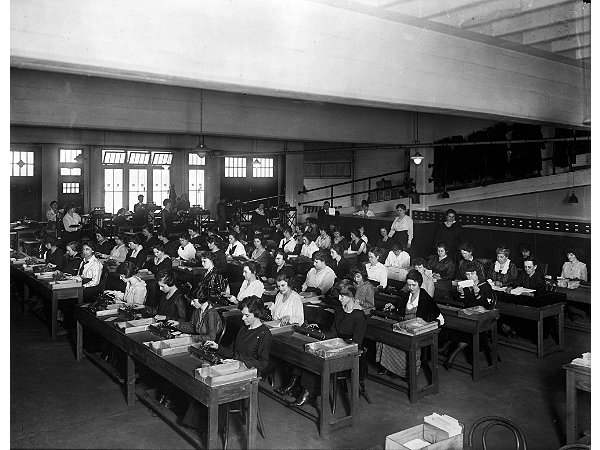
When somebody says humans don't compute, I like this picture :

http://cdn.theatlantic.com/assets/media/img/posts/computer_w...

Let's call it "ipython before computers", or "excel before computers" if you must.

Re: The brain is not a computer

#92

Earlier quoted context omitted.

Jerry Fodor himself was fond of saying, of his ideas with Ernie Lepore, "Absolutely no one agrees with us, which leads me to believe we might be right."

Chemero's book has a long section criticizing Fodor's reasoning in arguing that connectional networks are not a good model of human thinking. Looks like there's little skepticism about the power of neural networks here, even if some of the arguments are framed in terms of computationalism. https://en.wikipedia.org/wiki/Connectionism#Connectionism_vs...

I was studying Neural Networks in grad school (advisor was statistician from Bell Labs) at Rutgers and took a bunch of classes with Jerry, so I had these debates on a daily basis.

Unless you summarize Chemero's critique, though, I can't really respond to it.

Fodor didn't claim that connectionist models couldn't encode symbolic manipulation, just that the pertinent activity from the perspective of "thought" is symbolic manipulation. So he (I believe) would have said, maybe the connectionist can explain it or maybe he can't and who cares.

He did care that "concepts" were not statistical entities. They were "atomic" and basically tokens for the language of thought. So, Jerry argued, the concept of "Lion" could not be complex i.e. composed of cat, claws, teeth etc.

Re: The brain is not a computer

#93

I don't see it. - The brain is more fuzzy, but it still stores the link between the smell of roses and the look of roses. Just as a probability, like a Bayes network. And you will fall for Illusions, just like a Bayes network can be wrong ("for a second I thought this was..." and than more information from the senses falsifies/corrects the probabilities). - The brain is imperfect in reading from memory, but it still…

Agreed. This article struck me as exceedingly pedantic. Given the author's background, I'd put money on the idea that this is the result of years of frustration at having his life's work dismissively reduced by casual observers to something like "yeah, it's basically a computer" and thinking they therefore understand all the intricacies of the human brain. I can see how that might grate on a person in his field and t…

> Forgive me for this introduction to computing

A further frustration might be with computers themselves. I don't see why an introduction/exposition to computing should be something that needs pardon.

Re: The brain is not a computer

#94

I don't see it. - The brain is more fuzzy, but it still stores the link between the smell of roses and the look of roses. Just as a probability, like a Bayes network. And you will fall for Illusions, just like a Bayes network can be wrong ("for a second I thought this was..." and than more information from the senses falsifies/corrects the probabilities). - The brain is imperfect in reading from memory, but it still…

Bravo. You can understand that only if you offer an abstract definition of terms like 'computer', 'computation', 'calculation' etc. If you define 'computing' as something these clusters of regular matter we call 'computers' do, then if would exclude animals and other things. But, when you're thinking in abstract terms, then you come to the conclusion that a lot of things in nature are 'computing'. The same thing coul…

This still leaves the mind-body problem. Got an opinion on that?

Re: The brain is not a computer

#95
post #87
post #76

Earlier quoted context omitted.

And what does it mean for something to compute?

Being able to follow an algorithm, a set of steps(parallel or in series) to reach a result. The brain has input, goes through various connections, and you end up with a result.

So is fire a computer? It goes through a series of steps to reach a result.

Re: The brain is not a computer

#96
"The time has come to hit the DELETE key." So, after all, he is using a computer metaphor? The author proceeds with an priori agenda, rather than looking at facts and arriving at conclusions. I can't find a spot where he tries to see if his claims are falseable. His approach is unscientific. To be fair, his essay contains falseability ideas to test against current ideas of intelligence as the capacity of entities to consume and apply information.

Re: The brain is not a computer

#97
Oh, this is a treat. Author claims to demolish "Brain is a Computer" as historical ignorance by comparing digital computers and brain. Instead, author shows own ignorance of history of computing by ignoring the relevant branch: analog computers. Most ignore them although they're critical here. So, here's a summary of how analog computers work:

http://oro.open.ac.uk/5795/1/bletchley_paper.pdf

These types of computers implement mathematical functions that process signals from the real-world in their native form in real-time. Each component implements primitive functions that act on electrical input. They're usually arranged in connected components that flow from one thing to another or have feedback loops. They have no memory but can emulate it by generating on the fly. Doesn't that sound awfully familiar? ;)

I've been saying for years that brain is not digital and is a computer. Past year or two learning hardware just solidifies it more. Just look at it's properties to instantly see analog effects:

http://theness.com/neurologicablog/index.php/is-the-brain-an...

There's models for general-purpose, analog computers with prototypes built, analog models of brain functions, and analog implementations of neural networks. All show that the brain might actually be a general-purpose, analog (or mixed) computer. Moreover, it seems to be a self-modifying, analog machine with some emergent properties starting at childhood in its early phase. The complexity of this thing and re-creating any one brain's function would be mindboggling as author correctly noted.

So, the brain is not a digital computer. It's an analog or mixed-signal computer with massive redundancy and ability to reconfigure itself. The descriptions of inconsistencies with digital match up nicely to model approximations in an analog style. Those issues even contributed to switch to digital for better accuracy/precision. Now, they're going to have to switch back if they want to match the greatest computer ever made. :)

I'll leave you with examples of analog and neural.

http://www.artificialbrains.com/brainscales

https://pdfs.semanticscholar.org/6e84/1782fec1f1f46629ad965b...

Note: The above, my favorite as geometrically closer to brains, is a 60 million synapse system that took 294,912 cores to simulate. That's what a handful of analog chips are doing in real-time. Behold the power! :)

http://research.cs.queensu.ca/home/akl/cisc879/papers/PAPERS...

http://binds.cs.umass.edu/anna_cp.html

Note: Siegelmann writes on non-Turing models for computation focusing on analog and neural. Her lab is all over the theoretical aspects of this stuff.

http://moon.cc.huji.ac.il/oron-shagrir/papers/Brains_as_Anal...

Note: Shows how many of these things are mathematical relationships. Other references exploit that given it's what analog implements.

http://www.eetimes.com/document.asp?doc_id=1329591

Note: A few were interested in simulating actual brain structures with memristors. Above is the latest take on that in Russia.

So, there you all go. It's a computer. It's an analog computer. Also, ends the parallel debates about whether you can have a general-purpose, analog computer or whether it can top digital. A few, analog computers working as a team... invented... digital computers. QED. :)
Re: The brain is not a computer

#98
post #74

I've been going through my pocket stack today and came along this article: http://www.nytimes.com/2015/06/28/opinion/sunday/face-it-you... > "Face It, Your Brain Is a Computer" I think it fits as a counterpoint.

Interestingly, the author of that piece is the editor of "The Future of the Brain", a selection of which is cited in the original article.

Re: The brain is not a computer

#99
post #68

> Your brain does not process information, retrieve knowledge or store memories. Next up, an ornithologist tries to argue that birds don't fly, because they have muscles instead of engines and nobody can pinpoint the ailerons or control stick. What else could a brain possibly be doing? What do you think a brain responding to stimulus and changing as a result of it is , if not a form of information processing and stor…

Birds don't store flights, they fly. Human brains don't store memories, they remember: they reimagine internal mental states and tell stories.

And you're suggesting they do this without storing information?

Hmm.

Re: The brain is not a computer

#100
post #95
post #87

Earlier quoted context omitted.

Being able to follow an algorithm, a set of steps(parallel or in series) to reach a result. The brain has input, goes through various connections, and you end up with a result.

So is fire a computer? It goes through a series of steps to reach a result.

Is fire able to follow an algorithm? I mean some creative person could probably make a computer out of using fire.
Post reply on HN