Live data from Hacker News

There's something off about LED bulbs

nymag.com

891–900 of 966 posts

Re: There's something off about LED bulbs

#891
post #889

There's a lot wrong with LEDs in general and retrofit (E27 bulbs) in particular. In no particular order - LED emitters driven hard for cost reasons, age and fail quickly - Power supplies driven hard for cost reasons, age and fail quickly - Poor CRI and SSRI - Flickering - Dim-to-warm is uncommon - Poorly designed power supplies that age and fail quickly - The same light quality is vastly more expensive to achieve wit…

A bunch of this is driven by power efficiency requirements, creating a flickering low quality mess. Like no-flicker LED lights usually have a worse power factor.

Most flickering mess is caused by throwing away half of the sine wave due to cheaping out on components and has nothing to do with efficiency.

Re: There's something off about LED bulbs

#892
post #533

Earlier quoted context omitted.

This is the frustrating thing about LEDs that IDK we can change. If there was a "DC" light socket in the house we could have LEDs outlasting owners, and for cheap. Nearly all the expense of LED bulbs is the power supply. Everything else is dirt cheap. A single home DC power supply with ~200W of output could light an entire house, flicker free. What's even more frustrating is I think we could fix it. A national regula…

Trying to cram all the infrastructure for an LED lamp into the shape of a light bulb is a bad idea, even if the input power is DC. Good designs for LED lighting have larger surface areas for heat dissipation and some physical/thermal separation between the LEDs and the power supply. A quality power supply does not produce flicker. As other comments have noted, dimming, or even predictable output requires some sort of…

One of the problems is that in some countries like the US, ceiling lamps are hard-wired and not "user-replaceable", so people have to resort to using those stupid bulbs in their old fixtures.

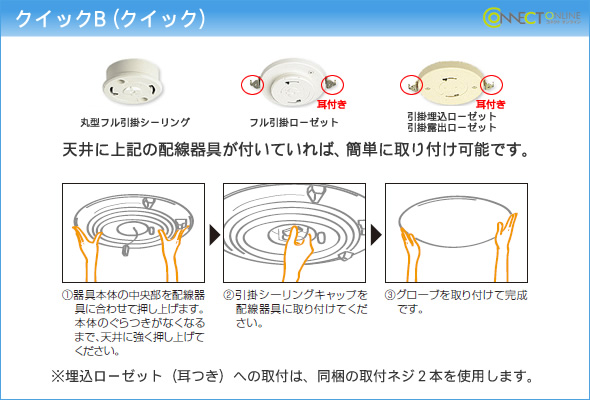
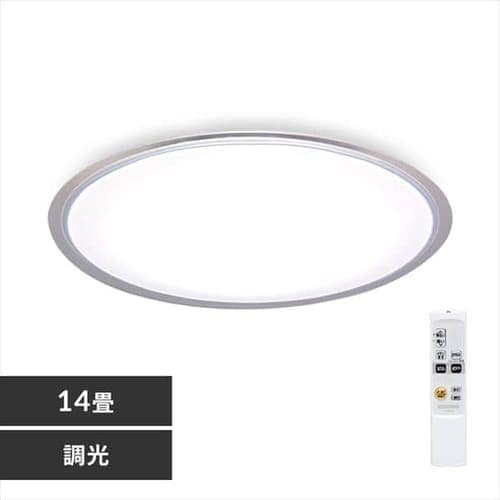
I live in Japan, and instead of just a pair of wires coming out of the ceiling, there is a standardized "ceiling socket" [0] which can also support the weight of a lamp. This means that swapping out light fixtures is plug and play, so the standard LED lamp is something like this [1] where you have a nice big flat metal plate backing the hardware is mounted to for heat-sinking.

I don't own any LED bulbs at all - all our lamps are of this type so I wouldn't have anywhere to put one.

It was the same when I lived in Sweden - a standard ceiling light outlet (IIRC there is a EU standard for this now called DCL) so that replacing light fixtures was easy. Moving into an apartment, often they wouldn't even come with light fixtures, you'd bring your own.

[0] https://www.e-connect.jp/images/to_quickB.jpg

[1] https://www.irisplaza.co.jp/IMAGE/HK/PRODUCT/H246902.jpg

Re: There's something off about LED bulbs

#893

Earlier quoted context omitted.

So "is now something" implies that incandescent was affordable. 16 incandescent bulbs, averaging 3 hours per day, would cost about 50 cents per day. $150-$250 per year in most of the country. So getting the really premium LEDs is still cheaper than lighting used to be. Even better if you use the good bulbs for room lighting and the cheap bulbs for closets and outdoors and such.

This is not how poor people are able to manage money. When you're living paycheck-to-paycheck, you don't buy $18 bulbs, ever. That $18 is needed for rent, food, and utilities.

> That $18 is needed for rent, food, and utilities.

You say that like the utilities weren't even larger before the change. That $11-18 a month is explicitly not going to utilities.

I'd say those people are getting an upgrade in food or other things at the cost of CRI. And they can choose not to take that trade if they prefer CRI. You only need to buy one bulb at a time, after all, no need for massive savings. And even if you buy the extra fancy $18 bulbs you'll still save some money compared to incandescent.

Re: There's something off about LED bulbs

#894

Earlier quoted context omitted.

> Trying to cram all the infrastructure for an LED lamp into the shape of a light bulb is a bad idea, even if the input power is DC. Absolutely, the incandescent light bulbs have that shape for a reason: the screw is small because there is nothing to put in it and it doesn't heat, the bulb is large to dissipate all the light and heat it generates. And the LED light bulbs have exactly opposite problems: almost all of…

There are finned LED bulbs which can fit standard Edison Screw sockets, e.g.: https://www.designboom.com/technology/self-cooling-100-watt-... > https://i.pinimg.com/originals/b5/c2/c5/b5c2c5d69fb240a571ba... > It's also helpful to recognise that existing lighting fixtures and lamps were designed around the constraints of incandescent bulbs. The first generation of LED bulbs and lamps largely conform to these. As LEDs…

There are also these type of "ceramic substrate" bulbs which claim to give longer life. I suspect other compromises in the construction may negate that.

https://www.sansiled.com/blogs/learn/what-are-the-benefits-o...

Re: There's something off about LED bulbs

#895

There's a lot wrong with LEDs in general and retrofit (E27 bulbs) in particular. In no particular order - LED emitters driven hard for cost reasons, age and fail quickly - Power supplies driven hard for cost reasons, age and fail quickly - Poor CRI and SSRI - Flickering - Dim-to-warm is uncommon - Poorly designed power supplies that age and fail quickly - The same light quality is vastly more expensive to achieve wit…

It is interesting you cite that the cost has went up for lighting. Where I live the government owned utility often raises their rates per kwHr. One of the reasons they cite is the increase in efficiency leading to a drop in revenue each year. The same utility pays for those efficiency projects.

My network and kWh cost are split and the network cost have risen far less than kWh cost. Also the network cost are constant. Looking at where those are used for the main cost are in peak usage capacity which efficiency actually lowers.

Re: There's something off about LED bulbs

#896

Earlier quoted context omitted.

>almost all of them are using their parts, especially capacitors, well above the specs Well, the LEDs themselves will last up to 20 years, so they have to make something in the bulb fail before that. Can't have people only buying replacement bulbs every other decade.

Not sure why you are being downvoted, when that is exactly what has happened with incandescent light bulbs one century ago: > How exactly did the cartel pull off this engineering feat? It wasn’t just a matter of making an inferior or sloppy product; anybody could have done that. But to create one that reliably failed after an agreed-upon 1,000 hours took some doing over a number of years. The household lightbulb in 1…

There's a fantastic video about this called "This is why we cant have nice things."

https://youtu.be/j5v8D-alAKE

Re: There's something off about LED bulbs

#897

Earlier quoted context omitted.

Almost all LED bulb failures are because the power supply died due to overheating, not the LEDs themselves. I harvest the LEDs out of dead bulbs to use in hobby projects. With Edison-style bulbs, anyway, the orientation they're mounted in makes a huge amount of difference. They're last a lot longer if they're oriented upright (base down) than in any other orientation because it reduces the heat buildup in the power s…

This is the frustrating thing about LEDs that IDK we can change. If there was a "DC" light socket in the house we could have LEDs outlasting owners, and for cheap. Nearly all the expense of LED bulbs is the power supply. Everything else is dirt cheap. A single home DC power supply with ~200W of output could light an entire house, flicker free. What's even more frustrating is I think we could fix it. A national regula…

> This is the frustrating thing about LEDs that IDK we can change.

I think that non-bulb LED fixtures are relatively common. For example, a style exists where you cut a hole in the ceiling and friction-fit the LEDs with the power supply up in the attic (presumably with infinite convective airflow): https://www.lowes.com/pd/Utilitech-Canless-Color-Choice-Inte...

These power supplies aren't going to die from overheating because the power supply is nowhere near the heat-producing LEDs. And, it's not like $30 for your entire light fixture is going to break the bank.

Re: There's something off about LED bulbs

#898
post #257
post #141

Earlier quoted context omitted.

Your comment is just regurgitating tech specs. In reality, the bulbs that are at hand vary so much in quality, that tech spec discussions are almost useless. The flickering is a real issue. I'm not aware of any standard way of rating the flickering of LED bulbs; they can vary from really bad (literally dark 50% of the duty cycle because one stupid diode) to decent (bidirectional diodes), to very good (full voltage re…

It’s not, though. First, this driver actually specifies flicker, and it has a credible number. Second, I own several and have tested them. Performance is excellent. It dims well, too. If you want a crappy driver, you don’t need to spend $25 for it :) Second, this LED chip is a serious one, with a serious data sheet, intended for people building their own fixtures.

Thanks, your posts were illuminating. I'm not looking forward to replacing my ancient quartz floor lamp, but I'm not sure I'll be able to buy a 3rd replacement bulb, when it finally goes out.

Re: There's something off about LED bulbs

#899

Earlier quoted context omitted.

That works OK because the transformer is relatively close to the lights. If it were a reasonably-large house, and the transformer were on the opposite side of the house, you'd have a problem with a noticeable voltage drop. All these ideas people are throwing out here involve a single whole-house power supply. If it were for 48VDC, it would probably be fine, but 12V would result in significant line losses.

We already see transformers for a run of e.g. track lights, low voltage lights on tension wires, and so on. That's been a thing ever since halogens came to market. Having multiple transformers is perfectly doable and commercially viable -- though I would appreciate more product availability for something easy to stash in the hollow space of a ceiling, like recessed lighting is installed.

I still don't see the point of all this. If you have a handful of lights in a room, and drive them with a single power supply, you're still going to have big problems: the line lengths to each fixture will be different, resulting in different voltages. You can't drive LEDs that way with good results: they need fixed current. And you can't daisy-chain them either: if one emitter dies, then the remaining ones will suddenly have different current, and probably die quickly. The proper way to drive LEDs is with a power supply very close to the emitters and designed specifically for those emitters and the (short) wire length to them, not 4 meters away and not with some variable-length wire that can't be designed for.

Everyone here is complaining about ultra-cheap LEDs that don't last very long because they're poorly engineered, but that's exactly what you're all trying to do here by using a separate, shared power supply. You could get away with that in the 1980s using incandescent bulbs, but you can't do it now unless you want the same crappy lifespan and reliability you're all complaining about.

The solution is very simple: buy fixtures that are engineered well. Switch-mode power supply electronics are not expensive at all, but when mfgs cheap out or do a crappy job designing them, you get bad results, usually short lifetime of either the power supply or the LED. What you're trying to do here is buy a really expensive power supply, which has to be engineered to a far greater degree and for a far wider range of operating conditions (since they don't know what you're going to connect to it), just because you had a bad experience buying some $2 light bulb that had a crappy power supply built-in. This really makes no sense.
Re: There's something off about LED bulbs

#900

Earlier quoted context omitted.

Sure, but I'm billed by kw-Hr. Bill me for the infrastructure if that is what costs money.

[flagged]

Burgers and bread loafs compete on all their costs, different competing outlets actually differ in those costs, and people choose which ones to use.

Utilities don't have that. Everyone is stuck paying for both infrastructure and use, so it makes sense to charge them separately.

If each neighborhood had exactly one restaurant that everyone used for all their food, maybe it would make sense to split the burger flipper costs evenly.

Post reply on HN