I think a more useful coloring would be by period: "first internet bubble", etc.
Famous tech acquisitions’ cost per user
81–90 of 100 posts
Re: Famous tech acquisitions’ cost per user
#82Wow. This graph is certainly illuminating: https://public.brightside.io/v1/chart/321ef2c603e8d67080afcd... 450000000 is a lot of users. Metcalfe's law says that the value of a communication network is proportional to the square of the connected users. Then add to this the amazing growth they are seeing. I don't think people quite realize what this means. EDIT: In general, it baffles me how many armchair opinionators…
Metcalfe's law is clearly wrong after a network get's overly large. I could in theory call a random person in China but if I have no way of communicating with them it's practically worthless to do so.
See "A Refutation of Metcalfe's Law", by Odlyzko and Tilly:
http://www.dtc.umn.edu/~odlyzko/doc/metcalfe.pdf
I'd extend the rule further and suggest that the value of a network scales as some Odlyzko and Tilly suggest, but with an additional negative function subtracting value (v) from the network:
v = n(log(n) - f(n)
v = n(log(n)) - kn^2
Moreover, let's look at some group sizes which might allow us to estimate for k in various contexts.
For software team size, it's very typical that a core engineering group has a size of 5-10 members, more or less. This suggests that k is about 0.2 for software development: every added team member exacts a cost, within a single group, of about 20%. This sees value grow for 1 For an elementary school classroom where the ideal class size seems to be around 22-25 students, k would be around 0.08.
For Dunbar's Number, the number of relationships people can manage (100 - 300, typically set at 150), k is between 0.028 (100), 0.2 (150), and 0.113 (300).
For city sizes, it's likely that different cities offer different matches of positive and negative factors. k of 0.0005 gives value max at n ~ 10,000, k of 0.0006 is ~ 100,000, and 0.000007 is around 1 million.
To scale to 1 billion users with net positive value means you have to keep k to less than 0.00000001. That is: any one member can have only a 1 in 10 million chance of being annoying to other members.
Re: Famous tech acquisitions’ cost per user
#83Uh, is it just me or is this chart having a hard time with comma versus period for "thousands separator"? Broadcast.com is listed as having $10,961 cost per user, but comes up as $10.961 on the chart. [Sale price of 5.7B for 520K active users]
That's correct notation for a significant part of the world:
Re: Famous tech acquisitions’ cost per user
#84I do not like charts like this because their existence implies that cost per user somehow matters, or is a deciding factor even, in the price of an acquisition. Even if that was the major metric in determining a price, there's often a very large difference between the number of users currently and the expected number 1 year or 5 years out. You don't buy a company because of the number of users it has right now. You b…
their existence implies that cost per user somehow matters
Well, it does matter, after a fashion, and it's a one (of many) metrics that an acquisition can be considered on.
I found it interesting to look through the list for obvious winners and loses, and actually, that would be a much more useful plot: showing the cost-per-user on one axis against, say, the 3-5 year investment performance on the other.
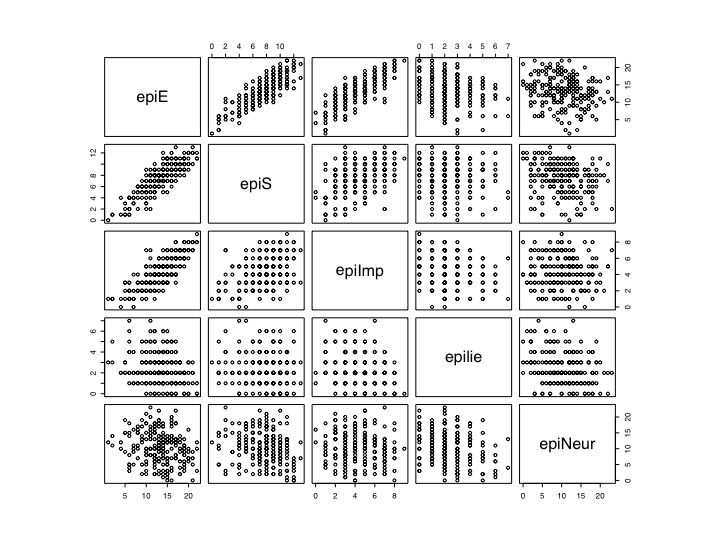
Actually, better than that even would be to look at a number of dimensions and plot these against one another looking for patterns in the data. R is particularly good at this with its scatterplot matrices:
Re: Famous tech acquisitions’ cost per user
#85So this story has 210 points, 80 comments and has been up for 13 hours and yet no-one has mentioned that the data is completely wrong.
There's no accounting for inflation. Comparing a nominal 1999 dollar amount with a nominal 2014 dollar amount is like comparing a euro amount with a dollar amount without doing an conversion (which would actually still be more accurate).
Re: Famous tech acquisitions’ cost per user
#86I do not like charts like this because their existence implies that cost per user somehow matters, or is a deciding factor even, in the price of an acquisition. Even if that was the major metric in determining a price, there's often a very large difference between the number of users currently and the expected number 1 year or 5 years out. You don't buy a company because of the number of users it has right now. You b…
Don't you think,
> number of users it has right now.
and
> or to be defensive in a field
often correlate?
Re: Famous tech acquisitions’ cost per user
#87Absolutely useless metric, both mathematically and economically.
When a service has a lot of users, it has no room for growth and cost per user will be small.
When a service has a few users, but has potential to grow exponentially, it will have high cost per user.
Economically there's a large difference between services with respect to their monetization. A service where each user pays $1000 will have higher cost per user than a free service.
Re: Famous tech acquisitions’ cost per user
#88Re: Famous tech acquisitions’ cost per user
#89Who made this? I want to cite it properly on TechCrunch?
Please don't, Techcrunch quality is already low enough even without charts based on bad statistics.
Re: Famous tech acquisitions’ cost per user
#90Can someone remind me what aardvark did?
My thoughts exactly.
Apparently it was a Q&A site that asked questions to friends and friends-of-friends.
This chart is the sweetest of schadenfreude — so many terrible acquisitions for huge sums of money.