Japanese from the inaka here. My contribution to this dataset: nothing. No station in my town, never was one. The nearest line is an hour by car and it's openly next on the chopping block.
All 9,300 Japanese train station, animated by the year it opened (1872–2026)
81–90 of 90 posts
Re: All 9,300 Japanese train station, animated by the year it opened (1872–2026)
#82Cool idea! Not sure if this was created with LLM help, but I suspect so? Not because the page is buggy (it is, though, crashed on my iPhone), but because they make data visualization so accessible. This type of presentation used to take days of work; now, if you find a unique piece of data, it's only a few hours of work to create a beautiful animated visualization. I do think this would be more compelling with some a…
If I may pimp my own similar, also railway related project...
https://tylereaves.github.io/uk-rail-map/
Not animated, but it's fully zoomable (with variable LOD at different levels), searchable (with fuzzy matching), info popups on not just stations, but things like track speed limits, and tunnels. What I do that's really different is that I'm VERY heavily manipulating the underlying data (The pre-processing pipeline is currently at something like 12k lines of python and counting, most of it doing things like advanced network topology, so that we show the actual track layouts, which if drawn at truly geographically accurate scale would just collapse to a single line.
I'm showing tons of detail..... 3.5k+ stations, and every single track - not just the main running lines, but every siding and yard track.
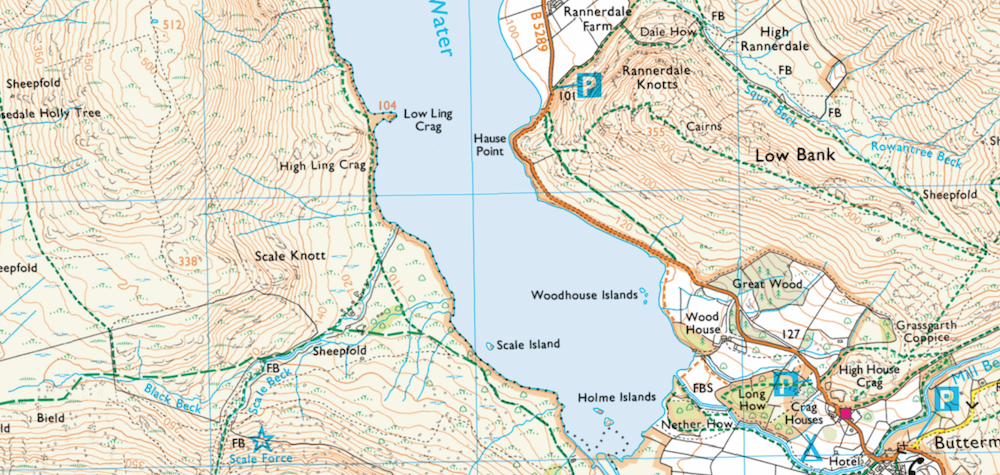
Yea, it's beige though, thought in my case I'm trying to emulate (without directly copying) the feel of Ordinance Survey maps like this: https://www.muchbetteradventures.com/magazine/content/images...
Re: All 9,300 Japanese train station, animated by the year it opened (1872–2026)
#83Cool idea! Not sure if this was created with LLM help, but I suspect so? Not because the page is buggy (it is, though, crashed on my iPhone), but because they make data visualization so accessible. This type of presentation used to take days of work; now, if you find a unique piece of data, it's only a few hours of work to create a beautiful animated visualization. I do think this would be more compelling with some a…
I created pages with Claude before and it's very very obvious when you see one. From the font choice to the color palette, and the style of the boxes. In fact if anyone has an effective prompt that says "please don't make this look like the average Claude page" please post it!
Though it standard look & feel is not that bad, IMHO.
Re: All 9,300 Japanese train station, animated by the year it opened (1872–2026)
#84Cool idea! Not sure if this was created with LLM help, but I suspect so? Not because the page is buggy (it is, though, crashed on my iPhone), but because they make data visualization so accessible. This type of presentation used to take days of work; now, if you find a unique piece of data, it's only a few hours of work to create a beautiful animated visualization. I do think this would be more compelling with some a…
It’s obvious on how much information is unnecessarily repeated. One of the main give away of AI is that the text is like an Atlantic article but worse, with very-very-very low information density. Full with sentences, paragraphs, pages which add absolutely nothing.
Re: All 9,300 Japanese train station, animated by the year it opened (1872–2026)
#85Earlier quoted context omitted.
> as soon as you finish paying it off, it's basically EOL The average age of a car on the road in the US today is now more than 11 years. The average new car loan is just less than 6 years. Beyond that, it's all just a different set of trade-offs. Aside from living somewhere truly dense with fantastic public transit and only going places reachable by said transit, owning a car means less time spent on transportation,…
The cost of ownership goes WAY up immediately after the warranty expires. I owned one car. A Ford I purchased brand new. I have no more desire to ever own a car. That experience taught me all I ever needed to know about cars. They are an endless money pit. Everyone I know who drives is poorer for it. >owning a car means less time spent on transportation See, that's how drivers think. "I need to spend less time in tra…
> I hear the cope though, about how cars are "freedom" and can "go anywhere," but when you don't have a car for a while, you begin to realize how cars are the opposite of freedom. Cars are an anchor. Everywhere you go, you have to worry about where to put the car. You can't get too far away from the car. If you have to feed a parking meter, you can barely get a block away from the car. Can't even finish the movie, let's go back to the parking meter. You always have to go back to the car, you can't just continue on your journey and leave it behind. That's not an option. Go back to the car.
Totally agree, I didn't realise how much of an issue this was.
I often go somewhere, walk 25km and go back from a totally different station. With a car this would have made me so uneasy knowing I still have to make my way back. Knowing I can do whatever I decide in the moment really makes me feel easy.
> See, that's how drivers think. "I need to spend less time in transportation", because it's miserable for them. You don't even consciously think about it, but subconsciously, you hate being in that car. I like riding the train. It's fun. Even the old Amtrak trains are fun to ride. I can enjoy a beer if I want. There's one cute conductor who flirts with me. I'm not getting any of that in a car.
Well personally I hate transportation too, but the car was more of a phenomenon. I had a car because I lived 70km from work. Now I live close and no longer need a car, and I waste less time on commute.
Re: All 9,300 Japanese train station, animated by the year it opened (1872–2026)
#86really cool wow
Re: All 9,300 Japanese train station, animated by the year it opened (1872–2026)
#87Earlier quoted context omitted.
> To be fair, most countries have due to privatisation Japan's system is almost entirely private and is best in the world by nearly every metric. We (the people) do not owe support to depopulated areas. If you choose to live in the boonies the government is not required to build or maintain roads, tracks, sewers, power to your place. Funds are not infinite. Japan's private system works because the government mostly g…
This take is hilariously misinformed. Japan's long-distance network was almost entirely public until JNR was privatized in 1987, and its successors the JRs continue to be for all intents and purposes controlled by the government. Some not-very-light reading about the rise and fall of JNR: https://www.substack-bahn.net/p/aura-of-success-the-first-ye... https://www.substack-bahn.net/p/the-death-and-privatization-... ht…
This is entirely wrong. Jees this is so infuriating to see repeated. Japan has ~100 train companies. JR is 1 of those (now 7). The rest are not. Hanshin, Hankyu, Keio, Keikyu, Tokyu, Toei, etc all giant train companies, all private, have been since they were foudned.
Re: All 9,300 Japanese train station, animated by the year it opened (1872–2026)
#88Earlier quoted context omitted.
> To be fair, most countries have due to privatisation Japan's system is almost entirely private and is best in the world by nearly every metric. We (the people) do not owe support to depopulated areas. If you choose to live in the boonies the government is not required to build or maintain roads, tracks, sewers, power to your place. Funds are not infinite. Japan's private system works because the government mostly g…
Or, more commonly, they have: 1. The public pay for and build the lines and prove market demand. 2. Decades later some 'fiscal conservatives' get elected. 3. Who then privatize them for a sweetheart deal to their friends. 4. Who then proceed to squeeze every penny they have out of the public, while foregoing expansion and service quality. With an end result of everyone getting to pay through the nose for shit service…
This is wrong! People keep pointing to JR and think that's the entire country and train system. It is not and never was. The majority of train lines in Japan were private, started private, privately funded, and are still private.
Re: All 9,300 Japanese train station, animated by the year it opened (1872–2026)
#89Earlier quoted context omitted.
This take is hilariously misinformed. Japan's long-distance network was almost entirely public until JNR was privatized in 1987, and its successors the JRs continue to be for all intents and purposes controlled by the government. Some not-very-light reading about the rise and fall of JNR: https://www.substack-bahn.net/p/aura-of-success-the-first-ye... https://www.substack-bahn.net/p/the-death-and-privatization-... ht…
This is entirely wrong. Jees this is so infuriating to see repeated. Japan has ~100 train companies. JR is 1 of those (now 7). The rest are not. Hanshin, Hankyu, Keio, Keikyu, Tokyu, Toei, etc all giant train companies, all private, have been since they were foudned.
No, it's not. The successful private companies all serve suburban commuters. The long-distance network was almost entirely JNR.
As of 1996, JR group still controls over 20,000 km of Japan's 30,000 km of rail, and that's after privatizing and closing a large slab of it (mostly those duplicated by Shinkansen).
Re: All 9,300 Japanese train station, animated by the year it opened (1872–2026)
#90Earlier quoted context omitted.
This is entirely wrong. Jees this is so infuriating to see repeated. Japan has ~100 train companies. JR is 1 of those (now 7). The rest are not. Hanshin, Hankyu, Keio, Keikyu, Tokyu, Toei, etc all giant train companies, all private, have been since they were foudned.
No, it's not. The successful private companies all serve suburban commuters. The long-distance network was almost entirely JNR. As of 1996, JR group still controls over 20,000 km of Japan's 30,000 km of rail, and that's after privatizing and closing a large slab of it (mostly those duplicated by Shinkansen).
The long distance is mostly irrelevant, People use trains daily for short commutes. As for JR, the arguably only reason it was in the position it was in was because the government got in the way. If they'd stayed out of the way the private companies would have built the rest.
Further, JR started private. It was nationalized in 1906. The Tokaido Line and tha Sanyo Line already built by private companies. They forced out 17 other companies and then ran it into the ground.
The only place private "might" not have built is rural and JR built those mostly as "pork-barrel" (favors to politians) when it was run by the government. I also say "might" because it is/was common, not just in Japan, to build housing and trains to that housing. You pick a place like Enoshima, build a few 1000s homes, build a train out there to sell the homes. So "rural" places do get private trains.