Live data from Hacker News

1-Bit Bonsai Image 4B Image Generation for Local Devices

prismml.com

81–90 of 214 posts

Re: 1-Bit Bonsai Image 4B Image Generation for Local Devices

#81
post #57

Earlier quoted context omitted.

Can you give an example of such a problem?

"Design me a 3d printable rocket engine for a hobby rocket project. Verify it's design in a full simulation. Iterate until it works reliably in simulation based on a verified printable design on a consumer laser sintering device (or substitute contract manufacture for under 1000 dollars)." This is a hobby version of a project, but you can imagine commercial versions of the same prompt for new databases, genomics stud…

I’m not convinced at all that the model won’t just get stuck in a loop where it doesn’t understand how to fix the broken rocket. I see similar failure modes in far simpler projects strictly confined to coding. This feels closer to “make me a profitable business, make no mistakes” than to a simple coding project.

Re: 1-Bit Bonsai Image 4B Image Generation for Local Devices

#82

Earlier quoted context omitted.

Ok heres the thing you will nevwr be able to truly do this due to logic. Logically five people pooling their resources beats one guy. therefore datacenters will always win because they get higher time utilization. so forget it. I always wonder the same but i let logic tell me its a fantasy, on average you cant outspend a whole group of people making better use of the hardware. you will get better hardware though, cut…

> so forget it. Which explains why you're using a dumb terminal to access compute services?

Basically, yes. We are on a website, after all.

Re: 1-Bit Bonsai Image 4B Image Generation for Local Devices

#83

Does anyone ever get their stuff to actually work. Like actually load?

Can't speak for browser demos, but I just got the ternary model working on my M5 generating images. The 1 bit didn't work, as it has a known bug with XCode 24.5 and I wasn't in the mood for installing 24.4 alongside.

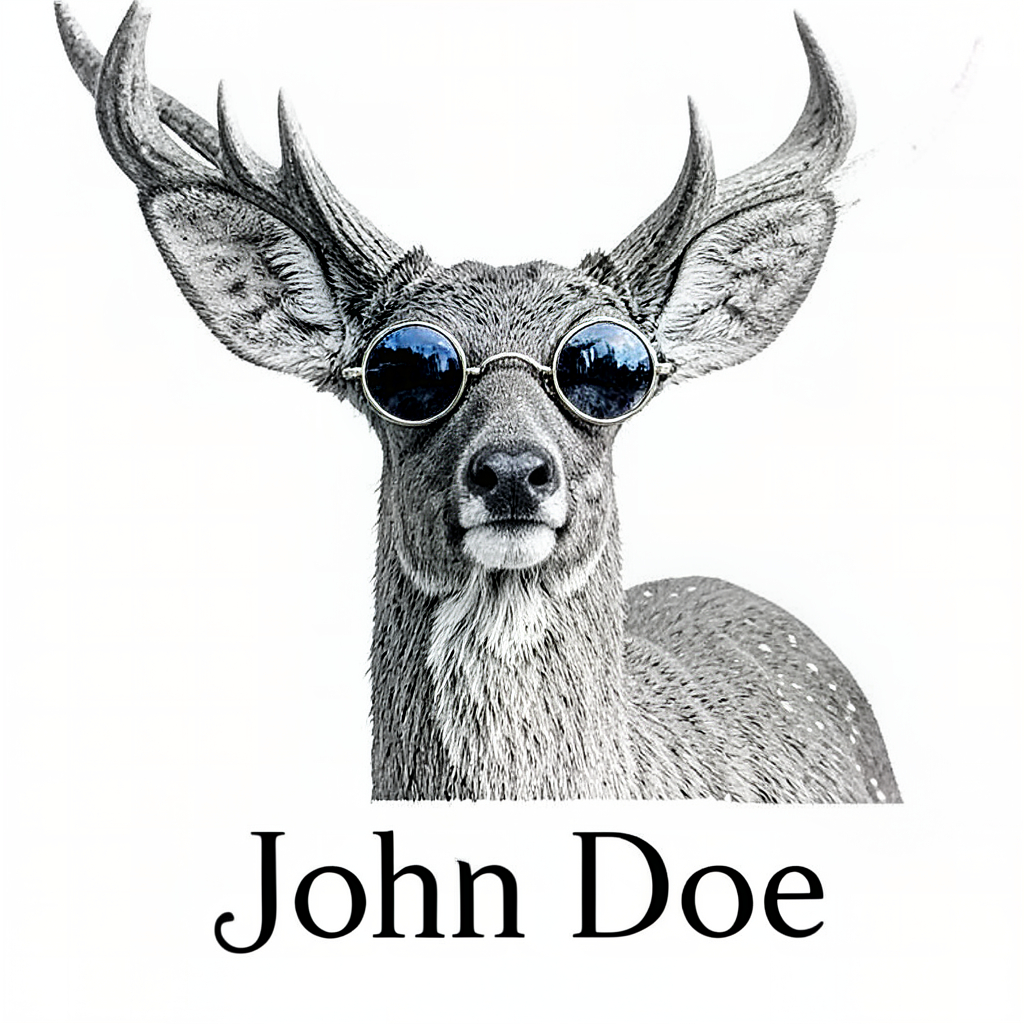
Here's a generation in your honor: https://peterc.org/img/johndoe.png

Re: 1-Bit Bonsai Image 4B Image Generation for Local Devices

#84

I saw '1-bit' and my mind first went to 1-bit dithered B&W image generation, not 1-bit model weights.... and so now I'm wondering how cool /fast / compressed a diffusion image generator could be if the images it was trained on / space it worked in was limited to 1 bit (Floyd-Steinberg / Atkinson / your favorite algo here) dithered images. Training would surely be pretty quick and probably fit onto one modern GPU.

I think you'd still be better off training in greyscale and dithering after the fact.

Re: 1-Bit Bonsai Image 4B Image Generation for Local Devices

#85
post #75

Earlier quoted context omitted.

Right now - there's some heavily subsidized subscriptions that are more or less cheating. For instance, Github CoPilot at $39/month gives you claude opus 4.6. They're going to close that off, but right now it's like a freebie for those doing API agentic harnesses. That said, if you are doing always on agents and you spend $3k-$4k on a GB10 or, $5+ k on Apple Silicon as your sunk cost, you will probably come out ahead…

> experiment What is the experiment? What are you hoping to learn from all this? Or do you just mean you've made a dynamic dollhouse that you think is cool? The Sims on your own terms?

A little of A, a little of B. I have a lot of fun building it out, it's surpassed Factorio in addiction, and I've been able to flesh out some patterns that I roll back into more productive agent harness bits.

For A:

The learning is in building agent harnesses that aren't just cron jobs reading a file like HEARTBEAT.md. I have some serious tools for my own use. One main assistant/coordinator agent, one SRE/coder agent (with sub-agents of its own).

I originally just started last year with the AI assistant (Jane from enderverse). Along the way building scheduled systems, hand offs to other agents, etc. As I ran into problems, I'd be rewriting and refactoring. So I spent some time making a low-stake hatbot with history and routines. Instead a from-scratch golang harness, I built it around pi and extensions. Time of day prompt splices (extensions can inject into or modify prompts on the fly, wake up reminders. Things that you do in the main session vs spinning up an ephemeral session. Self improvement daydreaming (modify your own skills and AGENTS.md) A lot of that went back into rebuilding Jane to something more useful for me.

For B:

The "dynamic dollhouse" as you put it was seeing where I could take that living chatbot next. There's a lot of projects pointing agents at slack, discord, message boards. I figured why not a mud with rooms, weather, and props. Lots of interesting challenges. How to keep bots from nesting in their own room, how to keep them from yes-anding each other all day long. How to slow down 3 bots talking at each other so a human can get a word in edge-wise.

Different levels. There's plain old NPCs that have dice roll random responses. There's LLM driven NPCs that only remember the last 5-10 messages. And the main ones are bot agents. Full agent harness, moving around the environment. Long lived context windows. One character (a nurse at the hospital) gets into arguments with an NPC receptionist that treats her as another patient. Complains about it to other characters, they remember and the word spreads.

The agents get prompted to write down notes, the head home for sleep (and session compaction). Next time they enter a room with that person after compact, their notes get loaded automatically. This kind of behavior can feed back into the more productivity based agents.

Re: 1-Bit Bonsai Image 4B Image Generation for Local Devices

#86
post #32

Genuine question: is this solving a real problem? IME, the bottleneck when using diffusion models isn't storage space or memory, it's generation time. Lots of models will run on 8-12 GB 1080-generation GPUs onwards, or on Macs with similar memory, which are probably the bottom end from a GPU power perspective anyway. I also note that these models are marginally slower than the small FLUX.2 model they're based on. Oka…

It solves part of the download issue if they actually delivers a 1-bit whole package (currently their download is around 3.5GiB, still not ideal since FLUX.2 [klein] 4B you can get a package including text encoder ~6 GiB).

For speed, no. Draw Things runs on iPhone just fine and generally faster than their implementation on the same model (FLUX.2 [klein] 4B).

Re: 1-Bit Bonsai Image 4B Image Generation for Local Devices

#87
post #75

Earlier quoted context omitted.

Right now - there's some heavily subsidized subscriptions that are more or less cheating. For instance, Github CoPilot at $39/month gives you claude opus 4.6. They're going to close that off, but right now it's like a freebie for those doing API agentic harnesses. That said, if you are doing always on agents and you spend $3k-$4k on a GB10 or, $5+ k on Apple Silicon as your sunk cost, you will probably come out ahead…

Have you learned anything interesting from your agent ant farm?

A few things. I replied to someone else above, but I feed lessons learned from my social ant farm agents back into more productive agents.

Memory recall:

Lots of systems out there to give agents memory. I've used a bunch and written a couple. Storing memories is easy, but getting an agent to recall them, no matter how much you mention it in your AGENT/CLAUDE.md is a bit of an uphill battle. I've even watched claude make useful project memories and never refer to them again.

In my agent ant farm - agents go "to sleep" at night. They get nudged to head home, once there they get prompted to make notes about their day, about other characters. Then we do a compact with custom instructions. After compact/sleep cycle, if they enter a room with one of the characters in their notes, that gets loaded back into context automatically.

That all boils down to hooks in Pi like before_agent_turn. You can intercept a prompt, check it against code/flat files, and smartly inject more information into context. You can have a long running main session with compacts that discard procedural bits and offload the rest to memory.

Time Awareness:

Agents have no concept of time. You can send them a message at 5am, then at 10pm, and it's been 2 turns for them. For coding, this is fine. But for assistant level stuff, adding a message like "It's 3PM. It has been 3 hours since the last interaction with the user" goes a long way. Without me saying something like "new topic", it knows now that time has passed, i'm probably onto something new. If I left something hanging, it will remind me about it, or maybe go check on things that should have happened during the day.

Inner Thoughts/Idle nudges:

I can have an extension run every 5 seconds, check a a schedule, check activity level of the main session and fire off nudges on the main session. These look like the user sent it, but I generally prefix it with [inner thought]. For my social bot, I tested this along the lines of "[inner thought] it's been 3 hours since you last talked with user, why not reach out, let him know what's new, maybe send a selfie or a photo of where you are". For my assistant bot, it's an 8am, 3pm, and 7pm nudge along the lines of "[inner thought] put together an activity report of work things that has changed since the last report". This all runs in the main context, they get the thought, have historical context, can run skill to check on vault updates, open beads, anything observed from ingesting other agent sessions, and sends me a summary. It take into account my idle factor. If I'm heavily engaged in conversation at 3PM, the report might get delayed 15 minutes or an hour, or skipped altogether.
Re: 1-Bit Bonsai Image 4B Image Generation for Local Devices

#88
> To our knowledge, Bonsai Image 4B is the first image model in its parameter class to run directly on an iPhone.

This is wrong. But they worded it carefully to be not entirely wrong.

FLUX.2 [klein] 4B (the same parameter class, basically the same model) runs on iPhone through Draw Things app, with 8-bit or 6-bit quantization (hence not "directly", I guess, but that is the technicality that sounds fishy enough).

Re: 1-Bit Bonsai Image 4B Image Generation for Local Devices

#90

Is there a benchmark of local image generation models? Local = can run on a 16 GB MacBook or 8 GB+ NVIDIA card.

Except the two (GPT-Image-2 and Nano Banana Pro), anything displayed here can run on the 16 GiB MacBook (including the FLUX.2 [dev]): https://tests.drawthings.ai/generate
Post reply on HN