Earlier quoted context omitted.
You have to understand or have experienced how fragile the early graphics programs were --- basically a .eps file would be a black box of PostScript code, and would have a pixel image preview used on-screen (a classic gag was to use a resource editor to change the pixel preview) --- whether or no it would actually print/image correctly was something one wasn't certain of until holding the actual output in hand, and e…
Thanks, I'm starting to understand. So Display Postscript was useful because it let you know that what you put on the screen as a programmer would be what's printed? And it allowed for cool graphics effects like custom strokes and fills. So that primarily matters for stuff you want to print. It wouldn't matter as much for assembling a UI. How does windows handle this stuff?
GUIs are built at least 2.5 times
81–90 of 155 posts
Re: GUIs are built at least 2.5 times
#82Earlier quoted context omitted.
The issue is that step 2 is wrong. Step 1 is to make a design, step 2 is to test it. Make a paper prototype and have your customer simulate working with it. If you feel fancy make a pretty prototype in Figma. If you have a good designer and cooperative costumer you can even combine step 1 and 2 with a whiteboard prototype. Ask the customer what a common task is. Draw the interface the whiteboard and ask the consumer…
> The issue is that step 2 is wrong ... step 2 is to test it. But of course the best and only real way to test it is to test the real thing...so build it. Back to step 2. :-/ Recurring theme in pre-press: get the texts, get everybody to proof-read the texts, get customer sign off, do on-screen proofs of the layout, everyone signs off, do print-proofs, do proof-printer proofs, do a press-run. Everybody signs off. Prin…
You could give $100 per typo found and I bet that first page would be caught.
Re: GUIs are built at least 2.5 times
#83Earlier quoted context omitted.
> The issue is that step 2 is wrong ... step 2 is to test it. But of course the best and only real way to test it is to test the real thing...so build it. Back to step 2. :-/ Recurring theme in pre-press: get the texts, get everybody to proof-read the texts, get customer sign off, do on-screen proofs of the layout, everyone signs off, do print-proofs, do proof-printer proofs, do a press-run. Everybody signs off. Prin…
I think these kind of tasks where many people are asked to review but nobody owns it are the problem. One assumes others reviewed it and then they might review them superficially. You could give $100 per typo found and I bet that first page would be caught.
Unfortunately, superficial feedback like typos are the least valuable feedback possible when creating a new design. What you really want to know is whether the design is actually feasible, if it introduced new pain points, if it is better than what it is going to replace. That's the sort of thing people will notice internally but not necessarily give voice to when they spend three minutes glancing at a prototype or initial build.
Re: GUIs are built at least 2.5 times
#84A tight iteration loop is the only solution I've seen for building high quality UI/UX. Embrace that it's going to be terrible the first few times and plan for this. We could save on cost per iteration by avoiding the layout and styling pass until the very end. These interfaces are about communicating information. Plain text and basic form submissions work just as well as anything else when you're still trying to desi…
One 'trick' I discovered recently was to completely ignore UI design and focus on _formatting_ instead -- the placement of elements in a proper and useable way. Saving the visual aspects of design (widget design, margins, padding, color, animations, etc.) until the very very last step.
My hypothesis is that "good UI" = "good page formatting" + "pretty UI elements".
Any thoughts on this approach?
Re: GUIs are built at least 2.5 times
#85A tight iteration loop is the only solution I've seen for building high quality UI/UX. Embrace that it's going to be terrible the first few times and plan for this. We could save on cost per iteration by avoiding the layout and styling pass until the very end. These interfaces are about communicating information. Plain text and basic form submissions work just as well as anything else when you're still trying to desi…
Very interested to hear about a high quality UI as I have never encountered one
iTunes: https://discussions.apple.com/content/attachment/192853040
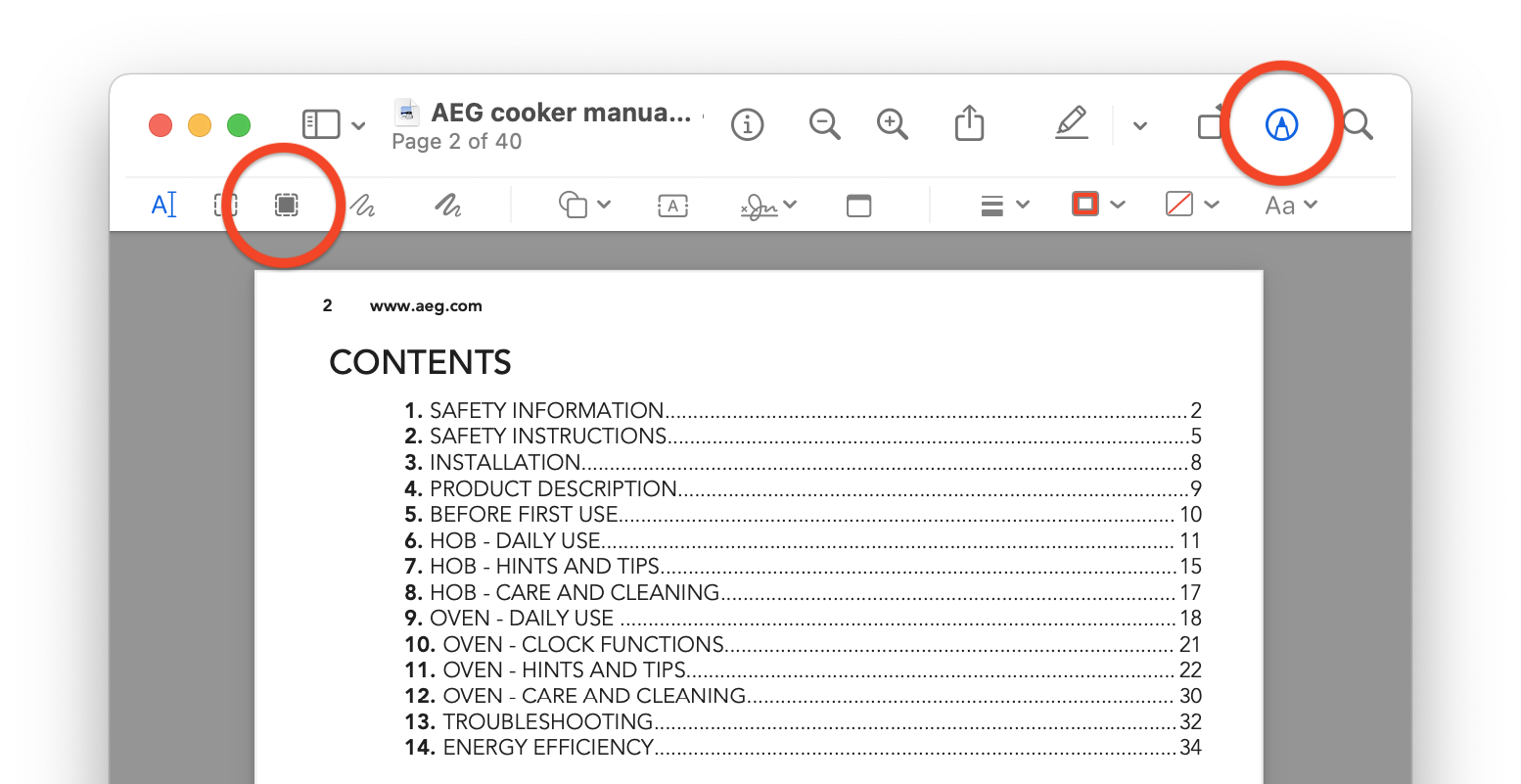
Preview: https://www.intego.com/mac-security-blog/wp-content/uploads/...
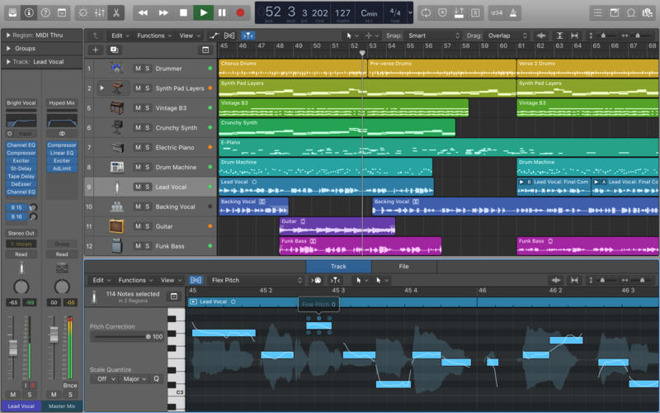
Garage Band: https://inside.wooster.edu/technology/wp-content/uploads/sit...
Re: GUIs are built at least 2.5 times
#86A tight iteration loop is the only solution I've seen for building high quality UI/UX. Embrace that it's going to be terrible the first few times and plan for this. We could save on cost per iteration by avoiding the layout and styling pass until the very end. These interfaces are about communicating information. Plain text and basic form submissions work just as well as anything else when you're still trying to desi…
Very interested to hear about a high quality UI as I have never encountered one
The bloomberg terminal UI.
Some emacs setups. (much more variability than VIM)
Some VIM setups.
The thing that all of these have in common is that they are designed for experts, not for every user. Also each one of those is a custom full platform app (or primarily text based) vs web app.
Re: GUIs are built at least 2.5 times
#87Earlier quoted context omitted.
UX is hard. What usually happens is that you have: - developers who are bad at UX writing the software and improvising with all the use cases that were not adequately specified in the design document - end users who are bad at UX giving their input, but can tell when something feels right for their use case - managers/spec writers who are bad at UX and are trying to translate the wishes of end users to the developers…
I've found that most teams are hesitant to show backend code, API calls, etc. during demos. Screw that! Show your product owner and stakeholders the complexity of the backend _in conjunction_ to the ease of the front end. The underlying note is "here is what you'll do manually and without support if you don't want the UX as it is now."
Plus, it feels a little too passive-agressive to me.
Re: GUIs are built at least 2.5 times
#88A tight iteration loop is the only solution I've seen for building high quality UI/UX. Embrace that it's going to be terrible the first few times and plan for this. We could save on cost per iteration by avoiding the layout and styling pass until the very end. These interfaces are about communicating information. Plain text and basic form submissions work just as well as anything else when you're still trying to desi…
When I do GUI work, it's usually for hobbyist or internal projects. I value quality UI/UX extremely highly. I often get 'analysis-by-paralysis' here because I try to do the design and development in a synchronous single pass. Your comment about tight and rapid iteration being the only solution resonates with me. One 'trick' I discovered recently was to completely ignore UI design and focus on _formatting_ instead --…
Re: GUIs are built at least 2.5 times
#89A tight iteration loop is the only solution I've seen for building high quality UI/UX. Embrace that it's going to be terrible the first few times and plan for this. We could save on cost per iteration by avoiding the layout and styling pass until the very end. These interfaces are about communicating information. Plain text and basic form submissions work just as well as anything else when you're still trying to desi…
This has been my experience as well. Something about the human brain just makes it very bad at observing a mocked-up screen layout and understanding how well it works in practice. Apply that to an entire application with multiple functions and the problem increases exponentially. Experience helps speed things up. But rapid iteration with a fast feedback loop is the best practice. Design is not doing the start of the…
It would be surprising if someone had the ability to do this.
Re: GUIs are built at least 2.5 times
#90A tight iteration loop is the only solution I've seen for building high quality UI/UX. Embrace that it's going to be terrible the first few times and plan for this. We could save on cost per iteration by avoiding the layout and styling pass until the very end. These interfaces are about communicating information. Plain text and basic form submissions work just as well as anything else when you're still trying to desi…
The best functional specs for a UI have come from business people building their own in excel. At a minimum they will have some idea of layout and what information should be displayed on which screens. This also lets them focus on the core information, not the styling. Building GUIs on the web, there are infinite ways to style every UI element and more attention goes to that then the actual interaction.
Not all spreadsheets are like this but there are absolutely no guardrails to prevent it.
Building a good GUI takes thoughtful design by someone who understands what makes a good GUI and what the goals of the interface are from the user's perspective. Someone who can make it look like what the user is already used to, even if that isn't "beautiful" UI or doesn't follow the latest trends in whitespace and widget appearance.