Live data from Hacker News

Why does the "chart increasing" emoji show in red?

blog.emojipedia.org

81–90 of 122 posts

Re: Why does the "chart increasing" emoji show in red?

#81
post #52

But their traffic lights are red, being the traditional "STOP", or caution, etc...why would that be chosen to be applied to something increasing? And apparently chart-decreasing is blue, again opposite correlation to use in traffic lights, meaning "go"

The first traffic lights were imported to Japan from the US in 1930, and had "subtitles" written on them because people had a hard time understanding what the colors meant*.

Something I find entertaining about the stock colors is that the idioms "in the red" and "in the black" mean the same thing in Japanese as in English.
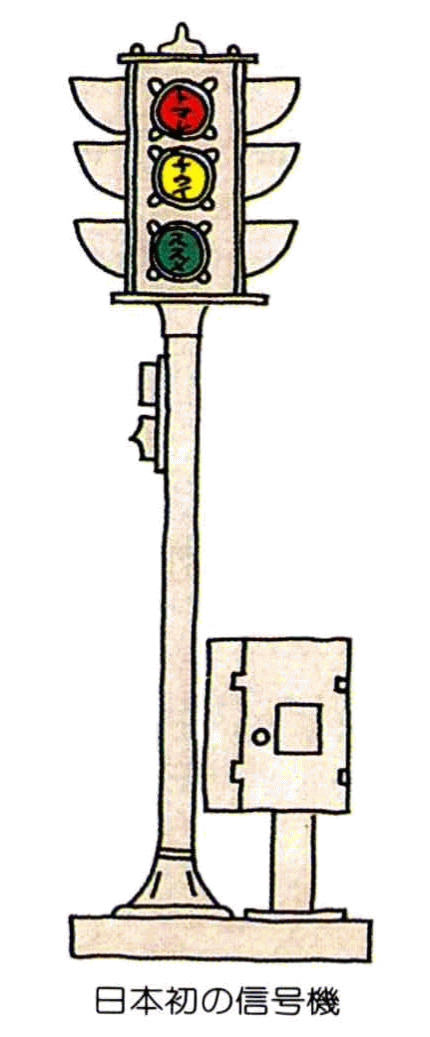
* https://www.pref.hiroshima.lg.jp/uploaded/image/24705.gif

Re: Why does the "chart increasing" emoji show in red?

#82
post #46
post #17

For a fun experiment, try Google finance with the Japanese language tag ( https://www.google.com/finance/?hl=ja ). Even knowing about the switched colors, it still fools my eyes. Goes to show how deeply ingrained the usual red/green assignment is!

Reminds me of the time I heard from someone much older than me that Democrats and Republicans switched from being red or blue almost every year until 2000 when the election results were so uncertain that people got used to seeing red=Republican and blue=Democrat for weeks and the color scheme just ended up becoming permanent. As a (younger) politics junkie I was shocked even though it makes total sense and I've alway…

Great video on this here: https://youtu.be/yD0POrq1UFk

Re: Why does the "chart increasing" emoji show in red?

#83
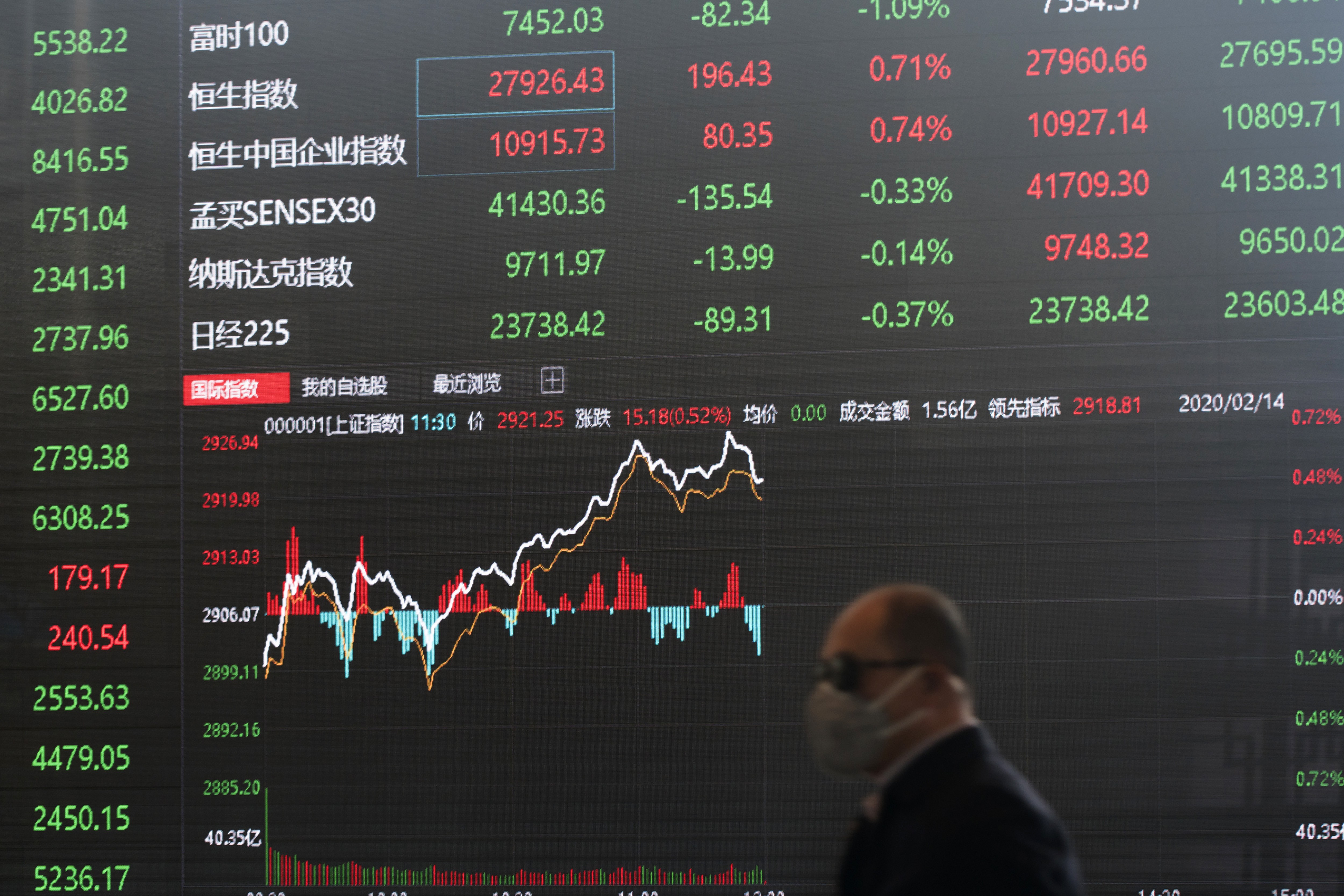
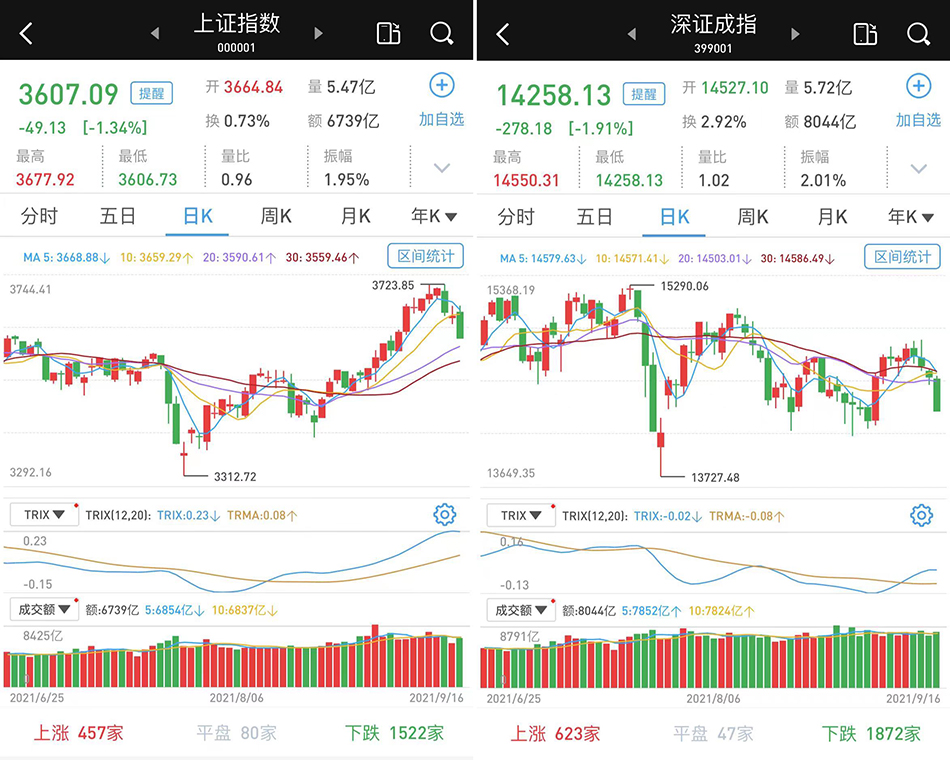
Chinese stock markets also use the color convention that green means down and red means up. Example pictures (notice the negative signs): https://www.china-briefing.com/news/wp-content/uploads/2014/... ; https://cdn.i-scmp.com/sites/default/files/d8/images/methode... ; https://imagecloud.thepaper.cn/thepaper/image/154/50/3.jpg

I'm not sure which country/culture first adopted this convention - China, Japan, etc.

Re: Why does the "chart increasing" emoji show in red?

#84
post #83

Chinese stock markets also use the color convention that green means down and red means up. Example pictures (notice the negative signs): https://www.china-briefing.com/news/wp-content/uploads/2014/... ; https://cdn.i-scmp.com/sites/default/files/d8/images/methode... ; https://imagecloud.thepaper.cn/thepaper/image/154/50/3.jpg I'm not sure which country/culture first adopted this convention - China, Japan, etc.

This confused me when I first came to Taiwan. I noticed in a TV drama that the candlestick colors were “wrong” and chuckled at the clueless writers of a low budget drama, and forgot about it. Then one day I opened the Stocks app on my iPhone and was very confused to see all my gains in red. It’s because I had changed the region in iOS.

Re: Why does the "chart increasing" emoji show in red?

#85
post #49

It starts with knowing why it was originally pronounced "eh-mohjee", and not "ee-mojee". The better question, then, if you really want to learn about culture, is why red is a good color in Japanese culture. I'll just tell you: Red is related to sun symbolizm in Shinto, it scares away evil spirits of 'the dark'. And the Japanese emporer (before McArthur said otherwise) was a sun god (descended from Amaterasu). Some Ja…

I had to look this up, as I (wrongly) thought the etymology was derived from the English "emoticon", but it's not, it is a purely Japanese word. https://www.sciencefriday.com/articles/the-origin-of-the-wor... So, yes, you are absolutely right, technically I have been mispronouncing it for almost two decades. I can't stop now though, because everyone else outside Japan is also doing the same.

> So, yes, you are absolutely right, technically I have been mispronouncing it for almost two decades.

I think by this point it's just as correct to say you have been correctly pronouncing the English loanword.

Re: Why does the "chart increasing" emoji show in red?

#86
post #67

Earlier quoted context omitted.

Funny you mention the outlets. They're actually safer "upside down" because if they get loose and something falls on top, it'll just hit the ground pin instead of possibly creating a circuit across the hot and neutral.

Now I'm wondering why they're not "sideways" where neither of those seem likely.

I can absolutely picture something hitting a sideways plug, knocking it slightly loose, and then teetering over the edge of the top pin until it goes parallel and makes contact with the bottom pin.

Re: Why does the "chart increasing" emoji show in red?

#87
post #46
post #17

For a fun experiment, try Google finance with the Japanese language tag ( https://www.google.com/finance/?hl=ja ). Even knowing about the switched colors, it still fools my eyes. Goes to show how deeply ingrained the usual red/green assignment is!

Reminds me of the time I heard from someone much older than me that Democrats and Republicans switched from being red or blue almost every year until 2000 when the election results were so uncertain that people got used to seeing red=Republican and blue=Democrat for weeks and the color scheme just ended up becoming permanent. As a (younger) politics junkie I was shocked even though it makes total sense and I've alway…

Left and right themselves just refer to where groups sat in the revolutionary National Assembly. At this point the terms, like “conservative”, have become labels without meaning in US politics.

Re: Why does the "chart increasing" emoji show in red?

#88
post #46

Earlier quoted context omitted.

Reminds me of the time I heard from someone much older than me that Democrats and Republicans switched from being red or blue almost every year until 2000 when the election results were so uncertain that people got used to seeing red=Republican and blue=Democrat for weeks and the color scheme just ended up becoming permanent. As a (younger) politics junkie I was shocked even though it makes total sense and I've alway…

Very true, "red" and "blue" had no political meaning in my childhood. Another source: https://www.smithsonianmag.com/history/when-republicans-were...

This is probably the single most impactful thing I’ve read on HN. My mind is blown.

Re: Why does the "chart increasing" emoji show in red?

#89
post #44
post #17

For a fun experiment, try Google finance with the Japanese language tag ( https://www.google.com/finance/?hl=ja ). Even knowing about the switched colors, it still fools my eyes. Goes to show how deeply ingrained the usual red/green assignment is!

I know Japan likes red, but I'm surprised that the TSE uses green for a negative/falling connotation. That's not a Japanese cultural thing generally, AFAIK. Is this just a historical path-dependent thing — e.g. stock-exchange trading floors traditionally all buying their sign boards from some specialty company that produced boards specialized to have exactly two "color channels" — red and green — and then, when the T…

Right now on websites it's not displayed as green, but blue (or greenish blue). Even the traffic light is called blue here (青) and they would look at you with surprise if you say the lights are green!

Re: Why does the "chart increasing" emoji show in red?

#90
post #87
post #46

Earlier quoted context omitted.

Reminds me of the time I heard from someone much older than me that Democrats and Republicans switched from being red or blue almost every year until 2000 when the election results were so uncertain that people got used to seeing red=Republican and blue=Democrat for weeks and the color scheme just ended up becoming permanent. As a (younger) politics junkie I was shocked even though it makes total sense and I've alway…

Left and right themselves just refer to where groups sat in the revolutionary National Assembly. At this point the terms, like “conservative”, have become labels without meaning in US politics.

Did that propagate to other countries afterwards then? For example left and right in the UK have the same meaning as I understand them to have in the US although of course in the US all parties are right of what the UK would call centre.
Post reply on HN