Live data from Hacker News

Common Jobs in a Medieval City

medievalists.net

81–90 of 193 posts

Re: Common Jobs in a Medieval City

#81
post #32

6th to 10th place are interesting: 6 – Tailors 7 – Notaries 8 – Barbers 9 – Retailers 10 – Stonemasons More notaries than barbers, retailers and stonemasons!

On notaries (and related officials) in the middle ages, see this[1] painting by Pieter Bruegel from around 1615. Here Bruegel mocks the tax collectors that are bamboozling the farmers with paperwork. "The work was boldly socio-critical in its time."[2]

[1] https://kunstberatung-zurich.com/wp-content/uploads/2018/12/...
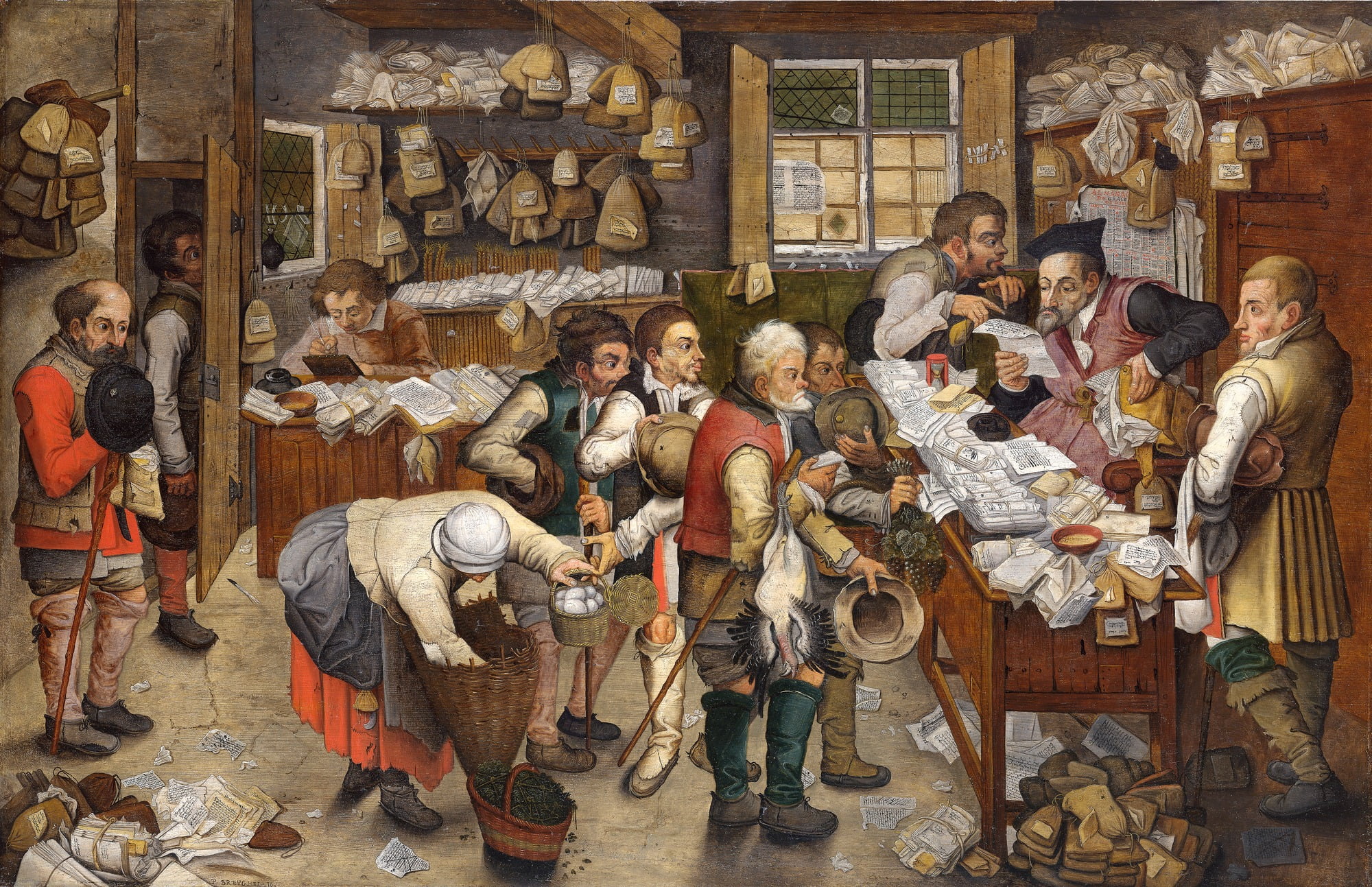
[2] https://kunstberatung-zurich.com/pieter-breughel-payment-of-...

Re: Common Jobs in a Medieval City

#82

Earlier quoted context omitted.

Reception at my doctor's in Norway are all qualified nurses. My sister on the other hand goes to a surgery in the UK has a dedicated receptionist. My sister's experience of visiting the surgery is considerably worse than mine. At the dental practice that I use the hygienists take turns to run the reception desk. > Would anyone like to have the dentist use his time to answer the phone rather than fix teeth? I don't ca…

Wouldn't that raise prices, to use a nurse as a reception? In the US it would be something like: Receptionist: 30k / year Nurse: 80k / year. So you have: Doctor's office 1: 3x Nurse, 240k per year in salary Doctor's office 2: 2x Nurse, 1x Receptionist, 190k pear year. That 50k in extra cost has to come from somewhere. Lower paid doctors, higher costs, ???

In Germany, the "nurse" (it's a separate profession from nursing) performs a variety of medical tasks (like vaccinations, blood tests, allergy tests) and does prioritization of incoming patients based on initial assessments. I've also had the "nurse" complete initial medical history with me.

This model is strongly influenced by the size of the clinic: we usually have small clinics owned and run by the only doctor in the clinic (though they sometimes team up). As the amount of patients per day is hard-limited by the doctors time, such small clinics have no need for a full-time receptionists.

Re: Common Jobs in a Medieval City

#83
post #74

Earlier quoted context omitted.

Of extraordinary interest is the fact that the blacksmith made his own charcoal and presumably other consumables and tools. From whence his anvil? Would you mind sharing some more details, such as where was the village? This is exactly the type of history story that I enjoy telling my children. If you'd prefer to share privately, my Gmail username is the same as my HN username. Thank you!

> Of extraordinary interest is the fact that the blacksmith made his own charcoal True. In medieval Europe charcoal burner was typically a very specialized profession. https://en.wikipedia.org/wiki/Charcoal_burner#Medieval_charc... "During the Middle Ages, charcoal burners were ostracised. Their profession was considered dishonourable and they were frequently accused of evil practices. Even today there is a certain d…

> True. In medieval Europe charcoal burner was typically a very specialized profession.

This thread reminds me of Kingdom Come: Deliverance, a computer RPG which has done in incredible job recreating aspects of life in medieval Bohemia. It has a fantastic level of historical accuracy and things like charcoal trading as a dependency to a forge are integral to one of the DLCs of the game.

Re: Common Jobs in a Medieval City

#84
post #79

It surprises me that all 10 jobs still exist, while there are several more recent occupations that no longer exist (albeit they were not that common): Milkmen, Elevator operator, Switchboard Operator, Ice Cutter, Bowling Pin Setter, Film projectionist, Lamplighter, Leech collector, Alchemist, Bematist, Redsmith, Daguerreotypist, Town crier

See also The Lindy Effect: https://en.wikipedia.org/wiki/Lindy_effect

No post body was provided.

Re: Common Jobs in a Medieval City

#85
post #80
post #70

Earlier quoted context omitted.

They must have been quite prolific then. There's a reason Smith is the most common surname in the English speaking world.

Maybe it was such an honorable craft that people were more likely to name themselves after it compared to other trades?

I have that surname but not for the reason that a blacksmith was in my family. My great grandparents took the name Smith at Ellis Island to Americanize themselves. I suspect this backstory is probably quite common in the US, especially amongst Irish and Italian immigrants in the late 18 to early 1900's.

Re: Common Jobs in a Medieval City

#86

It surprises me that all 10 jobs still exist, while there are several more recent occupations that no longer exist (albeit they were not that common): Milkmen, Elevator operator, Switchboard Operator, Ice Cutter, Bowling Pin Setter, Film projectionist, Lamplighter, Leech collector, Alchemist, Bematist, Redsmith, Daguerreotypist, Town crier

We had a milkman from a local farm until recently. Highly recommend it. Or if you’re in the Bay Area, Farmstead delivers glass bottle straus milk and picks up the empties.

Re: Common Jobs in a Medieval City

#87

It surprises me that all 10 jobs still exist, while there are several more recent occupations that no longer exist (albeit they were not that common): Milkmen, Elevator operator, Switchboard Operator, Ice Cutter, Bowling Pin Setter, Film projectionist, Lamplighter, Leech collector, Alchemist, Bematist, Redsmith, Daguerreotypist, Town crier

I would argue that a daguerrotypist is exactly analogous to a modern photographer; and print media is still developed as well.

Re: Common Jobs in a Medieval City

#88
post #32

6th to 10th place are interesting: 6 – Tailors 7 – Notaries 8 – Barbers 9 – Retailers 10 – Stonemasons More notaries than barbers, retailers and stonemasons!

I guess people from villages/provinces would maybe travel quite far to the city to notarize something? But barbers would only cut the hair of the city population.

What surprised me was the many shoemakers.

Re: Common Jobs in a Medieval City

#89
post #74

Earlier quoted context omitted.

> Of extraordinary interest is the fact that the blacksmith made his own charcoal True. In medieval Europe charcoal burner was typically a very specialized profession. https://en.wikipedia.org/wiki/Charcoal_burner#Medieval_charc... "During the Middle Ages, charcoal burners were ostracised. Their profession was considered dishonourable and they were frequently accused of evil practices. Even today there is a certain d…

> True. In medieval Europe charcoal burner was typically a very specialized profession. This thread reminds me of Kingdom Come: Deliverance, a computer RPG which has done in incredible job recreating aspects of life in medieval Bohemia. It has a fantastic level of historical accuracy and things like charcoal trading as a dependency to a forge are integral to one of the DLCs of the game.

While barbecuing last summer one afternoon I fell down the Wikipedia rabbit-hole and for a few days afterwards I was an expert on the chemistry, physics, history and economics of charcoal.

Sadly now all I've retained are a few dirty smudges.

Post reply on HN