Earlier quoted context omitted.
> very few kids/families, I am raising my kids here and disagree with your assessment. There is a pretty good community of families here.
That's all well and good that you disagree, but SF has 13.4% persons under 18 compared to the national average of 22.6% [0]. There are very few kids / families. [0] https://www.census.gov/quickfacts/fact/table/sanfranciscocit...
San Francisco’s Slow-Motion Suicide
81–90 of 312 posts
Re: San Francisco’s Slow-Motion Suicide
#82Earlier quoted context omitted.
> very few kids/families, I am raising my kids here and disagree with your assessment. There is a pretty good community of families here.
That's all well and good that you disagree, but SF has 13.4% persons under 18 compared to the national average of 22.6% [0]. There are very few kids / families. [0] https://www.census.gov/quickfacts/fact/table/sanfranciscocit...
13% of 800,000 is about 100,000. Very few.
Re: San Francisco’s Slow-Motion Suicide
#83Here’s what I don’t get. The real struggle seems to always be against local governments and the residents. The residents all know how jacked up it is and have good ideas for fixes, but constantly butt heads against their city. Somehow everybody knows this, but votes in people who increase the power, scope, and responsibility of the local government which works against their interest?
Not sure what you mean exactly. A lot of the issues are people “protecting their neighborhoods” from development and preserving the “feel”. People generally are voting against policies that would raise inventory of housing, which is really the only way to reduce its cost.
They do need to watch out though: there is nothing about San Francisco (or any other area) that means the rich need to live there, or you need to move there to get rich. (unless you are into mining for wealth where you obviously need to be where your mineral is). If some other area becomes hot the people in San Francisco have the most to lose: your house that you paid so much for and work so hard to protect the value of has the farther to fall. When/if the bubble collapses those in more reasonable areas who voted for policies that keep property values reasonable (ie allowing more development and/or not driving people out) won't fall as far.
Re: San Francisco’s Slow-Motion Suicide
#84Earlier quoted context omitted.
I've lived in New York. Why would anyone want San Francisco to become like that? Is NYC cheap, clean, free of homeless people? No, it is crowded, smelly, expensive, and only livable for the extremely wealthy.
The mistake here is assuming that if SF grows it must become NYC. What if it could be better? There are many other even higher density cities than NYC in the world with much better policies and quality of life. Look to those.
"We don't want to become like NYC, where are all these people going to go??"
San Francisco could double its population and still be ~30% less dense than Paris is. Let's aim for that. Paris is generally considered to be an okay place.
Re: San Francisco’s Slow-Motion Suicide
#85It's weird that technology oriented people see code/IT in terms of infrastructure, but too little from a city as such. I'm living in Vienna, Austria which is a city consistently rated to be in the top 5 most livable cities by multiple independent evaluations. How did that happen? A strong sense of ownership and infrastructure thinking over a _century_. Just to mention the obvious, property prices do not exist in a va…
By contrast the prior #1 most liveable city - Melbourne - has grown from 2 million 30 years ago to 5 million currently, forecast to get to 8 million by 2050, all due to mass immigration. Livability has fallen directly in line with population growth.
I've lived in a lot of cities around the world and think there is a 'sweet spot' population number: big enough to allow the provision of niche services and the agglomeration of talent, yet not too big as to introduce costly dis-economies of scale (usually through very expensive housing and transportation.) That level seems to be about 1-3 million.
Re: San Francisco’s Slow-Motion Suicide
#86Earlier quoted context omitted.
I've lived in New York. Why would anyone want San Francisco to become like that? Is NYC cheap, clean, free of homeless people? No, it is crowded, smelly, expensive, and only livable for the extremely wealthy.
Here's a quick test for you. Next time you go to SF, count how many dogs you see vs children. Then compare the ratio to NYC. Then tell me again about which city is not 'livable'.
Re: San Francisco’s Slow-Motion Suicide
#87It's weird that technology oriented people see code/IT in terms of infrastructure, but too little from a city as such. I'm living in Vienna, Austria which is a city consistently rated to be in the top 5 most livable cities by multiple independent evaluations. How did that happen? A strong sense of ownership and infrastructure thinking over a _century_. Just to mention the obvious, property prices do not exist in a va…
Re: San Francisco’s Slow-Motion Suicide
#88Having lived in SF for a number of years now, I 100% agree that SF is just dystopian as hell. Trash everywhere downtown, human feces/needles/smell of urine all over downtown & SOMA, depressing mix of aggressive and zombie-like homeless, very few kids/families, very few minorities (especially African-Americans), barely functioning public transportation system, high rents forcing six-figure earners to live with 2 roomm…
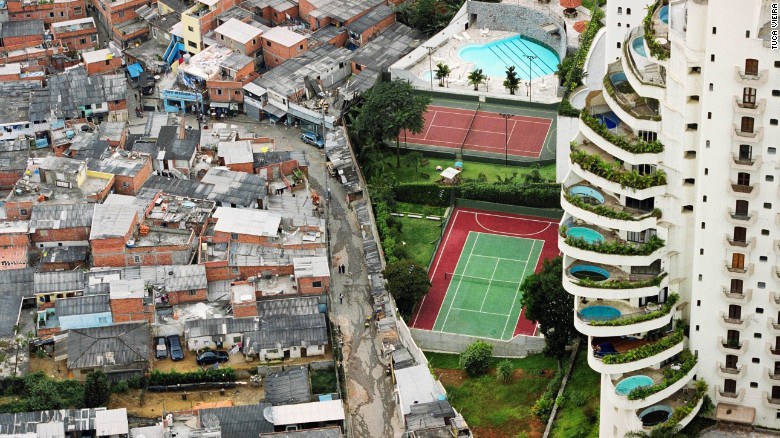
I could so see a planet-bound version of the movie Elysium. The elite top 5% live in walled off fortresses, a la Aeon Flux's city, and have everything - while the rest live outside in a daily fight to live against a dystopian environment financially and economically. I don't think it's inevitable though, so the question is - how do we stop it? We have some of the brighter minds in tech on this forum, what are your th…
Re: San Francisco’s Slow-Motion Suicide
#89Having lived in SF for a number of years now, I 100% agree that SF is just dystopian as hell. Trash everywhere downtown, human feces/needles/smell of urine all over downtown & SOMA, depressing mix of aggressive and zombie-like homeless, very few kids/families, very few minorities (especially African-Americans), barely functioning public transportation system, high rents forcing six-figure earners to live with 2 roomm…
I could so see a planet-bound version of the movie Elysium. The elite top 5% live in walled off fortresses, a la Aeon Flux's city, and have everything - while the rest live outside in a daily fight to live against a dystopian environment financially and economically. I don't think it's inevitable though, so the question is - how do we stop it? We have some of the brighter minds in tech on this forum, what are your th…
The question with many cities is the same - is it worth saving? A lot of any city's downfall is often the fault of its older residents. Why do the poor stay? Why do the rich not focus on changing it? Why do communities fail to fix it together?
The obvious answer seems to be moving to somewhere nearby that's cheaper and roomier. But people seem very resistant to this for some reason.