Earlier quoted context omitted.
> And are losing value on the property, which is the point of depreciation. The house depreciates while the land appreciates. In the US for the last 50 years has been net appreciation for most homes. > If it were so profitable, then tons of capital currently being spent on other uses (tech, medical, finance) would instead go into buying up more housing. Hedge funds have been buying houses at scale since the great rec…
>Hedge funds have been buying houses at scale since the great recession. Zillow tried that and lost over a billion dollars - I'd expect lots of those purchases are not the money makers you think they are. >Which increases faster than incomes. Not for the same size houses - the median house now is many times the size of a median house from 1950, and a few times the size of a median house from 1970. If you buy the same…
> Not for the same size houses
Anecdotally, the price per square foot has also gone up in the places with the most jobs. To be clear, the whole context of the article is that we're talking about the (sub)urban areas that have seen substantial job growth. If zoning prevents large houses from being split then you're describing an increase in mansions while others can't afford a home.
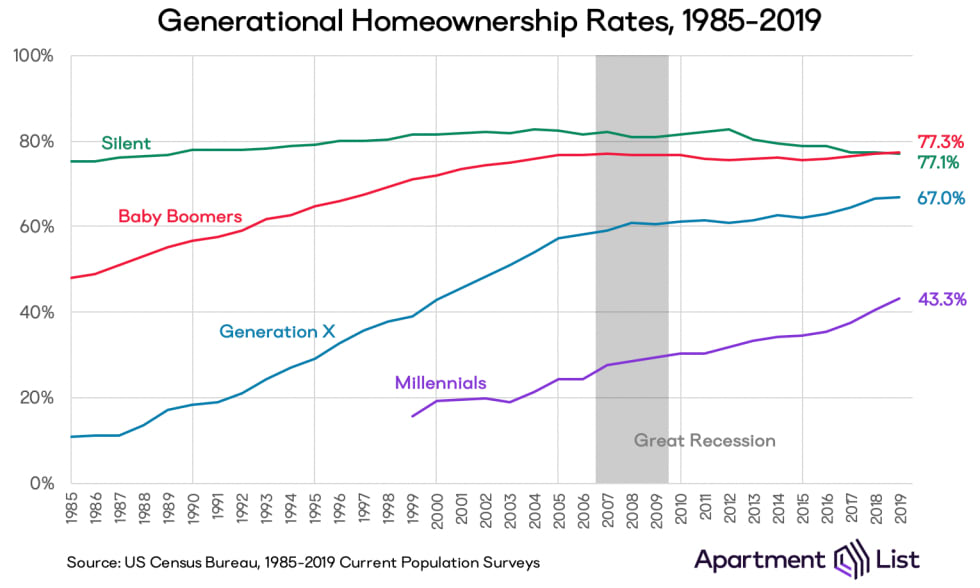
Despite younger people moving to less prosperous regions where they can afford a home, yes, home ownership rates for younger generations have declined. Specifically, in the family and peak earning years from 30 to 50. https://ipropertymanagement.com/research/homeownership-rate-...
More clear example https://res.cloudinary.com/apartmentlist/image/fetch/f_auto,... from https://www.apartmentlist.com/research/homeownership-by-gene...