Live data from Hacker News

The Healing Power of Gardens

nytimes.com

71–80 of 115 posts

Re: The Healing Power of Gardens

#71
post #64
post #14

Earlier quoted context omitted.

Yeah it really breaks through the paralysis because once you get the seeds wet the plants are coming on their own schedule whether you're ready or not. Plants are definitely resilient. I like experimenting with high densities/small pots on the very unlikely chance I find some plants with synergy (or just lack of space). In 2017 this resulted in tiny (but tasty!) jalapenos (about a quarter of the normal size) growing…

>Plants are definitely resilient. I like experimenting with high densities/small pots on the very unlikely chance I find some plants with synergy (or just lack of space). >In 2017 this resulted in tiny (but tasty!) jalapenos (about a quarter of the normal size) growing off a plant that had sat on the windowsill doing nothing for 2 years. Very interesting. Must try that out some time. >If anyone has advice on plant pa…

I was aware of nitrogen fixing in theory but was wholly unaware of the maize/beans/squash combo. That's 100% the sort of thing I'm after although I would prefer it on a container friendly scale.
Re: The Healing Power of Gardens

#72
post #45

I've had a theory for some time now based on my own observations: A big part of why nature is so calming is the absence of repeating patterns. In our artificial life everything follows standardized forms and patterns. It's a sterile world. The most obvious example being rectangles and perfect 90 degree angles everywhere. But I would also count things like uniform colors, evenly spread (artificial) light, predictable…

Nature provides "soft fascination" that stimulates you without burning you out. Many countries are learning this: https://www.nationalgeographic.com/magazine/2016/01/call-to-...

Re: The Healing Power of Gardens

#73
post #43

Earlier quoted context omitted.

i’ve had great results growing basil. I had a plant we named Harry, who thrived in Palo Alto despite erratic care. Harry would drink as much water as we could give it and would be visibly wilted when thirsty. Otherwise, incredibly happy sitting in the sun and producing leaves.

I'm in the Pacific Northwest, and I've had mixed experience with basil. I'm trying to grow it hydroponically at home now, and it seems to be going pretty well.

Yeah basil really takes well to that kind of setup and has the ability, given sufficient light, to grow so vigorously that it creates a wide band of acceptable fertilizer levels which can be a real challenge.

Re: The Healing Power of Gardens

#74
post #52
post #45

I've had a theory for some time now based on my own observations: A big part of why nature is so calming is the absence of repeating patterns. In our artificial life everything follows standardized forms and patterns. It's a sterile world. The most obvious example being rectangles and perfect 90 degree angles everywhere. But I would also count things like uniform colors, evenly spread (artificial) light, predictable…

Sort of off topic: One of the more frustrating things about going out in nature where I live at least, is seeing the pattern of invasive plants over and over again. I can identify every plant in my area, an area that would have been full of thousands of different trees and bushes now has repeating landscape of about two dozen different plants.

At some point in time, every plant was invasive.

Re: The Healing Power of Gardens

#75
post #4

This article focuses a lot on large, well curated gardens, but I'm an engineer who found a lot of solace and safety in managing my own garden. (As someone who has faced burnout and anxiety from work before.) There's something about planning, planting, and then caring for a garden that appeals to my engineer brain. It's an exercise in organization and planning that scales from "throw seeds at dirt" to "these plants wi…

I also like to have my own garden, or at least a small communal garden that is harmoniously integrated into the property.

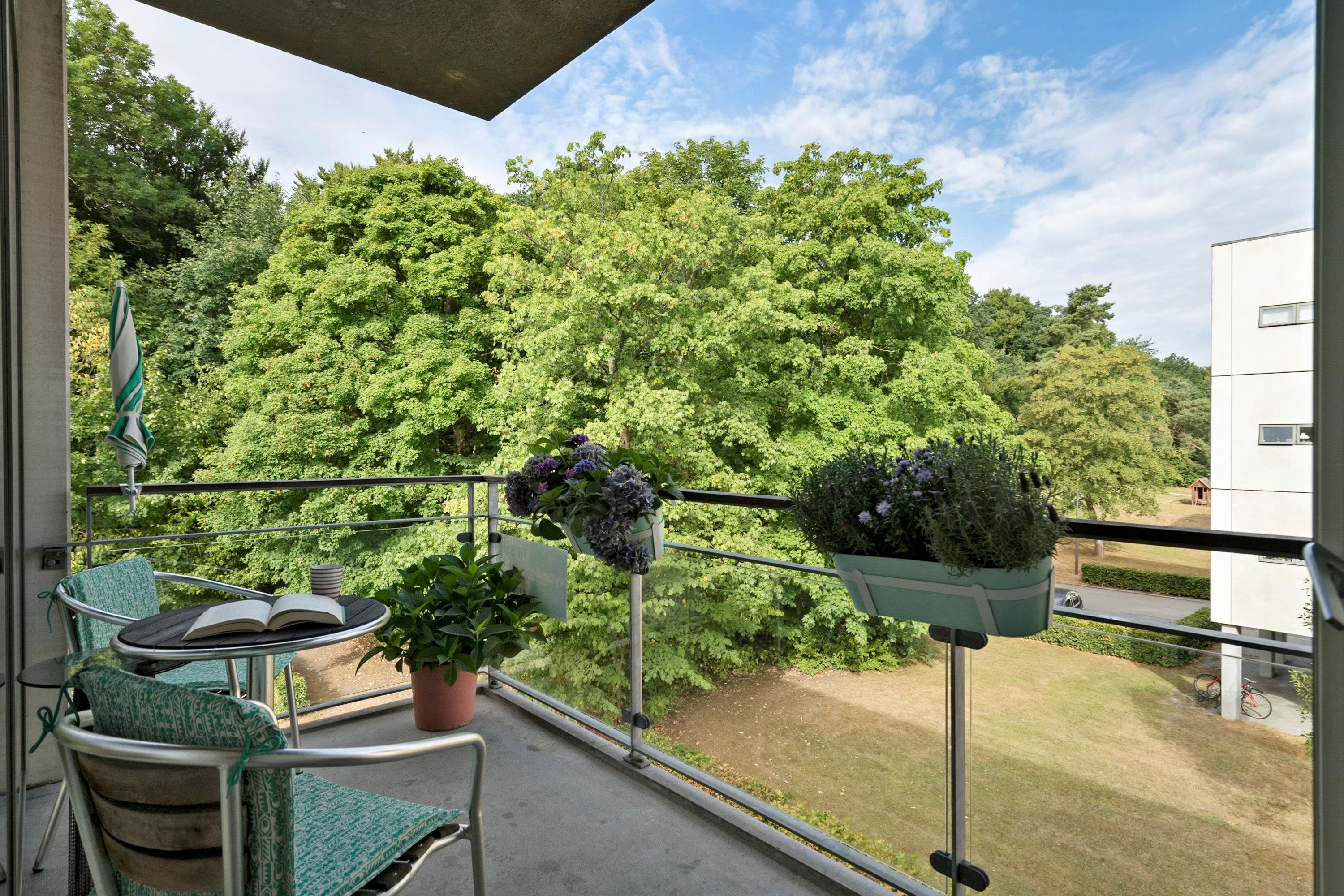
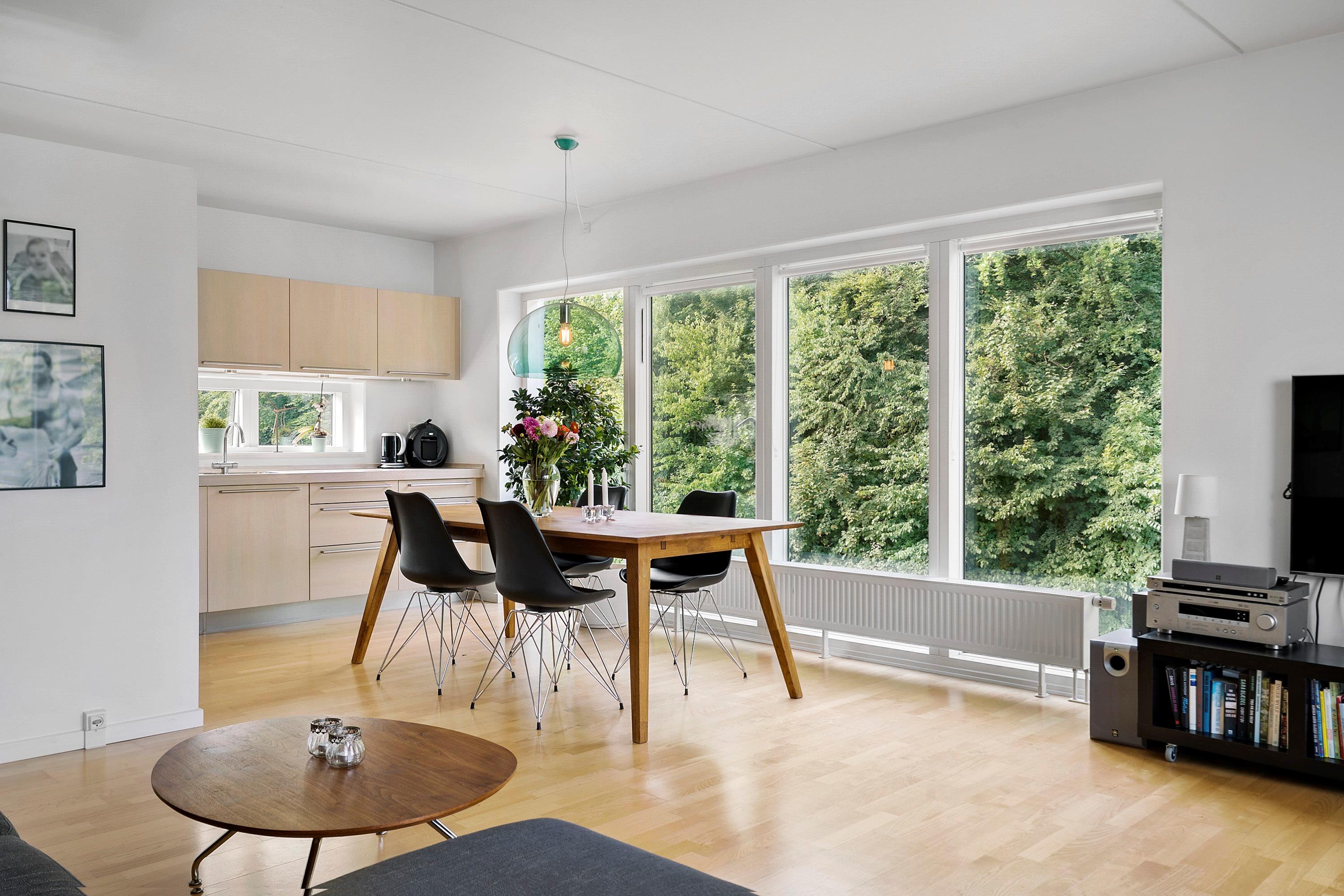
I was living in Copenhagen for a few years, and I was really impressed by how well designed some small blocks of flats were in order to get them integrated into wild gardens and little forests, e.g. [1,2]. Apparently a trend that started with Scandinavian mid-century architecture.

During Spring and Summer, from many living rooms you could not see neighboring blocks because there was an absolutely amazing small forest in between. With Summer breeze, you would only hear leaves moving. Absolutely amazing to work from home in such a property. Silent and very pleasant views.

Trees had been carefully selected and/or flats placed appropriately so that during darker months they would not give any shade. And these were mid-class flats I could rent with a (generous) MSc scholarship, nothing outrageously expensive. Good urban design makes a difference.

[1] https://nybolig.mindworking.eu/resources/shops/N270179/cases...

[2] https://nybolig.mindworking.eu/resources/shops/N270179/cases...

Re: The Healing Power of Gardens

#76
post #71
post #64

Earlier quoted context omitted.

>Plants are definitely resilient. I like experimenting with high densities/small pots on the very unlikely chance I find some plants with synergy (or just lack of space). >In 2017 this resulted in tiny (but tasty!) jalapenos (about a quarter of the normal size) growing off a plant that had sat on the windowsill doing nothing for 2 years. Very interesting. Must try that out some time. >If anyone has advice on plant pa…

I was aware of nitrogen fixing in theory but was wholly unaware of the maize/beans/squash combo. That's 100% the sort of thing I'm after although I would prefer it on a container friendly scale.

Good point. Not sure if it would work at that small a scale. You might have to look around more (on and off the Net); it could help. Some searching through organic gardening sites, Rodale Press mags/sites, permaculture sites, etc., may help.

Vaguely remember seeing some such points mentioned (about companion planting, plant-plant symbiosis examples for gardening, etc.) a while ago, but did not save those particular ones, unfortunately, although I do often save web pages of interest to my PC.

Just remembered / thought of another point: Just because beans and corn may not work at your small scale (tiny pots), does not mean that nitrogen fixation may not work at all (or other forms of symbiosis). I remember reading somewhere that there are many plants and trees in the legume family ( Fabaceae (or Leguminosae)) [1], and they range from small herbs to trees. So some googling for small leguminous plants may help. For example, clover (which can be small) is probably a legume. Also, a person I know - and who has a background in farming - once told me that there are many wild species that are legumes, and one way (not guaranteed to work always) to detect them, is that they have trifoliate leaves.

Just googled:

  legumes have trifoliate leaves
and it seems to indicate that what he said is partly right, at least.

[1] https://en.wikipedia.org/wiki/Legume

Re: The Healing Power of Gardens

#77
post #4

This article focuses a lot on large, well curated gardens, but I'm an engineer who found a lot of solace and safety in managing my own garden. (As someone who has faced burnout and anxiety from work before.) There's something about planning, planting, and then caring for a garden that appeals to my engineer brain. It's an exercise in organization and planning that scales from "throw seeds at dirt" to "these plants wi…

Can you suggest the best resources you've found for learning about gardening?

If you're in the SF bay area, I strongly recommend Golden Gate Gardening [https://www.amazon.com/Golden-Gate-Gardening-3rd-Year-Round/...] because it's approachable if you read it from the beginning, but comprehensive and highly detailed in the various aspects of this diverse region. Nothing more frustrating than growing a mandarin tree only to find out that the fruit will likely not be too sweet!

Re: The Healing Power of Gardens

#78
post #15

Earlier quoted context omitted.

Edit: I just saw your other post, this one in isolation made me think you had tried gardening once and given up. That just happens sometimes! Hard to explain failures are often caused by one or more of over watering, pests (including at the root level), too little soil, or bad soil PH. Symptoms of pests include visible bugs, mold, eggs, or webs (check under the leaves) or a weird smell. PH problems sometimes manifest…

i’ve had great results growing basil. I had a plant we named Harry, who thrived in Palo Alto despite erratic care. Harry would drink as much water as we could give it and would be visibly wilted when thirsty. Otherwise, incredibly happy sitting in the sun and producing leaves.

>i’ve had great results growing basil. I had a plant we named Harry,

Wow, really cool idea, naming individual plants. Much better than the pet rock concept ;) Going to give it a try, next time I plant something. Related, as a kid doing organic gardening, I once read a book called Talk To Your Plants. Just searched for it:

https://www.amazon.com/Talk-Your-Plants-Jerry-Baker/dp/B000H...

That's the one, I'm pretty sure. There is also this one which I have not read:

https://www.amazon.com/Talk-Your-Plants-Will-Eisner/dp/08973...

Re: The Healing Power of Gardens

#79
post #4

This article focuses a lot on large, well curated gardens, but I'm an engineer who found a lot of solace and safety in managing my own garden. (As someone who has faced burnout and anxiety from work before.) There's something about planning, planting, and then caring for a garden that appeals to my engineer brain. It's an exercise in organization and planning that scales from "throw seeds at dirt" to "these plants wi…

> putting food on a plate that came from your yard, from your care. Can't second this enough. This connection between soil (direct environment) to your gut is, as stupid as it seems, a marvellous thing.[1] > There's something about sitting in a green (or red, or blue, or yellow, etc.) space that you made. Few time I walk in a forest (semi-wild) I feel like a forest is like a big nest. Enough roof, enough sunlight, en…

> This connection between soil to your gut is a marvelous thing.

Indeed, some research is pointing to the beneficial effects on your microbiome, too. The microscopic critters in the soil where you live may be very well co-evolved to live there, and there's a body of reasoning which says since you live there, too, they can be - sometimes - be very helpful to your own body.

(not that you should eat dirt, of course)

Re: The Healing Power of Gardens

#80
post #58

Earlier quoted context omitted.

I love the uncertainty of it. There are so many things that can go wrong - weather, pests, misunderstanding a plants needs. Too many factors out of your control. At the end of the day you have to accept that nature will take its own course and appreciate it.

...beavers. I've lost two trees to beavers. I hope the jerks enjoyed it.

Wow. Have read about what they do, but thought it was only in nature / forested / non-urban areas. You live in such an area, or did they enter a citified area?
Post reply on HN