Live data from Hacker News

Undercover in a Toronto factory where a temp worker died

projects.thestar.com

71–80 of 140 posts

Re: Undercover in a Toronto factory where a temp worker died

#71
post #64

Earlier quoted context omitted.

Ending right to work laws and bringing back unions.

I don't really get this line of thinking, it just seems like a denial of globalization, automation, and economics. Instead of helping the workers it more seeks to punish American capitalists--including all the people like me who hope to retire in the future with investments that grow. When the rest of the world is developed enough that a union could span the entire globe, then this would at least be logical again. As…

> I don't really get this line of thinking, it just seems like a denial of globalization, automation, and economics.

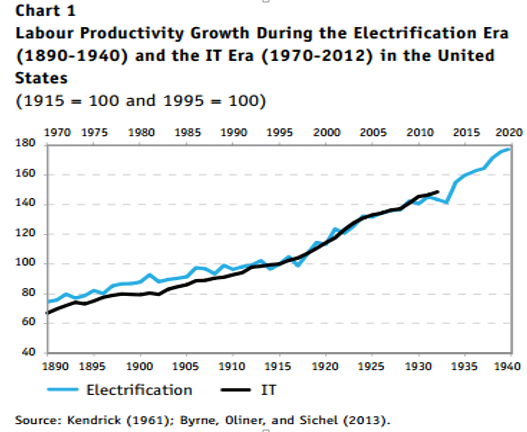
So what is the qualitative change in these three factors that changed so much in your opinion? Globalization was important for the US from its very inception (example: European price and production developments where a big factor in the Panic of 1819[1]). And productivity growth has been more or less constant over the last 100+ years [2][3].

[1] https://en.wikipedia.org/wiki/Panic_of_1819

[2] https://cdn-images-1.medium.com/max/800/1*i79QfQsgSagYNZl17o...

[3] https://www.bls.gov/lpc/prodybar.htm

Re: Undercover in a Toronto factory where a temp worker died

#72
post #3

I don't understand how this strategy works. Company A doesn't want to hire employees because employees have rights. Instead, they hire temps from Company B who abuses their employees' rights. Why doesn't the government start policing the abuse of rights by Company B? Why doesn't the government pass laws that acknowledge that these employees are truly employees of Company A?

Ignoring all the other things mentioned in comments, just assuming the simple case where Company B fully hires the employees. It's still an "advantage" for the bosses, because if things go wrong you can close Company B without much impact on the business of Company A. They just create Company C and continue.

Re: Undercover in a Toronto factory where a temp worker died

#73
post #64

Earlier quoted context omitted.

Ending right to work laws and bringing back unions.

I don't really get this line of thinking, it just seems like a denial of globalization, automation, and economics. Instead of helping the workers it more seeks to punish American capitalists--including all the people like me who hope to retire in the future with investments that grow. When the rest of the world is developed enough that a union could span the entire globe, then this would at least be logical again. As…

That just seems so paternalistic to me. You agree that those low on the totem-pole should have it better but handing them a method of direct-action, to collectively and directly make their work environments better doesn't make sense?

>Instead of helping the workers it more seeks to punish American capitalists--including all the people like me who hope to retire in the future with investments that grow.

This is actual nonsense. If you don't believe that making the middle and lower class better off is good for an economy, I don't know what to tell you.

Re: Undercover in a Toronto factory where a temp worker died

#74
post #3

I don't understand how this strategy works. Company A doesn't want to hire employees because employees have rights. Instead, they hire temps from Company B who abuses their employees' rights. Why doesn't the government start policing the abuse of rights by Company B? Why doesn't the government pass laws that acknowledge that these employees are truly employees of Company A?

As much as I hate all of this bullshit, it makes me happy that I refuse to let myself be abused like this.

The number of recruiters I have contact me for temp and contract-to-hire positions is insane! Even when I was unemployed a year ago, I told every single one of them the same thing. Temp and contract-to-hire is immoral and I am not interested in working for a company that sets their bar so low.

Sometimes I would feel a little too "holier-than-thou" saying that to a recruiter, but then I read stories like this and am glad I have at least some principals.

Re: Undercover in a Toronto factory where a temp worker died

#75
post #2

Many companies in countries like Canada and Australia are now trying harder than ever to emulate the United States with it's extremely low wages, health, benefits, etc. for temp or casual workers. Unfortunately, it's a race to the bottom, as tens of millions of Americas will attest to. My simple question is - can we justify treating humans like this in the name of increasing profit?

If I own a company, I can justify anything short of illegal activities to increase profit. If you don't want companies to behave in a certain way, get it outlawed.

This is too naive.

a) Companies will even do illegal stuff as long as they can do it and the lawsuits are not too expensive.

b) You can't make everything illegal. Smart people will always find a way no matter how strict your system is.

c) Yes, many people/companies will exploit others if they can. If you evaluate statistically that's actually "normal behaviour".

Re: Undercover in a Toronto factory where a temp worker died

#76
post #40

Having worked at two manufacturers in the Midwest, anecdotally the majority of forklift drivers, line workers on specific lines, and even many white collar office roles were filled by temp agencies. A similar structure existed for engineering too; we would have a problem and the engineering firm with workers under the same roof would develop a solution. For the temp workers the motivation was always very clear and ve…

> what other ways do we have of increasing the bargaining position of labor?

You tighten the labor market.

It's not coincidental that unions, which depend on a tight labor market for a bargaining position (striking is fundamentally their real weapon), have been on a downhill trend since basically the same time that trade laws were changed to favor capital, via removing barriers to both foreign labor and foreign trade. In some cases the labor supply is slackened by bringing in more workers, in some cases by just offshoring production to a place where the labor market is already slack.

Most of the reasons used to justify this were related to the West's perceived existential struggle against Communism: it was necessary to open the door to China trade because that was a wedge against the Soviets; NAFTA was necessary to secure America's standing "as world champion of the free-market cause" ([per the NYT](http://www.nytimes.com/1993/11/09/business/worldbusiness/09i...) as a hedge against an increasingly multipolar world in the 1990s; continued rounds of deals, up until very recently with the failure of the TPP, have always been justified similarly.

Though I am not intimately familiar with Canadian politics historically, I assume that the justifications there were similar (and with significant arm-twisting from their southern neighbor).

Intriguingly, the necessary sacrifices for American leadership (let's not call it 'hegemony', it has such an ... imperialist ring to it), in the form of the cost of economic subsidies to Western allies necessary to keep them toeing the free market line, have always seemed to fall on American -- and Canadian, apparently -- workers, and benefited American businesses and business owners. Workers are constantly reassured that these deals have been good for the country, but this explanation is starting to wear thin, as it becomes more and more apparent that the gains have gone to a small portion of the country at the expense of a great many.

Free-trade proponents have managed to extract a great deal from labor, but the gig is seemingly up.

Pro-trade, pro-business parties such as the British Columbia Liberal Party should take note of the current state of the US Republican Party, and take steps not to overplay their hand. While the gains made by businesses and capital owners at the expense of industrial workers are historically audacious (in the sense that they didn't result in getting anyone killed by an angry mob, which should be ),
Re: Undercover in a Toronto factory where a temp worker died

#77

Earlier quoted context omitted.

That's why it's not simple - you've got lots of things open to debate there - who is skilled or unskilled, who is a business, who is a 'larger' entity, who is the expert. That's why it's more complicated than just saying 'yes' with an emphatic full stop.

Then start defining those into laws. I think my country already has those defined pretty well thanks to strong unions. You'll never get there if you don't even start.

[deleted]

Re: Undercover in a Toronto factory where a temp worker died

#78

Earlier quoted context omitted.

Ending right to work laws and bringing back unions.

Of course, that too comes with it's negatives. Unions have both positives and negatives. It's not a simple discussion.

Corporations have both positives and negatives, yet somehow there's never a debate over whether we should have those.

It's very strange to me that employees organizing and working together is so controversial, but management doing the same thing is not only expected but we can't even envision anything else.

Re: Undercover in a Toronto factory where a temp worker died

#79
post #67

How is it not her own fault for wearing dangerous clothing (a hijab) in a factory workplace? Something as simple as long hair can be dangerous in such an environment, and a hijab or scarf is unthinkable. Darwin award.

" Darwin award. " I'm a little unclear about your point. Do you mean that Moslems deserve to die, or low skilled workers in general?

A Darwin Award is when a person removes themselves from the gene pool (usually but not always by dying) in a particularly idiotic manner.

It may be distasteful, but it has nothing to do with bias against a particular religion or against low-skilled workers.

Re: Undercover in a Toronto factory where a temp worker died

#80
post #3

I don't understand how this strategy works. Company A doesn't want to hire employees because employees have rights. Instead, they hire temps from Company B who abuses their employees' rights. Why doesn't the government start policing the abuse of rights by Company B? Why doesn't the government pass laws that acknowledge that these employees are truly employees of Company A?

Read up on the concept of "moral hazard." These temp companies are small entities, often run out of homes. If you go after them, they'll simply liquidate and fold up shop. Small entities have an advantage in highly regulated environments, because the most they can lose is 100% of their assets, while they stand to gain many multiples of that. Incorporation laws prevent owners from being liable for the debts of the corporation, in most cases, so in the event of a failure, the owners dust themselves off and move on to the next.

Large corporations love to outsource risky/dangerous/questionable activities to small firms who are willing to gamble.

Post reply on HN