Live data from Hacker News

Android Oreo

android.com

71–80 of 658 posts

Re: Android Oreo

#71
post #3

A non-generic brand name for their O-release? Did they strike a deal with Nabisco/Cadbury? I can't imagine Google doing this without some form of legal go-ahead from the trademark owner.

KitKat is also trademarked by Hersheys and Google use it. This was of course done in partnership with Hersheys. edit:// a little late with this

Actually, KitKat is trademarked by Nestlé. Hersheys has a limited license to produce it in the US, and the ad campaign for Android was done with Nestlé.

(And the Nestlé version actually uses real swiss chocolate, and tastes a lot nicer)

Re: Android Oreo

#72

Project Treble is the most important thing in this release >The biggest change to the foundations of Android to date: a modular architecture that makes it easier and faster for hardware makers to deliver Android updates. With any luck, this will end the huge security/update problem Android has. Right now an update is dependent on the chip manufacturer's drivers, then the OEM adding them to the ROM with their custom "…

As I commented in another HN story, I don't believe OEMs and telecom operators will release updates, if Google doesn't force them to do so.

They already admitted on the ADB Podcast that they don't want to remove the ability for OEMs and mobile operators to customize their forks of Android.

We will still be forced to buy new devices even if they are VTS certified.

Re: Android Oreo

#73
>Google Play Protect:

> Working to keep your device and data safe from misbehaving apps by scanning over 50 billion apps per day, even the ones you haven't installed yet!

Also known as anti-virus.

Re: Android Oreo

#74
post #43

Earlier quoted context omitted.

Does INTERCONTINENTAL GREAT BRANDS LLC have a trademark for Oreo in the "computer and scientific" or telecommunications categories? If not, then there is no trademark issue. Google isn't selling a food, it's selling an operating system.

Only they're marketing it with oreo cookie mascot, look at all the material. I highly doubt you can just do that. It's the same with kit kat, they probably couldn't just use that, either. But it's a win-win for both parties, I doubt either of them paid.

It seems like unnecessary legal risk for Google, and probably restricts how they can market it.

Re: Android Oreo

#75
post #43

Earlier quoted context omitted.

Does INTERCONTINENTAL GREAT BRANDS LLC have a trademark for Oreo in the "computer and scientific" or telecommunications categories? If not, then there is no trademark issue. Google isn't selling a food, it's selling an operating system.

Only they're marketing it with oreo cookie mascot, look at all the material. I highly doubt you can just do that. It's the same with kit kat, they probably couldn't just use that, either. But it's a win-win for both parties, I doubt either of them paid.

They can't, without permission.

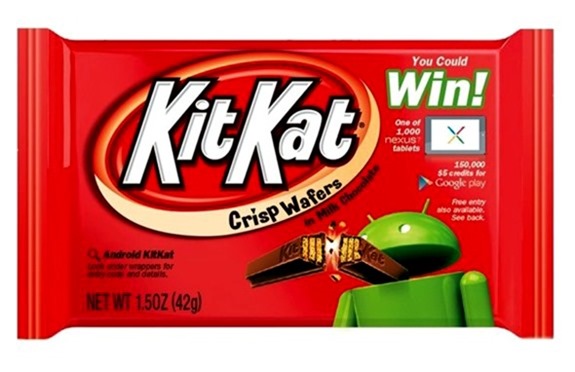
The logical conclusion is that they have permission, not that one of the largest companies in the world made a legal mistake that the "We Are Not A Lawyer"s on HN can see right through... for (at least) a second time. Keep an eye out for Oreo packages with Android branding material on them, in the style of: http://cdn.redmondpie.com/wp-content/uploads/2013/09/kitkata...

I do find myself curious what the negotiations look like when Google wants to not just use Oreos, but not slather all their material with "Oreos are a registered trademark of blah blah blah", which is pretty unusual.

Re: Android Oreo

#76
So according to the release the new features are:

-Picture in picture (dual app onscreen)

-Notification dots and "force-touch-like-feature" (my words, not Google's) to preview

-Google Play Protect (an antivirus) [0]

-Minimize unintentional overuse of battery from apps in the background

-Faster boot speed

-Support forAndroid Instant Apps

-Over 60 new emoji (sic)

Under the hood stuff, not in the release (thanks u/izakus)

- Project Treble that splits hardware HAL layer away from the OS layer. Plan being that this allows updating the OS without having to update the whole hardware driver stack (and thus avoid being dependant on Qualcomms of the world to update their proprietary blobs for each release) - GPU drivers are now updatable via Play Store (by OEMs)

More new features listed on the main Oreo page [2]:

-Accessibility button: Allows you to quickly access from the navigation bar accessibility features, like magnification, and functionality within accessibility services, like Select to Speak.

-Accessibility volume: Accessibility services can optimize the audio experience for users with disabilities.

-Adaptive icons: Developers can now provide a full-bleed square shaped icon and OEMs will mask the icon to ensure intra-device consistency.

-Ambient screen: Highlights the incoming notification with larger font, highlighted app name and immediate access to actions.

-Background execution limits: More control over how apps run in the background for better overall system performance.

-Background location limits: Limits the frequency of location updates in the background for better overall system health.

-Deep color: Enables applications to render richer visual content with more vibrant colors and subtler gradients. Supports full color management which allows applications to render images in the format and quality they were intended.

-Downloadable fonts: Applications no longer need to bundle custom fonts, which helps reduce their size.

-Install unknown apps: Hostile downloader apps can't operate without permission; users now permit the installation of APKs per-source.

-Integrated printing support: Compatible with all Mopria-certified printers, which make up 97% of printers sold worldwide.

-Linkable files: API that allows you to share files across the Internet via web links.

-Native C/C++ API for high-performance audio: API function for high-performance audio including Native C/C++ audio API.

-Notification categories: More granular and consistent control over which notifications can appear and how intrusive they are.

-Notification snoozing: Lets users hide notifications for a period of time, similar to Inbox snoozing.

-Pointer capture: Pointer capture allows the app to capture all mouse input.

-Project Treble: The biggest change to the foundations of Android to date: a modular architecture that makes it easier and faster for hardware makers to deliver Android updates.

-TextView autosizing: Developers can now let the size of their text expand or contract automatically based on the size and characteristics of the TextView, making it much easier to optimize the text size on different screens or with dynamic content.

-Tooltips: Support for tooltips (small popup windows with descriptive text) for views and menu items.

-Wi-Fi Assistant: Auto-connects you to high quality open WiFi and secures your connection with a VPN back to Google.

[0] https://www.android.com/play-protect/

[1] https://developer.android.com/topic/instant-apps/index.html

[2] https://www.android.com/versions/oreo-8-0/
Re: Android Oreo

#77

Earlier quoted context omitted.

Except, of course, getting your hands on a phone that has Oreo. For instance, the Galaxy S8 is the hottest new thing on the market right now, and it launched with Nougat. It will probably be six months to a year before Samsung pushes an Oreo update to it, if at all.

Samsung actually has a decent track record of updating their software -- my family's Galaxy S5s on T-Mobile (purchased 2014) are actually still receiving security updates, despite being on Marshmallow API level.

Only on the S series, the other ones is a guessing game.

Re: Android Oreo

#78
post #60

Am I the only one who's really disappointed by the platform's shift in its stance on background execution? I was originally drawn to Android because it wasn't iOS. I wanted to develop on a platform where I could run a service in the background if the user wanted that. Apps that were bad stewards of battery life and phone resources were supposed to be scrutinized by users and removed if they were too poor. You can be…

Elsewhere to what? What are you gonna do, run Windows Mobile?

I like native app development because it's not a browser. Android was the most honest manifestation of that on mobile (iOS is basically a "client OS"). I look towards domains where people are still putting powerful applications on connected hardware. Mobile is starting to look like a commodity web experience with half the history of JS, so why not just use that?

Re: Android Oreo

#79

"new emoji" is an OS-level feature now. Welcome to 2017.

Oreo now has new font handling that allows apps to download new (emoji) fonts so these shouldn't be necessary anymore.
Post reply on HN