Earlier quoted context omitted.
Yeah fireplaces don’t make sense to me. Hot air rises and it sucks the existing heated air in the house which all flows out. The only way to heat the space is you need something with a lot of thermal mass that heats up in the process and then radiates heat. So a lot of bricks around the fire, some sort of baffle to enable the heat transfer and a system that sucks in air from the outside.
I like the idea of an outside vent, and unfortunately, I think an insert of some kind. I can't help but first think of the goofy look of a wood fired stove sitting half in and half out of the fireplace. Surrounded by a few tons of river rock. That said, after a couple days of a couple degrees, it's either that or the tent in the basement.
An Elizabethan mansion's secrets for staying warm
61–70 of 185 posts
Re: An Elizabethan mansion's secrets for staying warm
#62When we lost power for 10 days a few winters back we attempted to use the fire place for heat. It was a fail. Post and beam house (large wide open floor plan) with a large transfer from 1st to 2nd floor, and apprently my lack of skill for optimizing heat over beauty in the fireplace, left us without much of a thermal bump. To this day I swear we were pulling heat out of the chimney faster than we were heating the hou…
Re: An Elizabethan mansion's secrets for staying warm
#63Related to the Maunder Minimum, named after my namesakes: Astronomer Walter Maunder and his wife Annie Maunder. https://en.wikipedia.org/wiki/Maunder_Minimum And here's more info on The Little Ice Age: https://en.wikipedia.org/wiki/Little_Ice_Age Debatable as to whether solar activity was a contributor to The Little Ice Age.
What did you think about the point in the article suggesting millions of people dying on South America caused the earth to cool down due to reforestation absorbing more green house gas. I find this hard to believe.
Re: An Elizabethan mansion's secrets for staying warm
#64Earlier quoted context omitted.
> Everyone I know who has built a house has thought very much about sun, season and temperature. I've lived in houses that certainly did not take into account sun, season and temperature. I learned a lot from that experience. My current house is optimized for it. I've learned a few more things about it, and could do better. > the idea that it has something to teach modern architects and builders is pure fantasy Not m…
> For example, how many houses have a cupola? They're common on older homes, but non-existent on modern ones. What the roof does is accelerate the wind moving over the roof, then the air vents in the cupola let the wind through, which sucks the heat out of the attic. This one is genuinely obsolete. With modern techniques, it’s straightforward to build a reliable unvented attic, and there are few if any climates where…
Re: An Elizabethan mansion's secrets for staying warm
#65Well that's full of really useful tips. I'll get the builders in to construct a 1.37m (4.5ft) thick spine through the middle of my house. Obviously.
https://en.wikipedia.org/wiki/Russian_stove
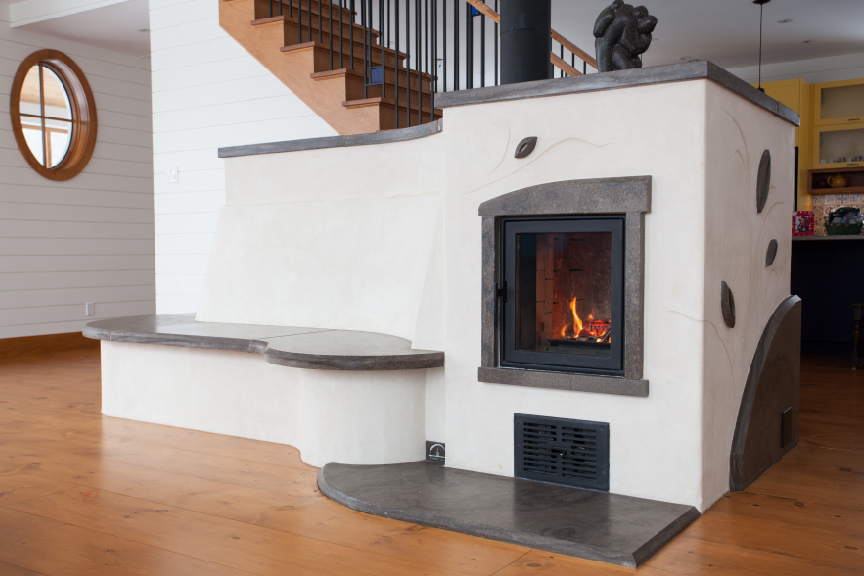
Modern fire codes require large space between a stove and walls which is usually goes unused where it could have been really filled with such a thick brick structure with the smoke passage snaking through it like in Russian and German stoves. Or like this:
https://www.mha-net.org/wordpress/wp-content/uploads/2020/05...
Re: An Elizabethan mansion's secrets for staying warm
#66Re: An Elizabethan mansion's secrets for staying warm
#67Brits will do anything except properly insulate their damn homes.
Brits, Dutch, Belgium, Northern Germany. They all have this incredibly outdated building style that they refuse to change. Bricks with no insulation. I live 1000km to the south of them and it is pretty standard for us to have tripple pane windows and thick insulation on our houses. But they for some reason prefer to live in cold houses during the winter and overheated houses during the summer. I have had multiple con…
Re: An Elizabethan mansion's secrets for staying warm
#68> The house has lessons for how we can heat our homes more efficiently today The problem in Europe isn't keeping warm in the winter but keeping cool in the summer. In part thanks to their near-total lack of AC in residential buildings, Europe has an extremely high heat-related death rate. 200k people per year die of heatstroke in Europe: this accounts for 36% of global heat-related deaths. This is despite Europe bein…
Re: An Elizabethan mansion's secrets for staying warm
#69Or go solar with a battery, or just have a massive battery hooked into your distribution panel and leave the 19th century heating hacks in the 19th century. Optimize what you need for today, not whatever was state of the art 200 years ago. An electric space heater running continuously is enough in an emergency.
Re: An Elizabethan mansion's secrets for staying warm
#70When we lost power for 10 days a few winters back we attempted to use the fire place for heat. It was a fail. Post and beam house (large wide open floor plan) with a large transfer from 1st to 2nd floor, and apprently my lack of skill for optimizing heat over beauty in the fireplace, left us without much of a thermal bump. To this day I swear we were pulling heat out of the chimney faster than we were heating the hou…
An open fire is not a particularly warm thing to have unless you’re directly in front of it. Most of the heat goes straight up the flue, and it uses an enormous amount of air to keep burning - it will pull huge volumes from rvertwhere it can. This is why these old buildings didn’t suffer from damp issues - the open fires burning were ventilating them.