> Most people know some basics of color theory. [...] And many people know that specific colors are really just wavelengths in the electromagnetic spectrum. [...] There are many systems involved to turn an RGB triplet value into a specific wavelength of light. A 5-year old asks you "The Sun is a big hot ball! What color is the ball?". What do you tell them? They ask "And sunlight?" You say? Most first-tier astronomy…
I don't even know what the confusion is. Is the sun not white? It looks white.
Different browsers see different colors
61–70 of 88 posts
Re: Different browsers see different colors
#62Earlier quoted context omitted.
I would say that much of it is actually solved in theory, just not in practice. (I.e. we know what it should display, but browsers get it wrong still) There are both outstanding issues with browsers being accidentally wrong/incomplete (e.g. both Firefox and Chrome have issues with full-range videos displaying incorrectly, just with different videos), and also with various implementations deviating from standards to "…
It's been my experience that part of the reason browsers get stuff wrong even when it's clear what to do, is that entirely different teams work on parts of the browser that all need a poper color pipeline, and while one team will learn and do it correctly, the new team working on the diffrent part has to go through the same process again. You can see this, for example in Firefox's image pipeline which seems to assume…
Re: Different browsers see different colors
#63Re: Different browsers see different colors
#64Re: Different browsers see different colors
#65(Mux founder here, but adding some additional community bits to the conversation) Probably unsurprisingly, the (honestly absurd world of) color is a pretty consistent topic among video engineers. Color theory is one of those areas that people working directly with it see it as a completely unsolved problem, and everyone else largely takes it for granted. This is a small sample size, but these are all talks just from…
(I hate having to make these statements but I am not trolling) I was told search for "perfect" parity across users was in vain because perception of colour varied too much, from blood sugar level to physiology and etc. What is the true benefit of going after this on software side? I mean I am not understanding the difference it causes on artistic statement or emotional impact. I understand and support "true colour" a…
Re: Different browsers see different colors
#66Earlier quoted context omitted.
I don't even know what the confusion is. Is the sun not white? It looks white.
Interesting related fact: Kids in the west usually draw the sun yellow, but in Japan, they draw it red.
Re: Different browsers see different colors
#67> Most people know some basics of color theory. [...] And many people know that specific colors are really just wavelengths in the electromagnetic spectrum. [...] There are many systems involved to turn an RGB triplet value into a specific wavelength of light. A 5-year old asks you "The Sun is a big hot ball! What color is the ball?". What do you tell them? They ask "And sunlight?" You say? Most first-tier astronomy…
I don't even know what the confusion is. Is the sun not white? It looks white.
As for the confusion... oh my, such a rich area.
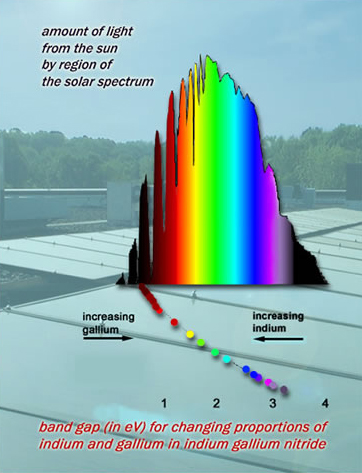
The Stanford Solar Center outreach site[1] could be a fun place to start. It manages "It is a common misconception that the Sun is yellow, or orange or even red." On a site heavily themed in, yes, yellow and orange and red. Other outreach sites don't even manage that warning, despite similar colors. It then continues with a common color misconception "However, the Sun is essentially all colors mixed together, which appear to our eyes as white." Followed by a miscolored ground spectrum[2], of which there's a diversity[3], on a page named GreenSun, reflecting a misconception that ground irradiance spectrum peaks in green (rather than 490 nm cyan/blue), and another misconception that spectrum peak determines object color, and thus another that the Sun is in some sense green.
In US popular culture, Sun color is yellow[4]. And that's pervasively used in K-12 astronomy and earth sciences illustrations, competing with orange.[5]
Astronomy textbooks, including the top 10-ish introductory astronomy college texts (thanks Library Genesis!), similarly use yellow. This is reinforced by "G2 class yellow star", while failing to mention that classification's blue "white"-point (Vega). And further reinforced by a diversity of aphysically colored H-R diagrams.[6]
We've known Sun color for a century, had detailed limb darkening and tint numbers for decades, and now years of intensive effort on stellar atmospheres in support of occultation and exoplanet work. And science education content manages to remain decoupled from all of that.
Confusion... sigh. There's a physics education research line, "if you think your lectures are working, your assessment also isn't". I'd extend it to "if you think your science students, content, and instructors, aren't deeply steeped in misconceptions, then your knowledge of your field's education research also is". Confused mess doesn't begin to cover it. The juxtaposition of good caring people putting in lots of (tragically not-broadly-collaborative) effort, with baseline that's so very ghastly... sigh.
If you know of anyone/project/lab/forum/etc with an interest in speculative exploring "what might science education conceptions/progressions/interactives look like if they weren't a disaster?", even if, as with Sun color, there's little hope of fixing it any year soon, I'd very much appreciate hearing of them. Thanks!
[1] http://solar-center.stanford.edu/SID/activities/GreenSun.htm... [2] http://solar-center.stanford.edu/SID/activities/images/solar... [3] https://www.google.com/search?q=solar+sunlight+spectrum&tbm=... [4] https://www.google.com/search?q=drawing+of+Sun&tbm=isch [5] https://www.google.com/search?q=solar+system&tbm=isch https://www.google.com/search?q=winter+summer+sun+diagram&tb... [6] https://www.google.com/search?q=Hertzsprung-Russell+Diagram&...
Re: Different browsers see different colors
#68(Mux founder here, but adding some additional community bits to the conversation) Probably unsurprisingly, the (honestly absurd world of) color is a pretty consistent topic among video engineers. Color theory is one of those areas that people working directly with it see it as a completely unsolved problem, and everyone else largely takes it for granted. This is a small sample size, but these are all talks just from…
Re: Different browsers see different colors
#69Earlier quoted context omitted.
It's been my experience that part of the reason browsers get stuff wrong even when it's clear what to do, is that entirely different teams work on parts of the browser that all need a poper color pipeline, and while one team will learn and do it correctly, the new team working on the diffrent part has to go through the same process again. You can see this, for example in Firefox's image pipeline which seems to assume…
Honestly a big reason is that there simply aren't tests.
[1] https://en.wikipedia.org/wiki/Acid2#Timeline_of_passing_appl...
Re: Different browsers see different colors
#70Earlier quoted context omitted.
I don't even know what the confusion is. Is the sun not white? It looks white.
Most people describe it as yellow, and if you google image search for "sun", most of them range from orange to yellow. Though it actually covers the full visual spectrum, much of the blue gets scattered, making the sky blue and the sun yellow.