Live data from Hacker News

I’m in the 1 Percent. Please, Raise My Taxes

nytimes.com

61–70 of 101 posts

Re: I’m in the 1 Percent. Please, Raise My Taxes

#61
post #34

Earlier quoted context omitted.

Can you clarify why you believe this is a "virtue signal?" You're the second person in this thread to do so. My understanding of "virtue signal" means promoting "virtue" over "action." And yet: > Two decades ago I turned full-time to philanthropy and threw myself into supporting public education, scientific and medical research, and visual and performing arts, believing it was my responsibility to give back some of w…

> My understanding of "virtue signal" means promoting "virtue" over "action." That's a misunderstanding. (edit) "Virtue signalling is the conspicuous expression of moral values" That's the definition on Wikipedia, which I agree with. (edit 2) I don't think of it in terms of "right" and "wrong".

Replying again, as I believe your reply to me is taking the form of the edit to this post?

> "Virtue signalling is the conspicuous expression of moral values"

What's wrong with this?
Re: I’m in the 1 Percent. Please, Raise My Taxes

#62

Earlier quoted context omitted.

Taxation is well-acknowledged a trade-off between liberty and social responsibility. This is a new type of tax that has never been implemented in the US. If the goal is to reduce poverty, it won't do that. So what is the goal?

> If the goal is to reduce poverty, it won't do that. [citation needed]

Do you really think an extra $100B-$200B added to federal revenue of currently ~$3.6T (5%) will have any noticeable effect on poverty?

Re: I’m in the 1 Percent. Please, Raise My Taxes

#63
post #27

Earlier quoted context omitted.

What is your take on the reasoning he put in the article on why he doesn't "just" do that? > Two decades ago I turned full-time to philanthropy and threw myself into supporting public education, scientific and medical research, and visual and performing arts, believing it was my responsibility to give back some of what had so generously been given to me. But I’ve come to realize that no amount of philanthropic commit…

That's not a reason why he can't do it, he's just saying that other people will need to do it too. I completely agree with him on that, he certainly can't do it alone. However, I think that he should set an example without waiting for others to join him.

What more can he do that would be considered "setting an example?"

He devotes himself full-time to philanthropy.

Re: I’m in the 1 Percent. Please, Raise My Taxes

#64

But why raise income or wealth taxes when you can raise land value taxes or carbon/pollution taxes instead? My income does not harm anyone else, nor does being wealthy. But my hoarding of land does exclude land from others. My release of carbon / pollution into the atmosphere even more obviously harms other people. I think we're doing a huge disservice taxing the wrong things, when there are things that are useful to…

This is not an income tax, this is a wealth tax. Very different. You're taxed on money you are simply holding.

> You're taxed on money you are simply holding.

Exactly, and that is why it's such an abysmal idea. Wealth is capital and how capital is allocated to a large extent how fast an economy will grow. To take private capital, which presumably was invested where it could find the greatest risk adjusted return, and move it to another enterprise (presumably a darling of some vested interest) or worse to consumption leaves the overall economy worse off.

Taxing income, which is a flow rather than a stock, has distorts incentives on the economy as well but much more gently.

Re: I’m in the 1 Percent. Please, Raise My Taxes

#65
post #49
post #23

Earlier quoted context omitted.

Hm. https://en.wikipedia.org/wiki/Virtue_signalling >In recent years, the term has been more commonly used within groups to criticize those who are seen to value the expression of virtue over action. This man appears to be taking action, and advocating action. > Two decades ago I turned full-time to philanthropy and threw myself into supporting public education, scientific and medical research, and visual and perform…

Which man we talking about here? Anyhow, my point is that nothing prevents Citizen X to send more money to the IRS. They talk about it and will "do it only if others do it" but like I said they are only using words rather than actions.

>Which man

The author, Eli Broad. He's not just using words, he devotes himself "full-time" to philanthropy.

This is my confusion - everyone's saying "why doesn't HE do anything about it?" He is, is he not? And he wrote this article because he's " come to realize that no amount of philanthropic commitment will compensate for the deep inequities preventing most Americans — the factory workers and farmers, entrepreneurs and electricians, teachers, nurses and small-business owners — from the basic prosperity we call the American dream." So what gives?

Re: I’m in the 1 Percent. Please, Raise My Taxes

#66
post #8
post #3

Does IRS prohibit people from paying extra in tax if they want to?

If you were a military commander and someone proposed attacking an opposing force with a unified front, would your answer be "You're welcome to go out there and attack them yourself if you want to"? The point is to enact tax policy that applies to everyone, so that the sum total of the changes can actually make an impact. Saying "well people can always donate to the treasury" is a ridiculous way of dismissing it.

This doesn't apply to everyone, only about 80K people who hold more than $50M in assets.

Re: I’m in the 1 Percent. Please, Raise My Taxes

#67
post #3

Does IRS prohibit people from paying extra in tax if they want to?

Billionaires know that money is power is a weapon and that other billionaires would exploit the power vacuum begotten by a sudden loss in wealth.

This is why it is important that increased taxes for the highest brackets are instituted generally and not on the charity of a few.

Re: I’m in the 1 Percent. Please, Raise My Taxes

#68

If you took the total combined wealth of the wealthiest 100 Americans, you wouldn't be able to fund the federal government for more than half a year or so. Taxing the rich sounds nice as virtuous political rhetoric but it won't effectively address poverty, just further erodes the liberty of private citizens. If you want to fund more social programs then tax corporations, like the oil companies and the large investmen…

You could fund the entire federal government for half a year with the wealth of only the top 100 people in the US? That's mind-blowing, and makes me way more optimistic about the practical effect of taxes on extreme wealth than I have been.

Re: I’m in the 1 Percent. Please, Raise My Taxes

#69

Earlier quoted context omitted.

> If the goal is to reduce poverty, it won't do that. [citation needed]

Do you really think an extra $100B-$200B added to federal revenue of currently ~$3.6T (5%) will have any noticeable effect on poverty?

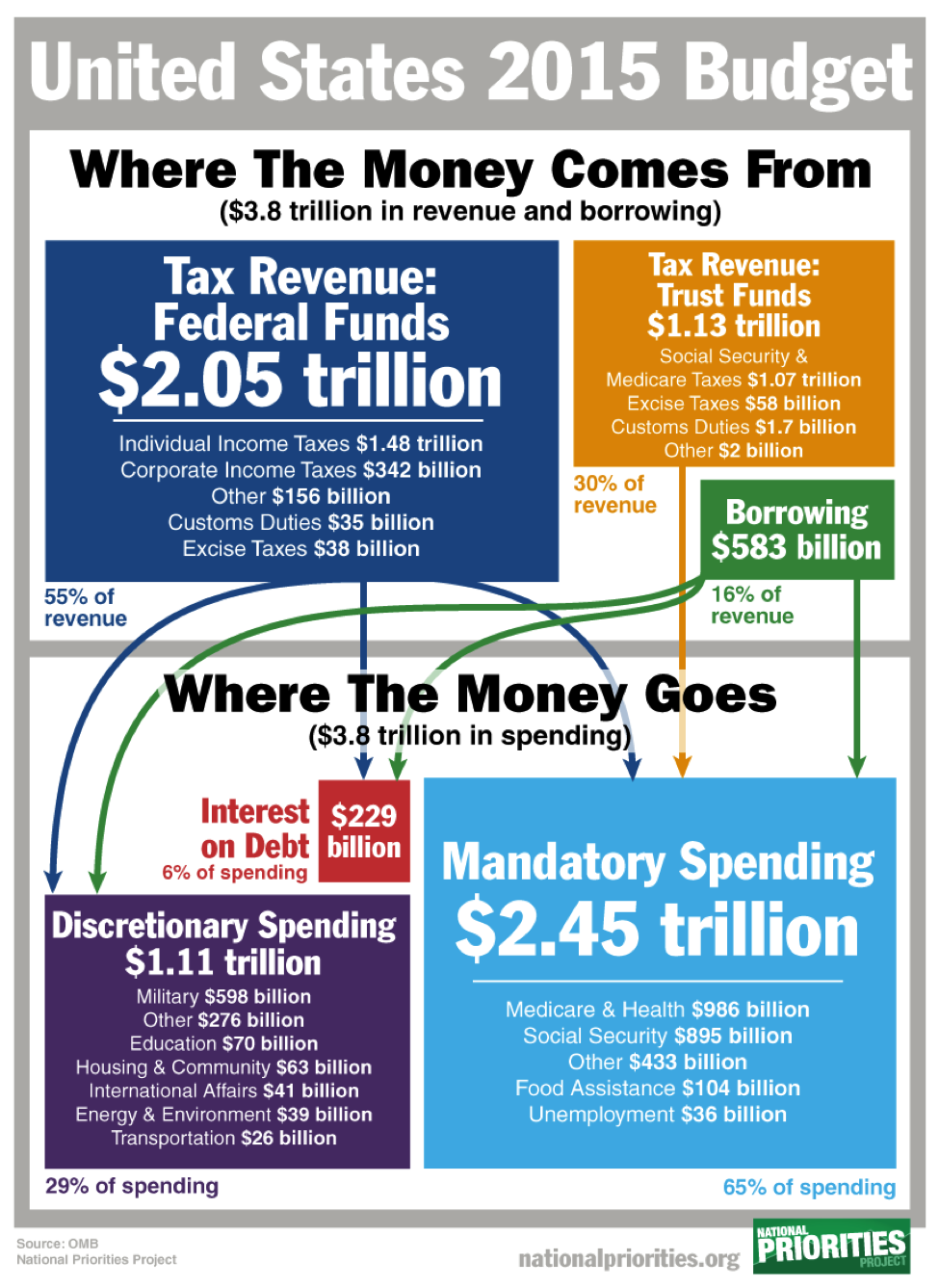
Yes, because the amount the US spends on welfare is a smaller fraction of the whole budget. For example, the US spends around ~$100 billion on food assistance [1]. Wikipedia estimates that all non-medical poverty assistance accounts for around $400 billion of the US budget [2]. Increasing expenditure by 10-20% (or even 5%) will almost certainly have a noticeable effect on poverty.

[1] https://media.nationalpriorities.org/uploads/budget-graphic.... [2] https://en.wikipedia.org/wiki/Expenditures_in_the_United_Sta...

Re: I’m in the 1 Percent. Please, Raise My Taxes

#70
post #46

Earlier quoted context omitted.

Senator Warren's plan would affect about 83,620 people[1]. I'm not saying you're point isn't valid, but your reference to the wealthiest 100 Americans is relatively meaningless to any discussion being had here. Also, the federal budget is composed of so many things[2], saying that taxing high wealth individuals couldn't affect it is a bit disingenuous. The bottom line is that if you have more money in the pool (eithe…

Just because it's not literally applicable doesn't mean it's meaningless, it emphasizes an important point that people overlook. The amount of wealth held by the top 80K is a drop in the bucket when compared to the total revenue of the federal government. The greatest effect of this policy is that it will harm individual liberty. It will have nearly no effect on improving poverty or increasing social programs.

But it's not. 45% of the federal government's income comes from individual taxes.

In 2016, the US took in about 1,442,385,000,000 total of which 839,898,000,000 was from the top 5% of individual earners. That's OVER HALF of the total amount[1].

You're wrong. You're point is not valid or based in the actual data. To say that hundreds of millions or billions of dollars in extra revenue couldn't help fund social programs or improve the conditions of the impoverished is factually inaccurate.

[1]https://taxfoundation.org/summary-latest-federal-income-tax-...

Post reply on HN