Live data from Hacker News

San Francisco Tech Firms See Workers Flee from $4,500 Rents

bloomberg.com

61–70 of 542 posts

Re: San Francisco Tech Firms See Workers Flee from $4,500 Rents

#61
post #13
post #7

Earlier quoted context omitted.

When did San Francisco become the hot property? I know that the last time I was out there, about 2005, tech was still in the valley and SF proper was relatively low rent, bad neighborhoods, and no tech presence. Does this industry (to the extent that you can call AirBNB, Uber, and Twitter the same industry) really act like a flock of grackles or starlings, descending on a place, eating everything, and moving on?

It's part of a nationwide(global?) urban renewal. Millenials and their successors are more likely to want to live in urban areas and stay single longer than their older counterparts. This is causing rents to increase noticeably in nearly every major urban area. Couple that with relatively high pay for tech sector jobs that like to hire these younger folks and you get it even worse in SF, Seattle, etc.

Be careful of overgeneralizing from the subset of the population you interact with in tech. For example, according to this FiveThirtyEight piece from last year, the actual trend is that college-educated millennials are slightly more likely to move to a subset of dense cities. [1] In general, it's unclear how much of an overall urbanization trend there is.

[1] http://fivethirtyeight.com/features/why-millennials-are-less...
Re: San Francisco Tech Firms See Workers Flee from $4,500 Rents

#62
post #5

Many problems with this article. "A software engineer in Austin earning $110,000 would need to make $195,000 in San Francisco to maintain the same quality of life" Would they? They point out the median in the bay area is $118k, but there's no indication that the median in Austin is $110k; maybe they just pulled that number out of thin air? They cite slowing tech employment growth in SF, but it seems clear that it's a…

The 110k vs 195k is just a comparison, not a statement of possibility.

The real question is "does an engineer of X qualities" make more or less after cost of living adjustments? eg: Maybe you could live well on 110k , but would only earn 95k, suddenly SF seems better.

Re: San Francisco Tech Firms See Workers Flee from $4,500 Rents

#63
post #55
post #20

Earlier quoted context omitted.

This is the answer. Deregulate housing/small businesse spaces/offices and let the market do its work. It's crazy the amount of regulation there is that pretty much dictates single family detached homes for large swaths of the country. Here in Bend, for instance, you must have a driveway with not one, but two parking spots. Land of the free indeed... http://marketurbanism.com/ Also, this book, although it's pretty hig…

"Here in Bend, for instance, you must have a driveway with not one, but two parking spots. Land of the free indeed..." Where I live people don't leave any room for parking on their own property and all of the streets are completely jammed with cars, every inch. You don't hardly dare move your car if you've been able to find a spot. Is that freer?

If you want more parking on your own property, feel free to build it. If you don't need it, you shouldn't have to.

Re: San Francisco Tech Firms See Workers Flee from $4,500 Rents

#64
post #56
post #41

Earlier quoted context omitted.

No, it won't, but it'll lead to the population as a whole being better off because it will allow more people to live in a very productive area, as well as leaving an out (sell and move) for those who can't stomach the thought of denser housing. Sooner or later, the US must confront the fact that not everyone can live in a single story ranch house with a big yard in an extremely desirable part of the country, without…

And a significant slice of the tech industry must confront the fact that not everyone in that industry can or should cram themselves into a narrow peninsula and a handful of other, mostly coastal, cities.

It does appear that, despite the internet, being in the same place offers some advantages. I'm all for people spreading out to different cities, but realistically, the bay area is going to be the place to be in the US, for the foreseeable future.

Re: San Francisco Tech Firms See Workers Flee from $4,500 Rents

#65
post #29

"They’ve increased 38 percent in Seattle, 12 percent in Austin and 6 percent in Phoenix." The article names the usual suspects for engineer emigrants (Austin, Portland, strangely no mention of NYC or Raleigh RTP), but why are people moving to Phoenix? Isn't living in the less sexy areas of South Bay (Sunnyvale, Milpitas, South San Jose) pretty much on par with urban life in Phoenix?

It's interesting that Seattle's rent has raised 38 percent, but I am left wondering if some of that is related to their ~37% minimum wage increase in the last year.

What possible connection could there be? Does minimum wage now change property values? Are all housing units in Seattle occupied by minimum wage workers? The average rent in Seattle for a one bedroom apartment is around $1600, which is around 100% of what a minimum wage worker made there two years ago - coincidence or no?

It's all just so interesting, I think?

Re: San Francisco Tech Firms See Workers Flee from $4,500 Rents

#66
post #44

Earlier quoted context omitted.

>It's 2016, and people still think that if someone moves into your neighborhood, someone else has to move out. How does this work in your head? When the new homes are being built, where do the people who were living on the land they're being built on go?

They go into higher-density buildings, just like everybody else. That, or nothing changes and they get priced out. Those are the options.

So projects, then.

Re: San Francisco Tech Firms See Workers Flee from $4,500 Rents

#67

Earlier quoted context omitted.

They go into higher-density buildings, just like everybody else. That, or nothing changes and they get priced out. Those are the options.

So projects, then.

No. Replace a single story ranch house with, say, a duplex. Or a single story duplex with a quadplex. It can be pretty incremental.

http://missingmiddlehousing.com/

Re: San Francisco Tech Firms See Workers Flee from $4,500 Rents

#68
post #7

Earlier quoted context omitted.

When did San Francisco become the hot property? I know that the last time I was out there, about 2005, tech was still in the valley and SF proper was relatively low rent, bad neighborhoods, and no tech presence. Does this industry (to the extent that you can call AirBNB, Uber, and Twitter the same industry) really act like a flock of grackles or starlings, descending on a place, eating everything, and moving on?

Early adopters started moving in 2006 (remember the YScraper?). It really accelerated around 2010, when the economy started recovering. Prices started rising in earnest in the second half of 2011. I know a number of people here who are praying for a tech crash so they can afford housing again.

Prices were already going up a lot in the dot com days.

Re: San Francisco Tech Firms See Workers Flee from $4,500 Rents

#69
post #55
post #20

Earlier quoted context omitted.

This is the answer. Deregulate housing/small businesse spaces/offices and let the market do its work. It's crazy the amount of regulation there is that pretty much dictates single family detached homes for large swaths of the country. Here in Bend, for instance, you must have a driveway with not one, but two parking spots. Land of the free indeed... http://marketurbanism.com/ Also, this book, although it's pretty hig…

"Here in Bend, for instance, you must have a driveway with not one, but two parking spots. Land of the free indeed..." Where I live people don't leave any room for parking on their own property and all of the streets are completely jammed with cars, every inch. You don't hardly dare move your car if you've been able to find a spot. Is that freer?

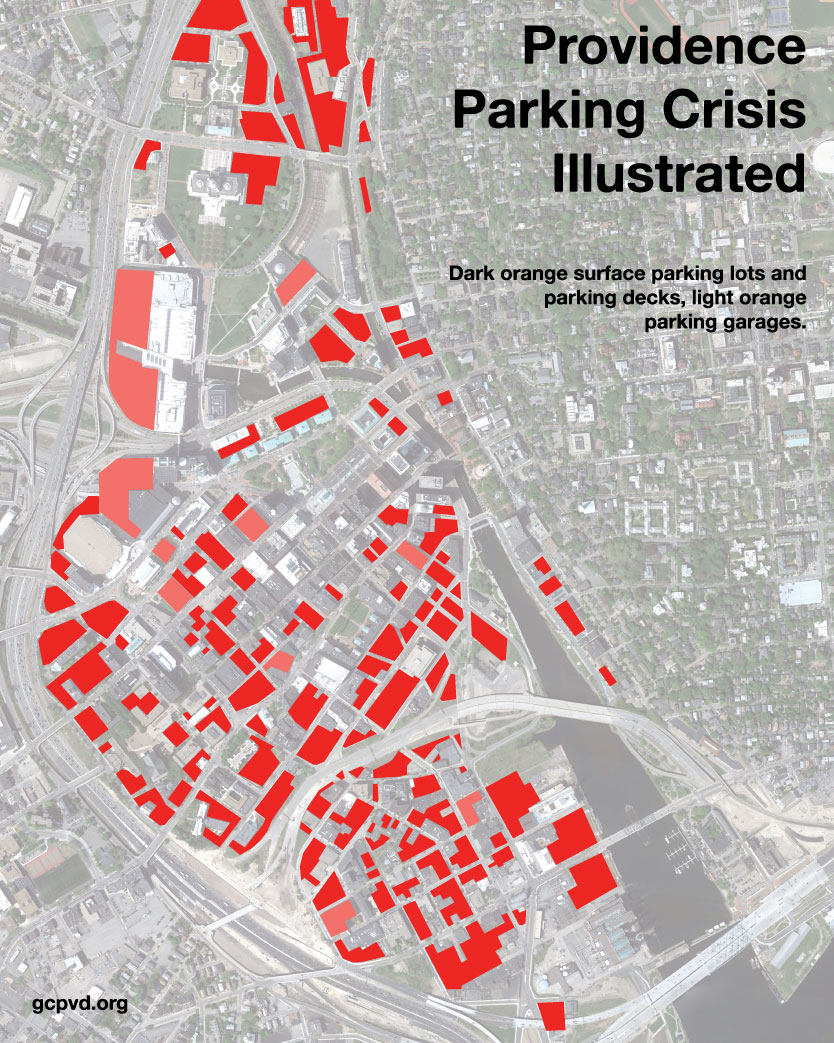
Forcing everyone to build parking makes building more expensive (http://www.thestranger.com/news/feature/2015/07/29/22612207/...) and spread out (google "parking crater" for examples, e.g., http://www.gcpvd.org/wp-content/uploads/2012/04/parking-cris...) which makes it harder to walk, bike, and take public transportation, which causes more people to drive, which causes more need for parking.

Parking your car costs money. People should pay to use it if they need it, but the rest of us shouldn't have to. Right now, drivers are subsidized.

Re: San Francisco Tech Firms See Workers Flee from $4,500 Rents

#70
post #22

"They’ve increased 38 percent in Seattle, 12 percent in Austin and 6 percent in Phoenix." The article names the usual suspects for engineer emigrants (Austin, Portland, strangely no mention of NYC or Raleigh RTP), but why are people moving to Phoenix? Isn't living in the less sexy areas of South Bay (Sunnyvale, Milpitas, South San Jose) pretty much on par with urban life in Phoenix?

Do you somehow think those places are significantly cheaper than San Francisco? They're not.

... What?

Cost of living index compared to San Francisco according to WolframAlpha:

Seattle -20%

Phoenix -42%

Austin -43%

Post reply on HN