Clarence Thomas's concurrence does not mince words: > This, [Justice Jackson] claims, locks blacks into a seemingly perpetual inferior caste. Such a view is irrational; it is an insult to individual achievement and cancerous to young minds seeking to push through barriers, rather than consign themselves to permanent victimhood. [...] What it cannot do is use the applicant’s skin color as a heuristic, assuming that be…
Supreme Court strikes down affirmative action in college admissions
521–530 of 1001 posts
Re: Supreme Court strikes down affirmative action in college admissions
#522Now, In 2022, almost 70% of all seats reserved for the "lower" castes with a small population. The rest population competes for 30% of seats.
If someone tries to reduce the amount of quota: Riots happens, ministers are dethroned, shot etc. Nobody even touches this issue anymore.
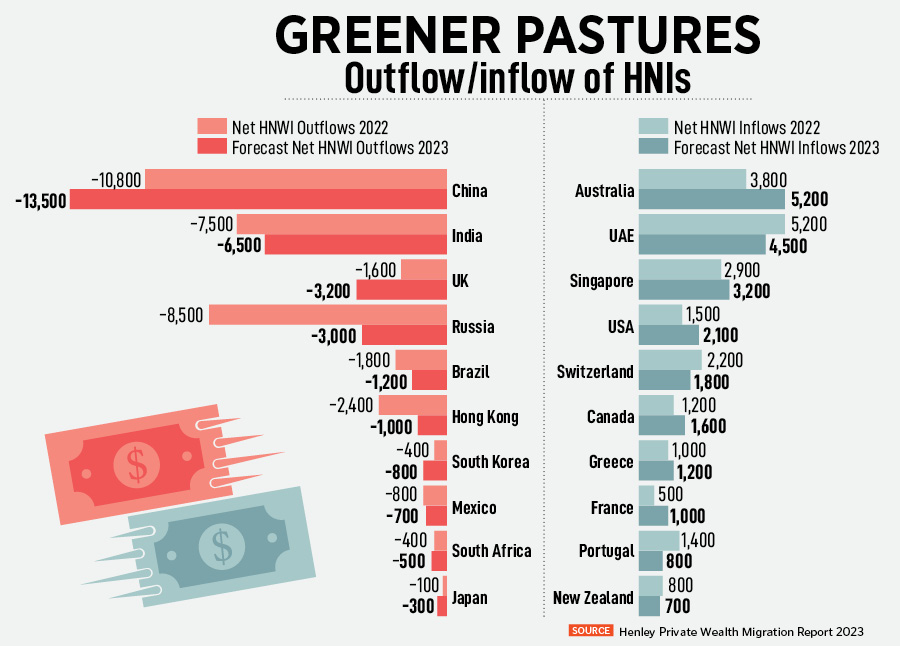
The result is that the top brass of the skilled population have built up a deep resentment. The moment they start earning well, they leave the country and surrender their citizenship without hesitation.
This leads to a feedback loop where the general population is taxed more and more to cover the revenue gap of HNI (High Networth Individuals) leaving. And then more population with the ability to leave , leaves.
1. https://www.shiksha.com/engineering/articles/jee-main-reserv...
2. https://en.wikipedia.org/wiki/Reservation_in_India
3. https://www.forbesindia.com/media/images/2023/Jun/img_210405...
Re: Supreme Court strikes down affirmative action in college admissions
#523Earlier quoted context omitted.
The underlying important question is what do you define as equality? Equality of outcomes, or equality of opportunity? This is a very slippery slope when some definitions are not equal, or stated, as we’ve come into a recent crisis of definitions being rewritten unnaturally (I understand the meaning of words change over time, but there have been recent inorganic changes, I’d argue) The classic opportunity of outcome…
This is fundamentally the only thing that bothers me about the entire post-modern left narrative. If the goal posts were “equality of opportunity” (as they historically have been) then I’d have no problem continuing to fight until opportunity is provably equal. But if you move the goal posts to “equality of outcome” (what people mean when they say “racial equity”) and say “look we’re still a racist society” I just ca…
Re: Supreme Court strikes down affirmative action in college admissions
#524So what does the elite institution actually do? It largely feeds the smartest to lower business ranks to allow elites to better their portfolios. You are smart when you get out to Harvard and you’ll still be smart when you leave. A great school would change low performers into high performers, but that’s not what Harvard does, it looks for those who will already do well after Harvard. Note that with the business focus on DEI, elites need DEI in their portfolio, but nepotism comes first. DEI is a worthy cause to address structural inequities, but it’s now also a business scorecard.
A meritocracy would eliminate the legacy admissions and make admissions not only need-blind but also PII blind. Some elite universities have done need-blind, but this is only sustained by their endowment which is predicated on admitting the less qualified legacies. A meritocracy like this is only possible if the endowment is self sustaining or the college is a public institution. But is meritocracy what we want? Should we focus the most energy on advantaging the already gifted?
It’s notable that in other areas of the world, public institutions provide the best education. Here society is less stratified and college is for learning more than networking. What is needed for the same in the US is a change in perception about our elite schools.
Re: Supreme Court strikes down affirmative action in college admissions
#525Earlier quoted context omitted.
Yeah, every time the discussion comes up about, for example, reparations for the descendants of slaves, I start out thinking: it's been 150 years! Some of those descendants are very successful now and some descendants of slave owners are probably very poor now. And some people are descendants of both. And then I learn about the Jim Crow period, and then you hear that even the GI bill explicitly excluded black people,…
> Yeah, every time the discussion comes up about, for example, reparations for the descendants of slaves, I start out thinking: it's been 150 years! Well, that might be a bit disingenuous. The "last chattel slave" was only freed around September 1942. I've seen this reference in several places, but the most direct one is a footnote on a wikipedia page [0]. Regardless, it is probably not worth putting a time limit on…
I'm not a historian, but if you believe this, how do you propose to make things right for all the suffering of the past? You would need to examine history for winners and losers, every battle and atrocity and societal structure, and then assign blame to modern people who look like the bad guys, and victimhood to modern people who look like the victims. How do you deal with the (probably very common) case when a group of people that looks one way has been both oppressor and victim? How do you deal with issues like pedophilia, incest, or domestic violence, or torture, all of which have had very different moral weight historically?
To me, that's the tragedy of this ideology. The problem isn't the desire for making past wrongs right - that's a very good urge, and one I share. It's that the method for making past wrongs right is based on a very simplistic reading of history and a simplistic, and deeply unfair, idea that you can assign blame and victimhood based on similarity of appearance. There ARE cases when you can address great wrongs, but there is a kind of natural "statute of limitations" where it becomes actually impossible to do anything. Should the Jews still be angry with Egyptians? Or does the Israeli treatment of Palestinians wipe that debt out? What about the Jews who weren't involved? What about the blood libel, the assertion that Jews killed Jesus (nevermind that he was a Jew), and so it is right to hold all modern Jews responsible? What about all the tribal massacres in Africa, where the victims and oppressors a) look exactly the same, and b) would do exactly the same thing if their positions were reversed? How do you deal with the Aztecs, who were slaughtered by Europeans, but who themselves did human sacrafice and slavery, and who eventually interbred with the Europeans? Same for the Russians and Mongolians. (There are probably a hundred other examples of this - Vikings and the Anglo Saxons? The French and the Celts? Etc).
What we can do, we should do. Japanese internment at Manzinar was wrong, and they deserved all the reparations and apologies they (eventually) got, and more. Harvey Weinstien's female victims deserved to see him in prison (at least). Black neighborhoods deserve to have freeways rerouted to not split them and make them terrible, and money to rebuild. But do all white people deserve to be hated, and to hate themselves, because they look like a group of wrongdoers? No. Heck, some of them are recent immigrants. Ditto for black people. And the whole idea we can assign blame based on a person's appearance is a CORE racist belief, and yet now the zeitgeist holds that if you don't do it, you're the racist. The world is upside down, and this ideology is utterly unjust. In my view, it's not anti-racist, it's a new racism that doesn't seek to end racism, but rather to turn the tables and swap the roles of victim and oppressor. This will not, cannot, end well, and it's not the world I want for myself or my children, and I don't think it's the world any right-thinking person wants.
Re: Supreme Court strikes down affirmative action in college admissions
#526Earlier quoted context omitted.
For 350 years of US history africans and their descendants were enslaved. Native Americans were ripped from their land and relocated, often with genocidal levels of casualties. After that, these two groups were substantially discriminated against in law, and other races were added to the mix to be given less rights than others. Today, there are huge disparities between outcomes for different races in large part due t…
> it is definitely the case that poor people of color have a harder time getting ahead than equally poor white people Do you have any sources for that?
I mean, there's a large body of evidence (I personally like the economics methodology of this study, which has been repeated many times: https://www.shrm.org/hr-today/news/hr-magazine/pages/0203hrn...).
But just like many will never be convinced that vaccines are safe and the earth is round, many will never be convinced that racism in the US is real, I suppose.
Re: Supreme Court strikes down affirmative action in college admissions
#527The concept of affirmative action is foreign to me (quite literally so). I only know it from American media, and I've come understand it to mean "positively discriminate based on race, so long as it's a minority race" - please correct me of I'm wrong. But anyway, my question for the Americans here who grok this stuff: I assume the intent is to help disadvantaged people have opportunities that more priviledged people…
Re: Supreme Court strikes down affirmative action in college admissions
#528Earlier quoted context omitted.
Yeah, every time the discussion comes up about, for example, reparations for the descendants of slaves, I start out thinking: it's been 150 years! Some of those descendants are very successful now and some descendants of slave owners are probably very poor now. And some people are descendants of both. And then I learn about the Jim Crow period, and then you hear that even the GI bill explicitly excluded black people,…
> And then I think: you can't just stop doing a bad thing and pretend it didn't happen. You've got to try to make things right. You're implicitly assuming it can be made right. That seems doubtful. The people who had been harmed by those policies are not the ones seeking admission to Harvard. Everyone seeking admission to Harvard has been born into circumstances through no fault of their own, so just help the financi…
Case in point: a black family whose great-great-grandparents 200 years ago were slaves, versus an Asian family that immigrated from a nation impoverished by colonialism last year. The child of the former will heavily benefit from Affirmative Action, while the child of the latter will be heavily penalized.
Why?
Who is to say that the child whose ancestors lived in a rich country for the past 200 years, is more "disadvantaged" then the child whose entire ancestry as far back as the records go always lived in a dirt-poor nation, further impoverished by colonialism?
Re: Supreme Court strikes down affirmative action in college admissions
#529Earlier quoted context omitted.
Because the US has systematically disenfranchised ethnic minorities over the course of its history. Any time there was a non-white person or community that was starting to become prosperous, the power of the state could be used to crush them. At times it was overtly murderous[0], but as that became unfashionable, it was relegated to more subtle methods. Some of the most blatant examples include: - Want an interstate…
> - Want an interstate in your city? Run it through a black or brown neighborhood.[1] A lot these debates really come down to just how impressed one is by arguments like this. It so happens that an Interstate was built through the neighborhood my entire family occupied in St. Louis in the 1950s. Some of them were "displaced." I can't for the life of me figure out how this is supposed to be relevant to my life today.…
Re: Supreme Court strikes down affirmative action in college admissions
#530The only way affirmative action makes 'logical' sense to me is if people believe in biological differences of intelligence between races. Not saying I believe this, but it's the only way I could think of to logically allow for AA. Because now you have "Race A" paying the same tax rates for public university as "Race B", yet their children could be biologically limited (on average) in comparison.