That's incorrect. Charge leaks very slowly out of cells. It's not a big issue, but it does happen. Powered-on SSD firmware knows about the problem and will maintain the cells. [1] http://www.anandtech.com/show/9248/the-truth-about-ssd-data-...
And AnandTech quotes Intel materials who often boasts to have the most durable drives. Imagine what happens to other ones.
Samsung back up the 850 Pro with a 10 year/150TB host writes warranty.
The trick is moving back 2 processes, which alleviates some of the issues they've faced with the 840 series.
And AnandTech quotes Intel materials who often boasts to have the most durable drives. Imagine what happens to other ones.
Samsung back up the 850 Pro with a 10 year/150TB host writes warranty. The trick is moving back 2 processes, which alleviates some of the issues they've faced with the 840 series.
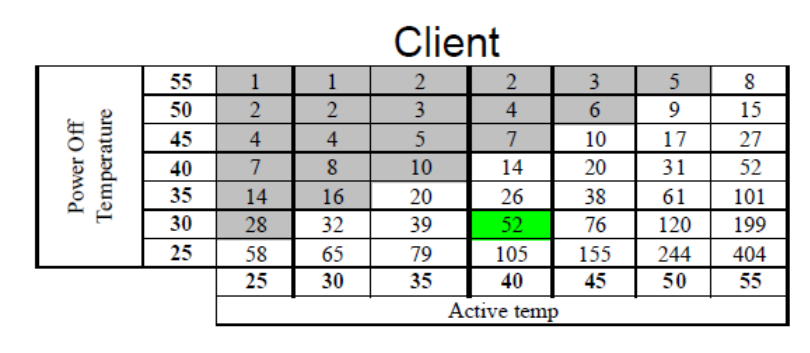
The warranty is certainly not "it will keep the data 10 years without being powered on." We discuss the topic of how long SSDs retain the data when powered off. Intel says, powered off but stored on just 35 degrees C, only 14 weeks, as published by AnandTech:
And Intel is proud to be more reliable than others. In one of their presentations I've seen they show that they use some very high tech setups (like accelerators!) to measure the degradations fast, and that the other producers fare worse on their tests.
SSD technology still has a reliability hurdle, you can nuke one in a month if you write to it constantly. Spinning media has much longer read/write durability. Until there is parity its still a bit of an arms race for capacity. Hybrid drives are pretty awful so I don't think they'll stick around. I could see Hierarchical Storage Management make a comeback and an entry to the consumer space, but thats been esoteric at…
While you are correct that you can nuke a normal SSD in a month, you can buy high-endurance drives which will last much longer. For example, you can buy a p400m with 7.5PB of write endurance [1]. It's just a question of making sure you buy a part that matches your need.
If you're writing more than 7.5PB in a month... I'm prepared to be amazed :-)
The author of that piece is actually somewhat confused about how SSDs work. Data retention is a matter of the charge store leaking. An SSD doesn't have any means of refreshing that charge on it's own, the same timer is there whether the drive is on or off. And in fact it will lose data faster if the drive is on since then the drive temperature will be higher. Luckily this sort of data loss isn't a big deal in practice for the reasons outlined elsewhere in this thread.
It appears so. "By packing 32 or 64 times the capacity per die, 3D NAND will allow SSDs to increase capacity well beyond hard drive sizes. SanDisk, for example, plans 8 TB drives this year, and 16 TB drives in 2016. At the same time, vendors across the flash industry are able to back off two process node levels and obtain excellent die yields." Goodnight spinning disk; you've served us well.
/me does the happy dance an ssd is the best hardware upgrade I've had in the last 5 years Once you get used to it, try using a computer with spinning rust and it will just feel glacial who doesn't need multi-tb ssds in their laptop?
In a side-note in the article, the author mentions that Amazon Glacier runs on tape. Although I'm not sure Amazon officially explained the technology, I heard (and read on Wikipedia) that they store data on conventional HDDs, that are however kept "offline". Has anyone here some more knowledge about that?
Yes please. I was also intrigued by this statement. I was under the impression that Amazon never told what the "secret sauce" was behind Glacier. Looking at Wikipedia now, it seems there are still multiple contending theories. Also, is it true that the service is not very popular? Are people here using it or similar?
My home Synology unit does nightly backups to Glacier. It'd be terrible to lose our house to natural disaster, but losing all our digital data (photos, records, etc.) would make it just that much worse. For about $10 a month, I know I can recover all that stuff even if we lose everything else.