Live data from Hacker News

Why the smart home bubble popped

hackaday.com

51–60 of 107 posts

Re: Why the smart home bubble popped

#51
It depends on what you need to be "smart" about your house. If you live in an apartment there is not much to be automated. However, (if like me) you live in a free-standing house with solar panels, possible power outages and all heating done through electricity, a PHEV you want to charge, being able to have smart energy management is actually very useful.

Ideally my house should have 3 phase power, but I'm not yet inconvenienced enough to go through the headache of getting this organized. This means that at any time my maximum power draw can be 13.8 kW (60A at 230V).

Generally this is enough, but I have on occasion tripped my mains due to drawing too much at a particular moment, I have the following significant power draw items:

- 4x underfloor heating circuits at 3kW each.

- 2x electric geyser at 2.5kw each.

- Electric oven and induction stove, not sure on amount but I think they can collectively pull 6kW easily.

- Pool pump at 0.6kW.

- Inverter re-charging batteries at night (I only have 10kWh of storage and want backup power at night in case of a power outage), I can configure maximum draw here, but could probably pull up to 8kW if I wanted.

- PHEV at 3kW.

When we had regular load shedding here (South Africa) it was very easy for the power to trip if I didn't manage things, particularly if I left underfloor turned on in the winter at night. What would happen is that power would have been off for ~2 hours, then comes back and everything on a thermostat would turn on AND the inverter would start charging its battery.

If I proactively turned the floors off then I wouldn't generally have an issue.

Even without a power outage, it is possible to trip things when using stove/oven with underfloor heating turned on or if both the geysers happened turn on their elements at an inopportune moment.

IoT can allow this to all be managed, it can have rules like:

- Don't run ALL the underfloor heating circuits at the same moment, alternate between them.

- If the stove/oven is in use, don't turn on the element for either of the geysers, it can wait.

- Temporarily stop charging the PHEV or inverter's batteries until there is less power demand.

- Temporarily turn off the pool pump if it would help.

It can also create other opportunities around solar energy production, you can do things like have only "excess" energy go into your (PH)EV provided it has a minimum charge level.

Other automations which I wouldn't mind:

- Exterior lights on a schedule based sunrise/sunset.

- When I'm away it would be nice to be able to remotely turn on/off particular interior lights and open/close curtains at particular times of the day.

What I actually have automated:

- My alarm system has (not great) app, I have wired it up to my garage door so I can remotely let in the armed response security company in the event of the alarm going off and I'm not at the house.

- I use the Tuya ecosystem to automatically turn my geyser and pool pump off on a schedule and if there is a power outage or load shedding. This allows me to heat the geyser still even if there is a power outage and it's the middle of the day with lots of sun on my solar panels.

HA is something I want to look at one day (when I have more time), meanwhile the Tuya ecosystem is very useful considering its minimal amount of time investment required.
Re: Why the smart home bubble popped

#52
Matter is hopefully changing it. It's a local first standard, based on IPv6 with security and provisioning in mind. BLE is used to give devices wifi or Thread credentials. Thread is a new protocol to replace ZigBee. Lower power using the same radio hardware. Ikeas new line is all Matter.

My one issue, while building a custom HA controller is... There's no standard for discovering the HA controller and have it join WiFi... So that will require an app. Just to do mDNS and TLS bootstrapping. Maybe I'll use a cloud relay and Web Bluetooth for it. Would relieve both issues and provisioning could happen in any browser supporting Bluetooth.

Re: Why the smart home bubble popped

#53

Matter is hopefully changing it. It's a local first standard, based on IPv6 with security and provisioning in mind. BLE is used to give devices wifi or Thread credentials. Thread is a new protocol to replace ZigBee. Lower power using the same radio hardware. Ikeas new line is all Matter. My one issue, while building a custom HA controller is... There's no standard for discovering the HA controller and have it join Wi…

None of the problems put forward by the article are protocol related, so I'm not sure why you think Matter would/could change it.

Re: Why the smart home bubble popped

#54

The reason really is the extreme arrogance of every single manufacturer that wants you to install their app and use their ecosystem. That might have worked if one of them became super dominant and pushed everyone else out. But because that didn't happen, now I have to install 20 apps for 20 different manufacturers with no guarantees of interoperability. Instead of that I'm choosing to vote with my wallet and mostly s…

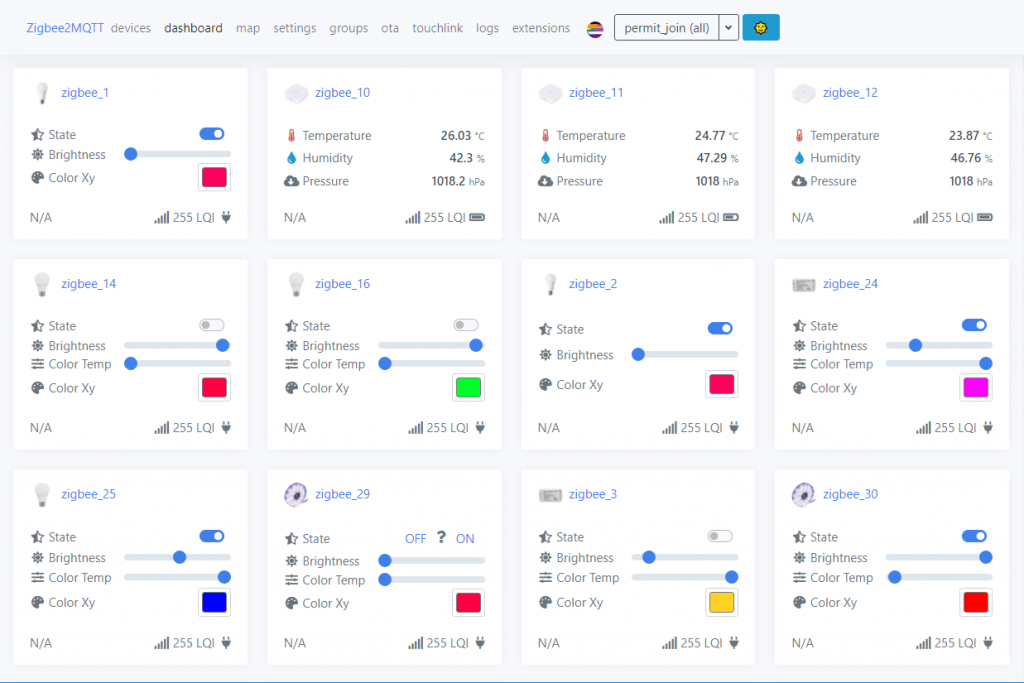
That one was pretty obvious to everyone, open hard- and software is a must for the longevity of (internet of) things that cost I've settled on a ZigStar Stick for my always-on Raspberry Pi and stick to compatible devices[0] only. I even just stick to the dashboard of Zigbee2MQTT[1], as Home Assistant[2] feels too bloated for my use cases.

Self-hosting and open source will certainly win in the case of smart homes.

[0]: https://www.zigbee2mqtt.io/supported-devices/

[1]: https://flemmingss.com/wp-content/uploads/2021/09/zigbee2mqt...

[2]: https://www.home-assistant.io/

Re: Why the smart home bubble popped

#55

Recurring revenue, K-factor, long shelf life and low actuation rate. Few verticals outside of video storage could support a monthly subscription putting negative pressure on supporting a shipped product. Most smart home products are anti-social and had a low k-factor. You don’t want to share access to your scale to more than a handful (2?) people. This makes market adoption slower than a social networking app. Touche…

You're describing those things as failures. I see them as successes.

A smart device that doesn't need a subscription to feed and keep track of, doesn't consume hours of my life trying to get my attention, doesn't get shared with the world, and doesn't bother me with needless bullshit? It just quietly does its thing and it also lasts 8 years?

That sounds great! Count me in!

(Actually, I'm already a member. My personal favorite smart devices come with open-source ESPHome firmware pre-installed, and they have all of the features I've described above. These manufacturers make their money by exchanging money for widgets in simple one-time transactions, not by being sneaky under-handed rent-seeking slimeballs who live to optimize ways continuously extract money out of my billfold for the rest of my life.)

Re: Why the smart home bubble popped

#56
post #32

Most of this smart home stuff doesn't do much. Managing lights and entertainment just isn't that interesting. It doesn't cook or clean. Vacuum, maybe. There's been generation after generation of lighting control. There was a 1950s/1960s thing of putting everything on relays with 24V control signals and panels full of rocker switches. There was x10 in the 1980s. There were "smart" light bulbs in the 2010s. It's just n…

I worked in a building that had that kind of "smart" controls. It was anything but. In practice, it started opening and closing shutters for no reason, when clouds obscured the sun, and then went away. Or even when some sort of reflection hit some sensor, somewhere in the building. I'm sure it's doable, but unlike factories, where automation is related to income and thus profits, most commercial buildings are built b…

Right. It works for hotels, because, if your hotel conference rooms are uncomfortable, some conferences will switch hotels next year. So there's a strong business case for getting HVAC control right.

Schools and colleges have the same HVAC problem, with huge variations in people load, but don't have the same incentive to get it right.

(I once found a computer room in the Gates Building at Stanford that had two packaged air conditioning systems at opposite ends of the room. One was heating and the other was cooling. You're supposed to get a control box that synchronizes your HVAC units when you have more than one, but they didn't. Each was running on its own thermostat. Huge energy consumption with an error like that.)

Re: Why the smart home bubble popped

#57
post #46

Earlier quoted context omitted.

I use Home Assistant ( https://www.home-assistant.io/ ). It has an integration for lots of manufacturers. Single app, single entry point, cross manufacturer automations.

Home Assistant is well beyond the skills of the vast majority of people to install, set up, and maintain. And they don't want to have to maintain something like that. They want an appliance that they plug in and just works.

Sure. Most people don't have much beneath-the-skin technical inclination at all. We see this right now in 3D printing: Bambu Labs printers are popular because they're simple to use: A person can unbox it, plug it in, load some filament, and start printing widgets from their pocket supercomputer basically immediately.

But it is available as a plug-in appliance, and they're getting better and better at the Just Works aspects all the time.

And in a world where everything is relative, it's a hell of a lot easier to get started with Home Assistant than it is to get started with something like KNX or Crestron.

[1]: https://www.home-assistant.io/green/

Re: Why the smart home bubble popped

#58
post #50

The reason really is the extreme arrogance of every single manufacturer that wants you to install their app and use their ecosystem. That might have worked if one of them became super dominant and pushed everyone else out. But because that didn't happen, now I have to install 20 apps for 20 different manufacturers with no guarantees of interoperability. Instead of that I'm choosing to vote with my wallet and mostly s…

Matter is a solution to that. It's a standard pathway for things to talk to (say) a light bulb. The control interface is local, not cloud-based. And configuring a Matter device from $random_company doesn't require $random_company's bizarro-world app; instead, it involves a QR code or a short alphanumeric sequence. That Matter light bulb still needs something to control it, but the light bulb is not tied to one contro…

It's also a bit of a trap. Many devices "work with Matter" but either they don't really until a future firmware update, and even then, a lot of them have certain features locked into the vendor app.

There's also complications around networking. Matter over WiFi works great if your networking gear can withstand potentially hundreds of devices connected. Matter over Thread seem to work under specific conditions, but I still haven't been able to pair the first device.

There's also potential issues around device certification.

All in all, Zigbee is a more reliable platform for the moment IMO, even though I have some issues with it as well.

Re: Why the smart home bubble popped

#59
The market needs competition.

Apple has this reasonable offer:

  - Buy an Homepod/Apple TB as a home station
  - Everything works locally, even the internet is down.
  - no Accounts. 
  - only one privacy policy: Apple's
  - but ofc, you can control everything remote, and Apple makes sure its easy and secure.

Since its Apple, they have to make sure there are downsides, too (beside price):

  - If Apple does not deem it worthy, it will not get implemented. [1]
  - Things that should be simple are not. Try to set the lights to turn on 10 minutes before your alarm goes off. I'll wait here.
I see a market for a company which builds on home-assistant. You can tell the nerds: If "corporate" does sth you dont like, you can always go back to home-assistant. And for everybody else, you can offer a support, a list of compatible/certified devices, an extendable, open API, a vetted applications/script market place, a secure remote connection, ...

[1] It has been a few years, but last time I checked, CO2 Levels still can only be reported as labeled Levels ("high/low/.."), with the actually ppm Value hidden in some auxiliary value. No way around it, Apple needed to put CO2{ type: integer, range: 0-10000} in some json some where, and they did not come around to do it for like half a decade, at which point I stopped caring.

Re: Why the smart home bubble popped

#60
post #59

The market needs competition. Apple has this reasonable offer: - Buy an Homepod/Apple TB as a home station - Everything works locally, even the internet is down. - no Accounts. - only one privacy policy: Apple's - but ofc, you can control everything remote, and Apple makes sure its easy and secure. Since its Apple, they have to make sure there are downsides, too (beside price): - If Apple does not deem it worthy, it…

>Try to set the lights to turn on 10 minutes before your alarm goes off

I had a very similar use case: turn on my espresso machine (via smart plug) 20 minutes before I wake up. It should have been simple, as I already have a sleep schedule with a wake up alarm in the system. It turned out to be such a complicated hassle, that it put me off from using HomeKit for anything more complicated than “press a button to turn on a lamp”.

Post reply on HN