Live data from Hacker News

Toyota’s advanced battery technology roadmap

newsroom.toyota.eu

51–60 of 327 posts

Re: Toyota’s advanced battery technology roadmap

#51
post #45

Earlier quoted context omitted.

I don't know what Toyota's future looks like in terms of electrics, but I know that I won't own an electric car until they sell an electric Corolla, or something equivalent.

I wouldn't hold my breath for something called a "Corolla". Their roadmap is a big gaping hole for the next 3 years. However, this exists, and kind of looks like a tall Corolla: https://www.toyota.com/bz4x/

What's the model called? I think someone accidentally base64 encoded it.

Re: Toyota’s advanced battery technology roadmap

#52
post #37

Earlier quoted context omitted.

Hydrogen is a gas, which expands or compresses to fill all available space, so its density varies. People really need to check their understanding of physics here.

I would assume, but perhaps be wrong, that it would be liquid Hydrogen pumped into a vehicle's tank, and much like a tank of propane, the liquid expands back into a gas as pressure decreases (due to consumption). Hydrogen vehicles have the advantage of being refillable in minutes, much like petrol based vehicles - yet the only byproduct is water vapor, making them completely environmentally friendly. Hydrogen is also…

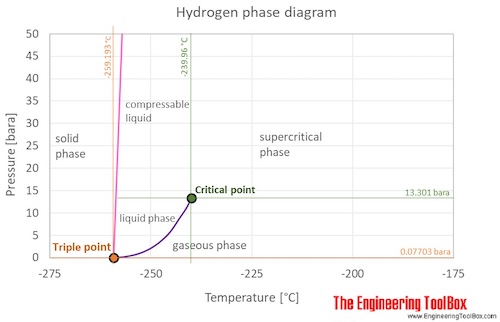
Hydrogen's critical temperature is cryogenic. There's no keeping it liquid at any pressure if it's warmer than -240C

Re: Toyota’s advanced battery technology roadmap

#53
post #37

Earlier quoted context omitted.

I would assume, but perhaps be wrong, that it would be liquid Hydrogen pumped into a vehicle's tank, and much like a tank of propane, the liquid expands back into a gas as pressure decreases (due to consumption). Hydrogen vehicles have the advantage of being refillable in minutes, much like petrol based vehicles - yet the only byproduct is water vapor, making them completely environmentally friendly. Hydrogen is also…

Toyota does sell the Mirai[1] in California, it has pressurized tanks[2] I think keeping the hydrogen liquefied would take low temps as well, which would use a lot of energy for refrigeration (and or a lot of volume for insulation). 1: https://www.toyota.com/mirai/ 2: https://en.wikipedia.org/wiki/Toyota_Mirai#High-pressure_hyd...

Thanks for the links. I had thought the Mirai was discontinued, but it looks like it's still in production.

Regarding the tanks - they appear to be high pressure, but non-refrigerated and non-insulated. It would seem pressure alone keeps the Hydrogen in liquid state - if that's how it works.

Re: Toyota’s advanced battery technology roadmap

#54
post #37

Earlier quoted context omitted.

I would assume, but perhaps be wrong, that it would be liquid Hydrogen pumped into a vehicle's tank, and much like a tank of propane, the liquid expands back into a gas as pressure decreases (due to consumption). Hydrogen vehicles have the advantage of being refillable in minutes, much like petrol based vehicles - yet the only byproduct is water vapor, making them completely environmentally friendly. Hydrogen is also…

Hydrogen's critical temperature is cryogenic. There's no keeping it liquid at any pressure if it's warmer than -240C

Can you locate a source specifically for a vehicle like the Toyota Mirai or one of the newer big rig trucks using hydrogen?

Everything I come across seems to imply they are using high pressure (10,000 PSI) but no talk about insulation or refrigerant. I could be missing it somewhere...

Re: Toyota’s advanced battery technology roadmap

#55
post #2

1000 km battery, 10 minute charge? I'm suspicious for many reasons. If they can't build their prime hybrids — or even supply gas Siennas in Canada — I'm not very confident about their manufacturing in the mid-term. I hope I'm wrong.

It reminds me of the old story about the inventor in the late 1890s, who claimed to have invented a car that could cross the United States running on just a gallon of water. After failing to deliver a tangible product for years, investors pushed him to either produce his vehicle or return their money. The inventor refused, saying that he'd now come up with an even better version that could cross the United States on just a single thimble of water, and it would be beneath his professional pride to release an inferior product, so he had no choice but to continue his research.

Re: Toyota’s advanced battery technology roadmap

#57
post #37

Earlier quoted context omitted.

Hydrogen is a gas, which expands or compresses to fill all available space, so its density varies. People really need to check their understanding of physics here.

I would assume, but perhaps be wrong, that it would be liquid Hydrogen pumped into a vehicle's tank, and much like a tank of propane, the liquid expands back into a gas as pressure decreases (due to consumption). Hydrogen vehicles have the advantage of being refillable in minutes, much like petrol based vehicles - yet the only byproduct is water vapor, making them completely environmentally friendly. Hydrogen is also…

> I would really like to know more about why Hydrogen vehicles did not take off as much as electric.

Lots of reasons. So, here's some off the top of my head.

* Infrastructure - There's no hydrogen distribution system in place. Further, hydrogen is trickier to distribute/store. It's not like gas where you can just have a big empty metal drum that you fill and discharge. Consider, for example, that as gases expand they cool down and as they compress they heat up (Boyle's law). Now consider the danger of refilling, go too fast (with any sort of oxygen present) and you run the real risk of explosion. Without oxygen, you still have to deal with the heat generated. On the flip side, pulling hydrogen out of a tanker will cause the tanker and the stored hydrogen to freeze, forcing you to wait for a defrost if you go too fast.

* Hydrogen is not green. I know everyone THINKS that hydrogen production would primarily come from electrolysis, but that's not how commercial hydrogen is produced [1]. Instead, hydrogen primarily comes from fossil fuels (methane, natural gas).

* Related to the first point, charging a hydrogen vehicle would require all the same headaches the current EV connectors have gone through. You can't just specify a diameter and go from there. You must create a seal to prevent hydrogen from leaking from the pump. It's doable, but also dangerous if you get it wrong. Hydrogen is far more flammable than gas which is really super risky if someone is smoking while recharging.

* Electricity is already distributed. The fact that you are writing here on hacker news means you have a source of electricity that could potentially power your car. The EV charge station distribution is largely just a factor of setting up stations. Further, for relatively little money existing gas stations can easily be converted to support EVs. That's not so with Hydrogen. Another reason for the popularity of EVs is home charging is really fantastic. If you own a home and install a charger you'll almost never need any public fueling infrastructure. (also, with an EV charger refueling at home from 0 to 100 takes about 7 hours. Refueling for daily road trips generally takes more along the lines of 1 hour. Most cars are idle for more than an hour).

[1] https://www.eia.gov/energyexplained/hydrogen/production-of-h...
Re: Toyota’s advanced battery technology roadmap

#58
post #53

Earlier quoted context omitted.

Toyota does sell the Mirai[1] in California, it has pressurized tanks[2] I think keeping the hydrogen liquefied would take low temps as well, which would use a lot of energy for refrigeration (and or a lot of volume for insulation). 1: https://www.toyota.com/mirai/ 2: https://en.wikipedia.org/wiki/Toyota_Mirai#High-pressure_hyd...

Thanks for the links. I had thought the Mirai was discontinued, but it looks like it's still in production. Regarding the tanks - they appear to be high pressure, but non-refrigerated and non-insulated. It would seem pressure alone keeps the Hydrogen in liquid state - if that's how it works.

The hydrogen is not in a liquid state.

Re: Toyota’s advanced battery technology roadmap

#59
post #2

1000 km battery, 10 minute charge? I'm suspicious for many reasons. If they can't build their prime hybrids — or even supply gas Siennas in Canada — I'm not very confident about their manufacturing in the mid-term. I hope I'm wrong.

For a 150 kWh battery, 10 minute charge to go from 10% to 80% SoC means charging at 600 kW or so. It would be pretty insane.

Re: Toyota’s advanced battery technology roadmap

#60
post #54

Earlier quoted context omitted.

Hydrogen's critical temperature is cryogenic. There's no keeping it liquid at any pressure if it's warmer than -240C

Can you locate a source specifically for a vehicle like the Toyota Mirai or one of the newer big rig trucks using hydrogen? Everything I come across seems to imply they are using high pressure (10,000 PSI) but no talk about insulation or refrigerant. I could be missing it somewhere...

The hydrogen is stored as compressed gas. No doubt about it.

The physics: https://www.engineeringtoolbox.com/docs/documents/1419/Hydro...

Some photos: https://www.thedrive.com/news/37872/now-with-three-hydrogen-...

Post reply on HN