To put this in perspective, it has happened before along similar lines in different produce types. For example, almost all of the vineyards in Europe were wiped out in the 19th century [1]. This is why the oldest vineyards in the world are somewhere in South America. (I think Chile?) Today, as we all know, France is still the most important wine producing country. South Africa has 100k hectares of wine; France has 10…
A minor difference: > The slow-growing trees take 65 to 80 years to reach stable yields. https://www.hunker.com/13428601/how-long-does-it-take-for-an...
Olive tree disease across Europe 'could costs billions'
51–60 of 95 posts
Re: Olive tree disease across Europe 'could costs billions'
#52Earlier quoted context omitted.
Personally, even if it's more expensive, I only buy olive oil from Europe, at least to support where I live
So you want to reduce trade between Europe and neighbouring mediterranean nations like Morocco and Turkey, the same countries we want to take in all the refugees from Africa and the Middle East.
Re: Olive tree disease across Europe 'could costs billions'
#53Earlier quoted context omitted.
So you want to reduce trade between Europe and neighbouring mediterranean nations like Morocco and Turkey, the same countries we want to take in all the refugees from Africa and the Middle East.
There's no need to politicize the issue or bring the completely irrelevant refugee topic in the discussion. Anyway the argument is so oversimplified that it's irrelevant in any discussion. No matter where you buy from a similar argument can just as easily and arbitrarily be used pro or against it.
Of course this is a complex subject, but I am responding to the extremely oversimplified idea that not buying from neighbouring regions is somehow supporting "where we live".
Re: Olive tree disease across Europe 'could costs billions'
#54Earlier quoted context omitted.
There's no need to politicize the issue or bring the completely irrelevant refugee topic in the discussion. Anyway the argument is so oversimplified that it's irrelevant in any discussion. No matter where you buy from a similar argument can just as easily and arbitrarily be used pro or against it.
I strongly disagree. Trade is very relevant to improving living standards and living standards are very relevant to migration (which is the term I should have used instead of refugees in spite of the fact that these two issues are closely linked). Of course this is a complex subject, but I am responding to the extremely oversimplified idea that not buying from neighbouring regions is somehow supporting "where we live…
Re: Olive tree disease across Europe 'could costs billions'
#55Re: Olive tree disease across Europe 'could costs billions'
#56Earlier quoted context omitted.
I strongly disagree. Trade is very relevant to improving living standards and living standards are very relevant to migration (which is the term I should have used instead of refugees in spite of the fact that these two issues are closely linked). Of course this is a complex subject, but I am responding to the extremely oversimplified idea that not buying from neighbouring regions is somehow supporting "where we live…
This I completely agreed with until 3 weeks ago. When borders close you need local industries and a degree of security in terms of food and other resources. The foreign owned supermarket couldn’t provide and the locally owned one couldn’t either (there are only 2 here in New Zealand), and it took over an hour queuing to find this out. However I contacted a farm with a mill which could. I don’t know what to think now,…
Also, self sufficiency doesn't really work, not for very long at least. After a few weeks, you run out of some chemical or some replacement part.
The right response to a pandemic can't be to return to a medieval style economy.
Re: Olive tree disease across Europe 'could costs billions'
#57Earlier quoted context omitted.
This I completely agreed with until 3 weeks ago. When borders close you need local industries and a degree of security in terms of food and other resources. The foreign owned supermarket couldn’t provide and the locally owned one couldn’t either (there are only 2 here in New Zealand), and it took over an hour queuing to find this out. However I contacted a farm with a mill which could. I don’t know what to think now,…
I don't doubt that it's a good idea to have some local food production everywhere. But huge olive plantations in Spain, Italy or Greece are not that. They wouldn't exist in this form without trade. Also, self sufficiency doesn't really work, not for very long at least. After a few weeks, you run out of some chemical or some replacement part. The right response to a pandemic can't be to return to a medieval style econ…
So you would move the "huge olive plantations" from Spain, Italy and Greece to Turkey and Tunisia, which also couldn't exist without trade?
Re: Olive tree disease across Europe 'could costs billions'
#58Earlier quoted context omitted.
I don't doubt that it's a good idea to have some local food production everywhere. But huge olive plantations in Spain, Italy or Greece are not that. They wouldn't exist in this form without trade. Also, self sufficiency doesn't really work, not for very long at least. After a few weeks, you run out of some chemical or some replacement part. The right response to a pandemic can't be to return to a medieval style econ…
> huge olive plantations in Spain, Italy or Greece are not that. They wouldn't exist in this form without trade. So you would move the "huge olive plantations" from Spain, Italy and Greece to Turkey and Tunisia, which also couldn't exist without trade?
Re: Olive tree disease across Europe 'could costs billions'
#59To put this in perspective, it has happened before along similar lines in different produce types. For example, almost all of the vineyards in Europe were wiped out in the 19th century [1]. This is why the oldest vineyards in the world are somewhere in South America. (I think Chile?) Today, as we all know, France is still the most important wine producing country. South Africa has 100k hectares of wine; France has 10…
A minor difference: > The slow-growing trees take 65 to 80 years to reach stable yields. https://www.hunker.com/13428601/how-long-does-it-take-for-an...
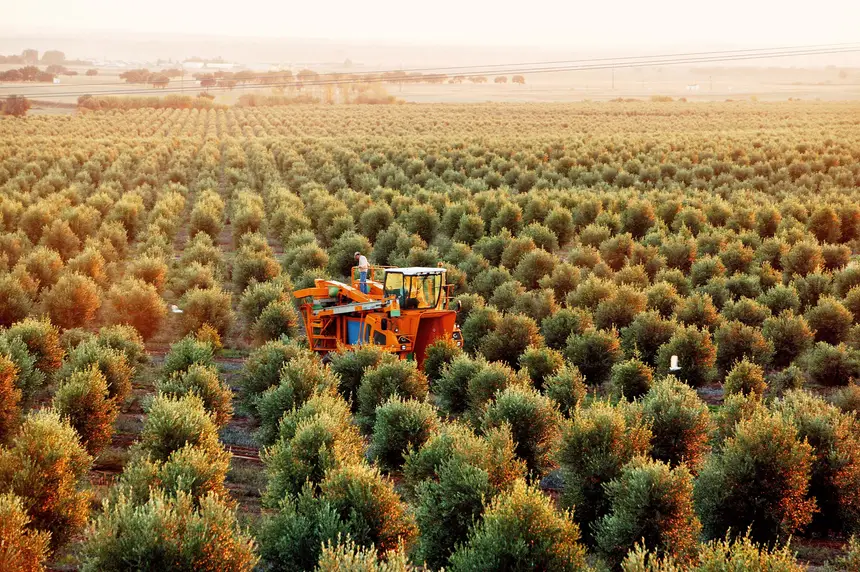
The typical modern plantation in Spain/Portugal uses very young and small trees (they start giving fruit by year 4) supported by intensive automated watering (typically from nearby dam projects) and with the trees spaced out just right for automated picking.
Like this photo: https://images.impresa.pt/expresso/2019-09-06-pag16_T-_IDP.j...
Re: Olive tree disease across Europe 'could costs billions'
#60Earlier quoted context omitted.
> huge olive plantations in Spain, Italy or Greece are not that. They wouldn't exist in this form without trade. So you would move the "huge olive plantations" from Spain, Italy and Greece to Turkey and Tunisia, which also couldn't exist without trade?
No, I wouldn't "move" anything. I just wouldn't boycott them based on the premise that trade only benefits one side.