Live data from Hacker News

Is the world becoming uninsurable?

charleshughsmith.substack.com

481–490 of 1001 posts

Re: Is the world becoming uninsurable?

#481

Earlier quoted context omitted.

Climate change enters the chat...

Still waiting for the water to flood New York...

Hurricane Sandy flooded big parts of lower Manhattan and Brooklyn. I have friends who couldn't go back to their apartments or offices for months afterwards.

Re: Is the world becoming uninsurable?

#482

American, living in area prone to natural disasters: "Is the WHOLE WORLD becoming uninsurable?" The answer is obviously "no" since there are other parts of the world that don't live on a hurricane highway nor build houses made from firewood in an area prone to wildfires.

I would assume that earthquake insurance in japan is a reasonable model for "world insurance". It looks like it's a reinsurance program: https://www.mof.go.jp/english/policy/financial_system/earthq... So, I think the answer is "no".

Japan is probably not a good comparison for home insurance because houses in Japan typically only have a 20 to 30 year lifespan. After that they are usually torn down and a new house is built.

Re: Is the world becoming uninsurable?

#483

Insurance is such a crutch for some people, but it shouldn't be. If something is worth doing, it's worth doing whether you have insurance or not. In my opinion, the amount of resources spent on buying insurance would, in almost every case, be better spent on prevention rather than after the fact mitigation.

> If something is worth doing, it's worth doing whether you have insurance or not.

Taking a mortgage that allows you to buy a house you'll pay off over 30 years and then sell when you retire requires insurance.

Without insurance the investments we make in ours homes would need to be a lot smaller.

I'm not saying it's a bad idea, just that it's not without significant impact.

Re: Is the world becoming uninsurable?

#484

Earlier quoted context omitted.

The entire west coast sits on top of a fault line. That’s why people don’t build with brick here. There’s plenty of brick buildings on the east coast (and on the west coast like in Oregon, but they have to be seismically retrofitted which is expensive).

It works for Taiwan and Japan

Is that brick or is it reinforced masonry?

Re: Is the world becoming uninsurable?

#485
Really interesting reading - looks like there's a lot of comments here along the lines of things that could be done to build more fire/flood/huricane resistant housing.

I don't want to detract away from those points, but it's definitely worth saying that, at present, we're polluting CO2 into the atmosphere at a very large and to some extent avoidable rate. Climate change is already happening, but the extent to which it happens is still down to us - we can and need to do lots to improve flood resistance in, say, Florida, but we can also stop parts of Florida ending up below sea level too.

Re: Is the world becoming uninsurable?

#486

Earlier quoted context omitted.

HN just had a "Whoops we undercounted plant C02 absorption by 40% for the last 40 years" post so I would say the errors mostly go in one direction.

Isn't that overly pessimistic, not optimistic? Surely if plants are absorbing more CO2 than we thought, that's a good thing for climate change? (More CO2 absorbed by plants -> less CO2 staying in the atmosphere -> less warming. No?)

>(More CO2 absorbed by plants -> less CO2 staying in the atmosphere -> less warming. No?)

The vast vast vast majority of co2 absorbed by plants remains in the carbon cycle. The share that leaves it is in fact ridiculously small.

There's absolutely no reasonable scenario where we wait for plants to deal with the output of the fossil fuels pumped up.

Re: Is the world becoming uninsurable?

#487

American, living in area prone to natural disasters: "Is the WHOLE WORLD becoming uninsurable?" The answer is obviously "no" since there are other parts of the world that don't live on a hurricane highway nor build houses made from firewood in an area prone to wildfires.

Honest question. Why when people describe wood framed homes do they always phrase it like houses made from "firewood", "sticks", "twigs" etc? It at least for me always detracts from the argument at hand. You could just as easily build a wood framed home with an exterior shell that is fire resistant using modern materials or brick.

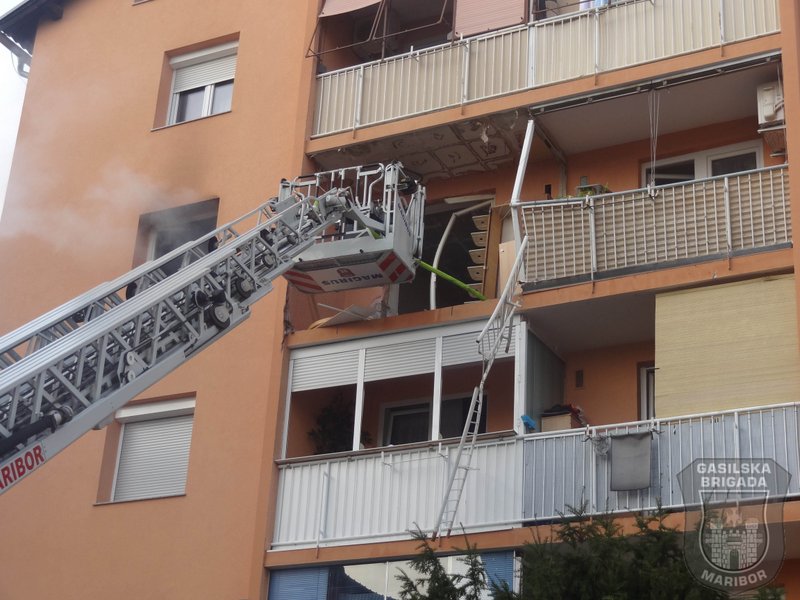
Some of us live in reinforced concrete socialist-built apartment buildings, and our homes don't burn like american houses do. Same for single family houses made from brics and cement (most houses here)

Same for eg. gas explosions, this is one one looks like in us:

https://media.cnn.com/api/v1/images/stellar/prod/23081219122...

And this is one over here:

https://www.prlekija-on.net/uploaded/2018_11/eksplozija-plin...

Same for eg floods, pump the basements and ground levels, repaint, move stuff back in. Someone from US I work with on a project had a pipe burst while on vacation, and insurance wrote off their whole house, because of a few days of water.

I mean, sure, you could that, but looking at the photos from fire-affected areas, nobody did that, it's all burnt to the ground.

Re: Is the world becoming uninsurable?

#489

Earlier quoted context omitted.

> What's the average monthly leccy bill in Phoenix during the summer? $400? The average high temperature in Phoenix in July is 106.5F (41.4C). If you are cooling to 70.0F (21.1C), that's a difference of 36.5F (20.3C). The average January low in Berlin is 28.0F (-2.2C). If you are heating to 65.0F (18.3C), that's a difference of 37.0F (20.5C). I feel like many people living in climates that don't require air condition…

You’re ignoring one critical difference between these two scenarios. Humans, and all human related activities, produce heat as a waste product. It’s much easier, and consumes less additional energy, to heat an occupied space, than to cool it. Thanks to the fact that your average human produces 80W of heat just to stay alive. So every human in your cold space is 80W fewer watts of energy you need to produce to heat th…

"cooling a living space is always more costly than heating a living space" Man I wish this was true but it definitely isn't in anyplace that gets significantly cold. Heat pumps are super super efficient at cooling but they get less efficient at heating the colder it gets. Humans and appliances create a pretty negligible amount of heat.

Re: Is the world becoming uninsurable?

#490
What amazes me about watching californians interviewed about the wild fires is the discourse heads towards conspiracy and corruption:

- It's all part of planned land grabs and clearances - They don't want to pay to protect us

And so on. Nobody once mentioned the real driving factor of increasing incidences of natural disaster: climate change.

I wouldn't insure that attitude either.

Post reply on HN