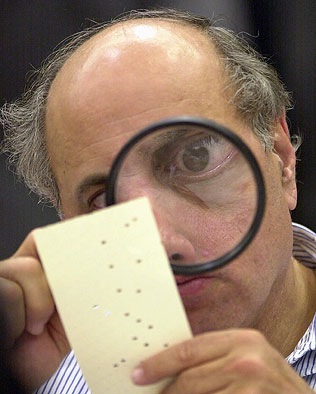
The system here in Minnesota works much better. All ballots are paper ballots that are indelibly marked by voters. My wife and I voted this morning in our busy precinct in Minnesota, where there are some tight statewide contests about constitutional amendments and perhaps the most contested race for our state's House of Representatives of any electoral district in our state. As usual, we voted by marking bubble-shape…
The system in Oregon works quite well. In the mail, you get a voter's pamphlet, a ballot to fill out, and two envelopes. You put your name, address, and signature on the outer envelope, put the ballot in the unmarked inner "secrecy" envelope, and put the secrecy envelope in the identifying envelope. The people counting the ballots use the outer envelope to check identity against the list of registered voters (and the…
I think you'll be less enthusiastic once you understand how it works.
In my jurisdiction, ballots are stuffed into an image scanner (like a high speed fax) as they arrive, the votes are detected, any ambiguous votes are "electronically adjudicated" meaning workers alter the database to correct for voter intent or write ins. There's a nightly summary report, allowing people to peek at early results.
Add the problems with USPS losing 1% of all first class mail, and the lower end demographics being more mobile (changes of address), you get some real disenfranchisement issues.
It's true that vote by mail increases turnout, mostly with primary and special elections.
It's also true that vote by mail silently disenfranchises about the same number of people it enfranchises.
The correct solution is postal ballots for people who need them, poll sites for every one else. Thereby maximizing the number of people enfranchised and minimizing the number disenfranchised.