Live data from Hacker News

Fraud, so much fraud

science.org

451–460 of 868 posts

Re: Fraud, so much fraud

#451
post #62

These sorts of articles raise so many thoughts and emotions in me. I was trained as a computational biologist with a little lab work and ran gels from time to time. Personally, I hated gels- they're finicky, messy, ugly, and don't really tell you very much. But molecular biology as a field runs on gels- it's the priimary source of results for almost everything in molbio. I have seen more talks and papers that rested…

What's amazing to me is that journals don't require researchers to submit their raw data. At least, as far as I know.

The only option for someone who wants to double check research is to completely replicate a study, which is quite a bit more expensive than double checking the researcher's work.
Re: Fraud, so much fraud

#452
post #338

If I have learned anything over 40 years, is that the number of people who actually live in a way consistent with hypothesis testing, data collection, evidence evaluation framework required to have scientific confidence in future action or even claims is effectively zero That includes people who consider themselves professional scientists, PhD‘s authors, leaders etc. The only people I know who live “scientifically” c…

It's disheartening to think that the virtues you are told to have as a kid are considered "weak sauce" once you are an adult.

But what virtues were rewarded when you were a kid?

My parents and grandparents would say I should be charitable, helpful, and share, but what actually made them happy? Beating other kids.

Re: Fraud, so much fraud

#453

Earlier quoted context omitted.

Actual real world impact? Hard to game. But, nobody measures that. Everything that's tracked is a circularly defined success metric (you're successful if other academics consider you successful).

Convince (lobby) a politician that your research will save the trees/whales/global warming/end starvation/any other fear inducing thing and get funding to bribe (lobby) more politicians to further your “research” until anyone would be a fool to question the science. I feel like this same story happens every year and people are surprised. I often wonder how many “academic” or “scientific” quotes to not conflate valid…

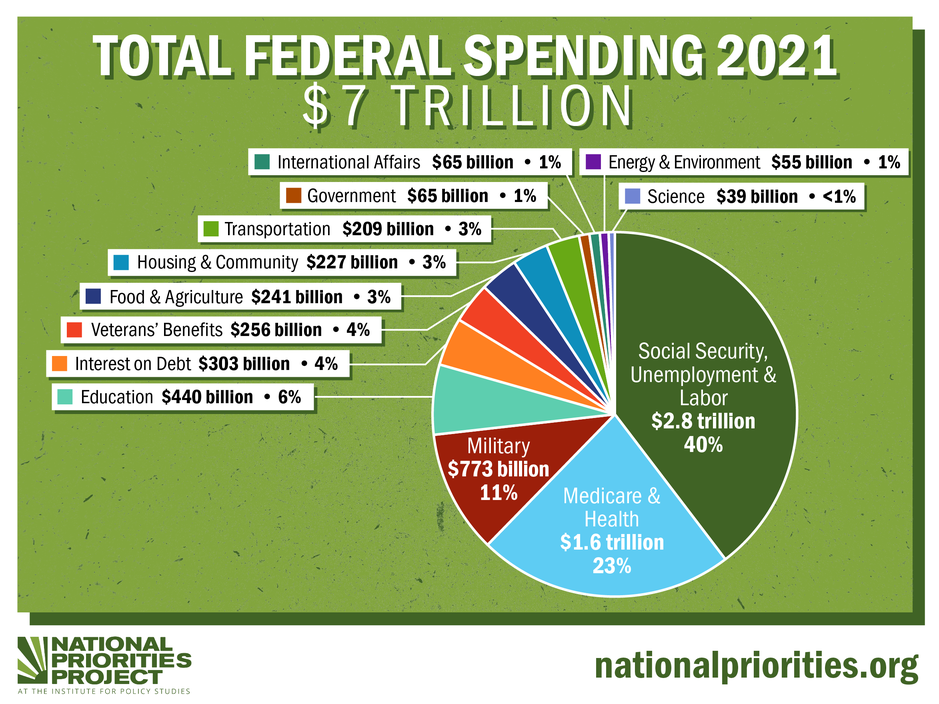
Academic scientists aren't lobbyists, and politicians aren't giving us money. The funding institutions set research goals. Those funding institutions (staffed by people who actually understand science) don't conduct the research--they choose the winning research plans to fund to achieve their stated goals (1 in 12 applicants, last time I tried). These bureaucrats write budget justifications for Congress--just as the military, Social Security Administration, VA, etc, do. And frankly, compared to those entities, our $40-something billion of the $6 trillion budget is pathetic.

https://static.nationalpriorities.org/images/charts/2021-cha...

https://www.nationalpriorities.org/budget-basics/federal-bud...

Re: Fraud, so much fraud

#455

Earlier quoted context omitted.

It becomes a survival bias: if people can cheat at a competitive game (or research field) and get away with it, then at the end you'll wind up with only cheaters left (everyone else stops playing).

As they say: the scum rises to the top, true for academia, politics etc, any organization really. Quote: "The Only Thing Necessary for the Triumph of Evil is that Good Men Do Nothing" My own nuanced take on it: Incompetent people are quick to grab authority and power. On the other hand principled, competent people are reluctant to take on positions of authority and power even when offered. For these people positions…

I would add c) often entail incalculable risk for any who aren't already corrupt enough to be climbing into bed with other evil powers or blackmailing, extorting, or exploiting their way into a safe haven and a golden parachute.

Who willingly remains vulnerable before the Sword of Damocles?

Re: Fraud, so much fraud

#456

Earlier quoted context omitted.

Similar - when I was younger, I would never have suspected that a scientist was committing fraud. As I've gotten older, I understand that Charlie Munger's observation "“Show me the incentive and I will show you the outcome.” is applicable everywhere - including science. Academic scientists' careers are driven by publishing, citations and impact. Arguably some have figured how to game the system to advance their caree…

I think my favorite Simpsons gag is the episode where Lisa enlists a scientist (voiced by Stephen Jay Gould) to run tests to debunk some angel bones that were found at a construction site. In the middle of the episode, the scientist bicycles up to report, dramatically, that the tests "were inconclusive". In the end, it's revealed that the bones were a fraud concocted by some mall developers to promote their new mall.…

That's a good one. In my experience, corruption is almost always disguised as neglect and incompetence. Corrupt people meticulously cover their tracks by coming up with excuses to show neglect; some of them only accept bribes that they can explain away as neglect where they have plausible deniability. It doesn't take much brainpower to do well, just malicious intent and knowing the upper limits.

IMO, Hanlon's razor "Never attribute to malice that which can be adequately explained by stupidity" is a narrative which was created to condition the masses into accepting being conned repeatedly.

On the topic, I subscribe to Grey's law "Any sufficiently advanced incompetence is indistinguishable from malice" so I see idiots as malicious. In the very best case, idiots in positions of power are malicious for accepting the position and thus preventing someone more competent from getting it. It really doesn't matter what their intent is. Deep down, stupid people know that they're stupid but they let their emotions get in the way, same emotions which prevent them from getting smarter.

Re: Fraud, so much fraud

#457
post #230
post #131

Earlier quoted context omitted.

Lots of people doing research find this depressing to the point of quitting. Many of my peers left research as they couldn't stomach all this nonsense. In experimental fields, the current academic system rewards dishonesty so much that ugly things have become really common. In my relatively short career, I have been asked to manipulate results several times. I refused, but this took an immense toll, especially on two…

So do you believe the author of the OP could honestly omit from their article the things you (and many others here) talk about? Could they be naive?

Nah, I think the article has good intentions. And rampant fraud is important to address.

But as others said, addressing smaller shenanigans is also crucial to steer things in the right direction.

Re: Fraud, so much fraud

#458

I wonder if there's evidence of fraud _increasing_ or if the detection methods are just improving. In my last workplace, self-evaluation (and, therefore, self-promotion) was mandatory on a semi-annual cycle and heavily tied to compensation. It's not surprising that it became a breeding ground for fraud. Outside of a strong moral conviction (which I would argue is in declining), these sorts of systems will likely alwa…

I’ve hacked even peer reviews. Nobody wants to really write yours, so offer to do it for them.

Obviously making it mindlessly laudatory.

Re: Fraud, so much fraud

#459
post #440

Earlier quoted context omitted.

Far more educated. But certainly not smarter. And it's not at all clear if that education does anything other than magnify their intellectual predispositions. The smart people can make great strides, but the stupid will be stupid louder and harder. And the average may well just be... more average.

IQ levels has risen on average because of nutrients, not using lead and education. An increase in blood lead from 10 to 20 micrograms/dl was associated with a decrease of 2.6 IQ

> Q levels has risen on average because of...

...nobody really knows why

Re: Fraud, so much fraud

#460
Is it time for periodic AI-driven audits of papers. Some types of audits may be easy—Western blots for example. But many edge cases will require lots of sleuthing or preferably open access to all files and data. Obviously paying for your own audit sets up the incentives the wrong way.

Alzheimer’s research has been a mess for 30 years as Karl Herrup argues persuasively in How Not to Study a Disease:

https://mitpress.mit.edu/9780262546010/how-not-to-study-a-di...

Post reply on HN