Live data from Hacker News

Brave Search beta

search.brave.com

441–450 of 697 posts

Re: Brave Search beta

#441
post #330

Earlier quoted context omitted.

I just tested an image search on Bing ( https://www.bing.com/images/search?q=test ) and Brave Search ( https://search.brave.com/images?q=test ) and it definitely appears that Brave is falling back to Bing as the results are highly identical, especially compared to Google ( https://www.google.com/search?q=test ).

They mention that image search is 100% bing. Not sure if this is planned to be replaced by their own implementation later. "However for some features, like searching for images, Brave Search will fetch results from Microsoft Bing."

Indeed, we lean heavily on Bing for image search. With time and maturation, this will change I'm sure. That said, when Bing lacked "tank man" results recently, Brave Search still yielded results (although the quality wasn't what we'd like to see; still a beta product. Screenshots here: https://twitter.com/BraveSampson/status/1400926207416410113). Crawl, walk, run. We're just getting started
Re: Brave Search beta

#442

Earlier quoted context omitted.

Obviously they're saying (correctly) that the part that isn't true is the part where you said the search results aren't directly from bing. And by search results they clearly mean the list of links wherein you click on a link and go to a webpage that matches your query.

>Obviously they're saying(correctly) that the part that isn't true is the part where you said the search results aren't directly from bing. This makes no sense. What I said is still there. I said that Bing is one source used to derive the results DDG returns.

> I said that Bing is one source used to derive the results DDG returns.

No, you said it was one of many. Implying that there are other sources that users are likely to actually encounter in practice feeding the search results page. That's what your repliers are saying is untrue.

Re: Brave Search beta

#443
post #279

Earlier quoted context omitted.

They are called bangs, not shebangs. A shebang is #! > In computing, a shebang is the character sequence consisting of the characters number sign and exclamation mark (#!) at the beginning of a script. It is also called sha-bang,[1][2] hashbang,[3][4] pound-bang,[5][6] or hash-pling.[7] - Wikipedia > Bangs are shortcuts that quickly take you to search results on other sites. For example, when you know you want to sea…

Thank you for the correction. I used to call them hash-bangs (not sure where I picked up that habit in my ~25 years of industry experience), until I started seeing more people refer to them as shebangs . Oddly enough, while reading them out I would always say "bang, ". I'll try to refer to them simply as bangs (or perhaps something like search/filter bangs ) from now on

Because '#!' is a hash followed by a bang.

Re: Brave Search beta

#444

Earlier quoted context omitted.

We don't care what it does with the previous ad data, what's disturbing is that there is even a setting to opt-in to more ads in the first place . Many people (myself included) will be completely turned away because of that option. That's just the cost of doing business.

Person 1: Brave replaces existing ads, that’s bad Someone from Brave: actually we don’t replace existing ads at all, here’s why Person 2: no one cares what you do or don’t do with existing ads! I don’t have any connection to Brave but I find it odd they’ve become some kind of hate figure here on HN. Their iOS client IMO is quite good. Their privacy is miles ahead of the other options. But merely by trying to be priva…

I didn’t realize Brave had become a “hate figure” here but it seems like the discussion in this thread took a hard turn to the kind of conspiratorial, reactionary, nasty “gotcha” reply behavior I come to Hackernews specifically to avoid. In this thread are multiple examples of the Brave employee saying Thing A and just getting mean-spirited responses reframing A as negatively as possible as if it’s an argument retort.

Example: “Oh this person works for Brave, don’t trust them.” Or in reply to the post explaining what sounds like a bug in the application being misread as a way to grift money from traffic, “No revenue made? So you got caught before you got paid?” Or the clarification that Brave browser ads are confined to the browser and OS UI followed by repetition of the same insisted point that they “block then replace browser ads,” while the rep seems to have explained quite clearly opt-in browser ads are not presented inline to the webpage content. It is, sorry to use a tired comparison, “Reddit behavior.”

I recently saw a note by dang in a Bitcoin thread about how crypto tends to generate repetitive arguments on HN and it seems like that blind spot for the community may have eclipsed Brave by association (maybe in addition to HN’s negativity towards anything ad related). I keep scrolling further expecting to learn something salient about why I shouldn’t trust Brave but instead I see a bunch of people beating on a community rep.

Re: Brave Search beta

#445

Earlier quoted context omitted.

> You make it sound like Brave has intentionally done wrong; They're not saying Brave did anything intentionally wrong, they're just big enough mistakes that it's not possible for them, personally, to trust the organization. > those are enough for me to choose not to trust them as an organization

then what about this?: > On 6 June 2020, a Twitter user pointed out that Brave inserts affiliate referral codes when users type a URL of Binance into the address bar, which earns Brave money. Further research revealed that Brave redirects the URLs of other cryptocurrency exchange websites, too. In response to the backlash from the users, Brave's CEO apologized and called it a "mistake" and said "we're correcting". Se…

That was addressed in my comment (the one you're responding to) with this link: https://brave.com/referral-codes-in-suggested-sites/.

Briefly, we added a way for users to support Brave without having to make financial contributions. They could simply opt to use one of our affiliate codes for a few poplar sites/services.

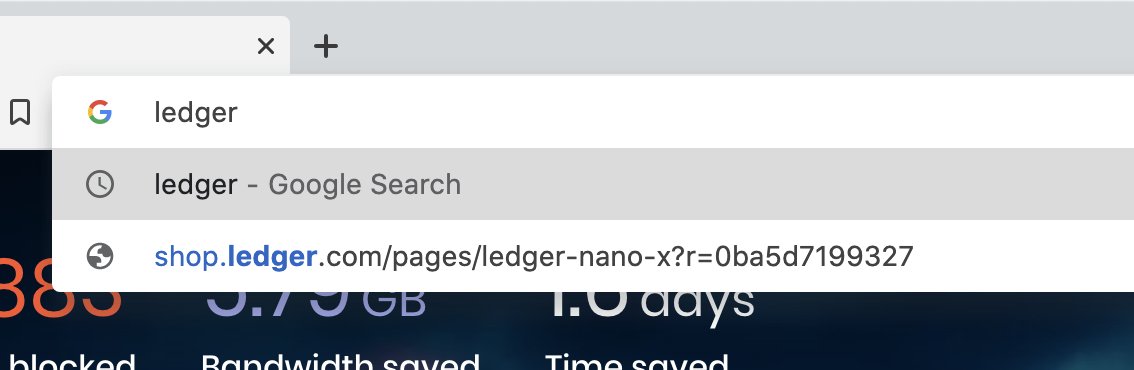
We added a feature to Brave which responded to user search input, and offered affiliate links for relevant results. You can see a screenshot of what that looked like at https://brave.com/wp-content/uploads/2020/06/image3.png. This didn't involve any user data, didn't rewrite links on pages, didn't redirect network requests, or touch the area of privacy/security in any way. Seemed like a good idea :)

When the feature actually launched, users quickly realized that the logic was handling fully qualified URLs in additional to search input. You can see a screenshot of that at https://brave.com/wp-content/uploads/2020/06/image2-1.png. This was the mistake that needed to be corrected.

I hope that helps clarify things a little. Again, there was no impact to user data or privacy, and Brave made $0 on this feature. Thankfully, our community is attentive, and yields prompt feedback when mistakes are made. Fortunately we were able to resolve the issue quickly and get a fix out to users.

Re: Brave Search beta

#446

Earlier quoted context omitted.

You make it sound like Brave has intentionally done wrong; that isn't the case. Brave is designed in every way to preclude abuse from the design stage, and with a Can't Be Evil mindset, as opposed to the Don't Be Evil of Google. If you have questions about Brave, or Brave Search, we're always happy to chat. - 2018 Rewards Update documented at https://brave.com/rewards-update/ - Affiliate Codes explained at https://br…

I appreciate the response! I stand by what I said, but I do appreciate you adding your perspective and sharing links so that others can read what Brave as an organization has to say about these incidents.

Fair enough; I can respect that :)

Always happy to chat if anybody has any other questions about Brave.

Re: Brave Search beta

#447
post #46

Previous related discussion: https://news.ycombinator.com/item?id=26328758 If things go as planned, this may become a paid, ad-free, zero-tracking search engine. I can't express how exciting this is to me. Over the past few years, I have made several attempts to replace Google Search with DuckDuckGo. But they have all failed and I always ended up changing the default search engine back to Google. I mean, DDG worked f…

I've stuck with DDG for about the past year and a half and I have to agree. I want it to be good, but when debugging some obscure problem (like trying to learn SwiftUI lately) Google is able to dig up more result. Of course the "there were not results for so displaying results for 'computer programming instead'" is frustrating so I preemtively add quotes around every term more frequently.

Lately I've noticed a weird problem with DDG where it will load a blank page of results. The page header with logo and search bar is there, but the white part of the page that has results never loads. Even after refreshing multiple times it's the same, but trying a different query fixes it.

If Brave can manage to produce higher quality results while weeding out SEO spam I will definitely subscribe.

Re: Brave Search beta

#449

There's only 1 page of search results, regardless of the search term. Why?

this is to do with the philosophy of Cliqz (who developed what's now Brave Search) - if you can't find the results on the first page, you'll probably be better off changing the search term than paginating. I have no idea how reasonable that is though.

Search the word “porn”. 20 results? The results I want might be on the 2nd page or further.

I’m willing to concede maybe I’m an outlier in behavior but I definitely want more than 20 results perhaps 33% of my searches.

I wonder if cliqz did any studies on this before deciding on 20 fixed results.

It also conveniently allows them to avoid the issue of paging search results.

Re: Brave Search beta

#450
post #319

Earlier quoted context omitted.

Why wouldn't it be? Google scrapes the web to populate it's results, why wouldn't other search engines scrape the web as well? Google is a website.

It's not scraping static text in order to point you to those sites, it's using the features of the site to perform a service better than you can do yourself. It's completely different. If I made a site that claimed to help you with your math homework and simply sent the queries to WolframAlpha, that would also not just be "scraping."

This is basically what Google does to Wikipedia and rebrands as "Knowledge Graph".
Post reply on HN