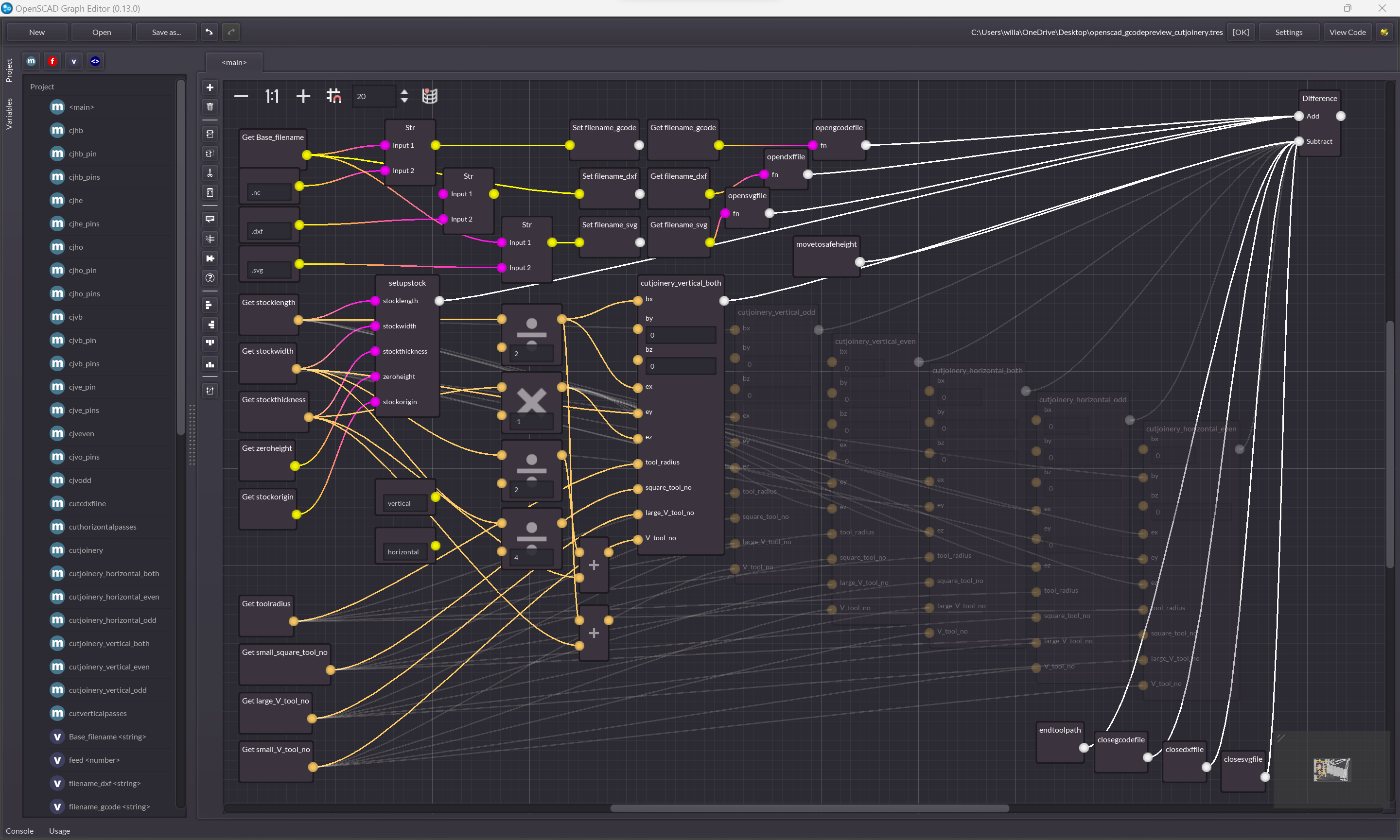
I have seen dozens of these things and have made a few myself. Beyond some specific use cases, they don't seem to scale cognitively. The tangle of connections is a problem. The previous HN link from @andsoltis has a better critique than me. Don't get me wrong. Besides being experientially cynical about these things, I'm also firmly in the camp of "one more UI breakthrough, bro and we might crack it!" This one has som…
Advantages are:
- discoverability --- it seems pretty easy to arrange all elements in a hierarchy and make them accessible via clicking/revealing
- no syntax errors --- if things fit together/connect, then it should be a syntactically valid program
The problem is, it relies on a couple of concepts we don't seem to have a good solution for:
- What does an algorithm look like?
- How to deal with an algorithm which is larger than the current screen/window size? (it's all-too easy to have the same sort of problem of a not-wrapped program with lines longer than the current window size and more lines than will fit in a window, and there doesn't seem to be a 2D graphical equivalent of turning on word-wrapping)
- If programs are broken down into discrete modules, then connected together, one is back to the wall-of-text description which presumably one was trying to escape from, just wrapped up in boxes and connectors
Two pages with cautionary images are:
https://blueprintsfromhell.tumblr.com/
and
https://scriptsofanotherdimension.tumblr.com/
I've been trying to use OpenSCAD Graph Editor: https://github.com/derkork/openscad-graph-editor in my own work:
https://github.com/WillAdams/gcodepreview
and the screen grab from there sums up the difficulties pretty well:
https://raw.githubusercontent.com/WillAdams/gcodepreview/mai...