Give up population growth. This really is key but too often overlooked.
Most of the "western world" already has barely growing or declining populations: https://en.m.wikipedia.org/wiki/Population_decline What you are proposing is thus an imperialist dictate on African and Asian countries, which is an obvious no go. Instead you should advocate for improved standards of living and flourishing economies in all these countries, which is strongly correlated with stabilizing population levels.
This is both a ridiculous and offensive accusation.
It is quite irrelevant which parts of the world have a growing population and which have not. What's important is the global population.
Somewhat tangentially related: I wrote this in a private note to a friend last year. I don't believe this 100%, but the idea is worth exploring in my opinion: 1. Corporations desperately pursue continuous growth, even when they're already profitable, and do so at the expense of the environment, employee welfare and sometimes, the rule of law. 2. Corporations pursue growth because investors demand it. 3. Investors dem…
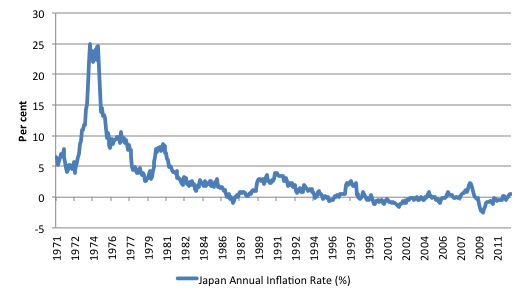
I don't think companies need to grow at a certain rate to get more ROI than the inflation rate. The value of a company expressed in currency should already go up with that currency's inflation rate, even if the company stays exactly the same.
There certainly are ways to live there. Granted, it needs some colonization effort - still easier than colonizing Mars, and actually producing some technologies for that.
The past 200 years is the era of energy-intensive technological innovation. What is the evidence that the technology innovation pattern we've experienced so far can shift into ultra-low energy mode at scale? In inhospitable environments to boot. PS. Mars colonization is folly.
The need to find new places to live, perhaps combined with regulatory effort.
Somewhat tangentially related: I wrote this in a private note to a friend last year. I don't believe this 100%, but the idea is worth exploring in my opinion: 1. Corporations desperately pursue continuous growth, even when they're already profitable, and do so at the expense of the environment, employee welfare and sometimes, the rule of law. 2. Corporations pursue growth because investors demand it. 3. Investors dem…
While that is all true, at least to me it sounds like the old explanation of why Communism failed - "It was indeed superior, but all the world had to agree so for it to work". Say one country develops this utopia where everyone doesn't have to compete to survive, either companies or individuals. Its neighbour though remains with the old Capitalist model. In a generation or two the struggling capitalist country could…
I'm merely suggesting that we maintain the money supply at a level that does not result in any inflation.
Somewhat tangentially related: I wrote this in a private note to a friend last year. I don't believe this 100%, but the idea is worth exploring in my opinion: 1. Corporations desperately pursue continuous growth, even when they're already profitable, and do so at the expense of the environment, employee welfare and sometimes, the rule of law. 2. Corporations pursue growth because investors demand it. 3. Investors dem…
Investors demand growth as part of a risk vs. return tradeoff. There's probably quite a bit of "waste" involved in pursuing excessively-risky opportunities that have not shown profitability, simply to obtain a shorter time-to-market than competitors. OTOH the social returns from this activity could still be positive if it means that a broader variety of opportunities is being pursued at any given time.
Somewhat tangentially related: I wrote this in a private note to a friend last year. I don't believe this 100%, but the idea is worth exploring in my opinion: 1. Corporations desperately pursue continuous growth, even when they're already profitable, and do so at the expense of the environment, employee welfare and sometimes, the rule of law. 2. Corporations pursue growth because investors demand it. 3. Investors dem…